THE CLASSIC COLLECTION✦A dead man’s diaryCLASSIC FREE BOOKS
A dead man’s diary
Coulson Kernahan
THE CLASSIC COLLECTION · 1892
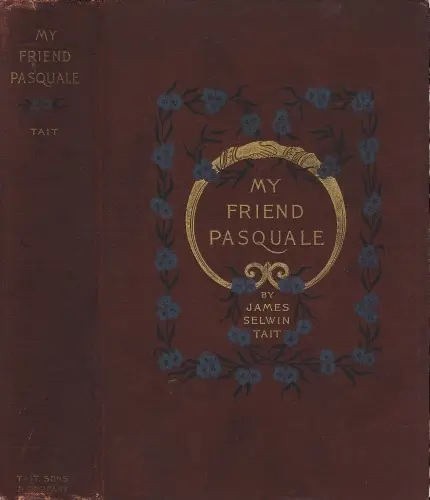
"My Friend Pasquale and Other Stories" by James Selwin Tait is a collection of fictional narratives likely written in the late 19th century. The book opens with a story centered on the titular character, the enigmatic Pasquale, and the events surrounding a chance encounter that transforms the narrator's life. Themes of friendship, duty, and the darker aspects of human nature begin to unfold as the narrator reflects on his relationship with Pasquale, hinting at a blend of tragedy and mystery. The opening of the book introduces us to the narrator, who journeys home from work only to find himself inadvertently engaged in a disturbing scene involving a dog fight. He witnesses the rescue of Pasquale, a passionate stranger who intervenes in the brutality. Their fateful meeting ignites a unique friendship filled with intriguing conversations and underlying tensions. As Pasquale’s complex character emerges—emotionally charged yet affectionate—the narrator begins to ponder the deeper implications of their bond and the dark turns that may await them. This initial chapter sets a compelling tone for the collection, suggesting a rich exploration of both companionship and fate that will likely unravel throughout the stories.
Introduction adapted from the source catalogue; source summaries may be automatically generated.
Free to read · English · 60,340 words · No account needed
MAKE TIME FOR A GOOD BOOK
On by default. Untick to stop anonymous reading totals. Each page counts after 10 seconds in view. How this works.
Anonymous counting is on unless you have switched it off.
“No, dear, Strangely has been telling me all the month that he is very short himself and that his directors will insist on the note being paid when due. He says that they have made some losses lately and are in quite a bad mood over them.”
“Well, dear, but if you cannot meet the note, what will they do then?”
“They will protest my note, get a judgment against me, and sell my
property.
“What! this house--our home!” almost screamed his wife, as she sprang to her feet, her indignant eyes all ablaze and giving back flame for flame with the leaping sea-coal fire.
“Yes, darling,” murmured the weary, heart-broken man, “everything down even to the baby’s cradle.”
“O, but they cannot do it,” replied the wife, her bright head high in the air, and her eyes full of a lovely defiance. “Ben,” she resumed with a pitiful attempt at a cheery smile, “they cannot sell you, can they?”
“No, sweetheart,” replied Ben with a duplicate of the same wintery heartbreaking mirth in his tone.
“Then never mind, my darling, love will find a way out of the difficulty. My poor, poor dear, to think that you have been bearing this burden all alone for these long, miserable months while I was so blindly, so foolishly happy. And, oh me! to think of a note falling due on Christmas eve; that must have been Mr. Strangely’s doing that, to spoil our Christmas, now wasn’t it dear?”
“Well, I tried to put it off till January, but he said he could not make the note for more than six months, although he could renew it. Now, of course, he says he cannot renew it.”
“Just so, Ben, dear; do you not remember it was last Christmas eve Mr. Strangely proposed, and I declined his suit? Does not this seem like what you call getting even with us, darling, just a little like that, eh? He is a vindictive, jealous man, and he has tried to ruin you, that is all, love; that mine was a complete fraud, just his way of wrecking you. Depend on it, I am right. Did you send anyone to examine the mine? Do you know positively that he put $15,000 into it? No, my own honest, unsuspicious husband, I see you did not. Well, be assured it is as I say, and although he has spoilt our Christmas eve, he will not spoil our lives or our love. A woman always gets a keen insight into the character of the man who loves her; that is, provided she does not love him. When she returns his love, she is blind and can see none of his faults. I saw a good deal of Mr. Strangely, and I always disliked him, even when he was expressing the greatest devotion to myself; he is a bad, unprincipled man. That is probably not just what the commercial agencies say about him, but I know I am nearer the truth than they are.”
Your reading position is saved on this browser. Take it to another device with a library code. Reading pages adapt to text, rather than matching a printed edition.
BEHIND THE BOOK
This eBook is for the use of anyone anywhere in the United States and most other parts of the world at no cost and with almost no restrictions whatsoever. You may copy it, give it away or re-use it under the terms of the Project Gutenberg License included with this eBook or online at www.gutenberg.org. If you are not located in the United States, you will have to check the laws of the country where you are located before using this eBook. Read the source licence.
The original source file, including credits and licence, is retained by this library. Request an original-format copy at no charge. Please include the book title and Project Gutenberg identifier #49484.
KEEP YOUR CURIOSITY GOING
Coulson Kernahan

Maurice Baring
Frances Wright
Cécile Tormay

Frederic Jesup Stimson

W. H. P. (William Henry Pope) Jarvis