Letters to a Friend, Written to Mrs. Ezra S. Carr, 1866-1879
John Muir
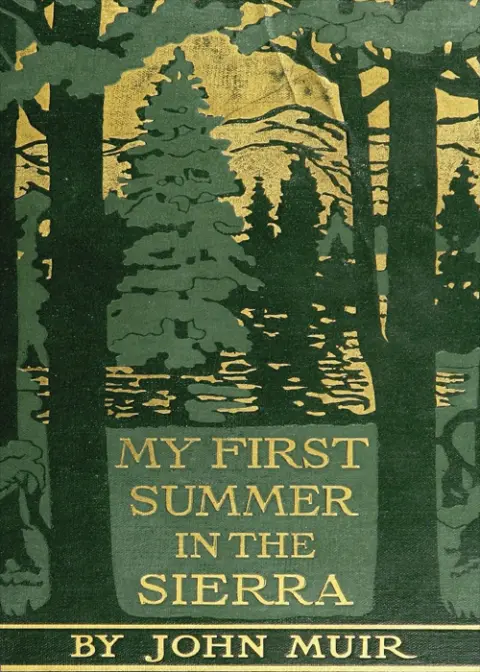
THE CLASSIC COLLECTION · 1911
"My First Summer in the Sierra" by John Muir is a memoir written in the early 20th century. The text recounts Muir's experiences as he travels through the Sierra Nevada mountains, exploring the flora and fauna while working with a flock of sheep. This work highlights Muir's profound connection to nature and his passion for wilderness exploration, making it a captivating read for anyone interested in natural history or the great outdoors. The opening of the memoir introduces Muir's longing for the mountains and his precarious financial situation, which leads him to accept a job with a flock of sheep as they are driven to higher pastures in the Sierra. Alongside a shepherd named Billy, a Chinaman, and an Indian, Muir embarks on this journey, eagerly anticipating his time to study the region's plants, animals, and landscapes. As the group makes their way through the foothills, Muir describes the sights and sounds of nature, his interactions with the flock, and the occasional challenges they face, all of which set the stage for a summer of discovery and appreciation of the natural world.
Introduction adapted from the source catalogue; source summaries may be automatically generated.
Free to read · English · 59,530 words · No account needed
MAKE TIME FOR A GOOD BOOK
On by default. Untick to stop anonymous reading totals. Each page counts after 10 seconds in view. How this works.
Anonymous counting is on unless you have switched it off.
September 22. The sheep were let out of the corral one by one, this morning, and counted, and strange to say, after all their adventurous wanderings in bewildering rocks and brush and streams, scattered by bears, poisoned by azalea, kalmia, alkali, all are accounted for. Of the two thousand and fifty that left the corral in the spring lean and weak, two thousand and twenty-five have returned fat and strong. The losses are: ten killed by bears, one by a rattlesnake, one that had to be killed after it had broken its leg on a boulder slope, and one that ran away in blind terror on being accidentally separated from the flock,—thirteen all told. Of the other twelve doomed never to return, three were sold to ranchmen and nine were made camp mutton.
Here ends my forever memorable first High Sierra excursion. I have crossed the Range of Light, surely the brightest and best of all the Lord has built; and rejoicing in its glory, I gladly, gratefully, hopefully pray I may see it again.
Abies concolor and magnifica. See Fir, silver.
Abronia, 228.
Adenostoma fasciculata, 14, 19, 20.
Adiantum Chilense, 17.
Alpenglow, 220.
Alvord, Gen. Benjamin, 183, 185, 186.
Animals, domestic, afraid of bears, 107, 108.
Animals, wild, in the Merced Valley, 43;
clean, 18, 79;
man-eaters, 211, 212.
Antone, Portuguese shepherd, 209, 210.
Ants, 8, 43-47;
bite of, 46.
Arctomys monax. See Woodchuck.
Arctostaphylos pungens. See Manzanita.
Avalanches, 216, 217.
Azalea, “sheep poison,” 22.
Azalea occidentalis, 20.
Baccharis, 20.
Beans, as food, 81.
Bear, cinnamon, adventure with, 134-37.
Bear-hunting, 28-30.
Bears, favorite feeding-grounds of, 28, 29;
fond of ants, 46;
fear of, 107, 108;
very shy in Sierra, 108;
raid sheep camps, 191, 192, 194, 207, 209, 210, 211.
Billy, Mr. Delaney’s shepherd, 6, 61, 62, 75, 80, 146, 147;
his everlasting clothing, 129, 130;
afraid of bears, 191, 193;
quarrels with Mr. Delaney, 205.
Birds, 68, 96;
in the Merced Valley, 50, 65-67;
water ouzel, 106, 107, 223;
wrens, 170;
on Mount Hoffman, 173-77;
sparrows on Cathedral Peak, 251.
Bloody Cañon, 214;
origin of name, 215.
Bluebottle fly, 139.
Borer, 169.
Boulders, in streams, 47-49;
near Tamarack Creek, 100, 101.
Bower Cascade, 224.
Bower Cave, a marble palace, 25, 26, 262, 263.
Bread, famine, 75-85;
effects of the want of, 76, 77;
sheep-camp, 82, 83.
Brodiæa, 20.
Brown, David, bear-hunter, 27-30.
Brown’s Flat, 25, 27, 262.
Bryanthus, purple-flowered, 151, 161, 218.
Buffalo berries, 226.
Butler, Henry, 189, 190.
Butler, Prof. J. D., strange experience of Muir with, 178-91.
Butterflies, 160.
Calochortus albus, 17.
Camping, in the foothills, 10, 11;
on the North Fork of the Merced, 32-74;
at Tamarack Flat, 99;
in the Yosemite, 122;
near Soda Springs, 201, 229;
alone, in Bloody Cañon, 220-22;
on the Tuolumne, 232-53.
Cañon Creek, 223.
Carlo, St. Bernard dog, with Muir in the Sierra, 5, 6, 43, 57,
59, 60, 62, 123, 124, 154, 181, 192, 193;
afraid of bears, 116, 135;
runs away, 232, 233, 255.
Cascade Creek, 104, 259.
Cassiope, 244, 250.
Cathedral Peak, 154, 212, 231, 247, 250;
well named, 146;
a majestic temple, 198;
view from, 248;
height, 249.
Cedar, incense (Libocedrus decurrens), 20, 21, 93.
Chamæbatia foliolosa, 33, 34.
Chinaman, shepherd’s helper, 6, 9.
Chipmunk, in the Sierra, 171, 172.
Cleavage joints, 254.
Clouds, 56, 73, 147, 148, 242, 243;
sky mountains, 18, 19, 37, 39, 61, 133, 144, 145.
Coffee, 82.
Corylus rostrata, 65.
Coulterville, 9, 17, 19.
Crane Flat, 90, 92, 93, 260.
Crows, 9, 248.
Crystals, radiant, 153, 250;
frost, 234, 236.
Daisy, blue arctic, 218.
Deer, black-tailed, 142.
Your reading position is saved on this browser. Take it to another device with a library code. Reading pages adapt to text, rather than matching a printed edition.
BEHIND THE BOOK
This eBook is for the use of anyone anywhere in the United States and most other parts of the world at no cost and with almost no restrictions whatsoever. You may copy it, give it away or re-use it under the terms of the Project Gutenberg License included with this eBook or online at www.gutenberg.org. If you are not located in the United States, you will have to check the laws of the country where you are located before using this eBook. Read the source licence.
The original source file, including credits and licence, is retained by this library. Request an original-format copy at no charge. Please include the book title and Project Gutenberg identifier #32540.
KEEP YOUR CURIOSITY GOING
Wilfrid Scawen Blunt
Wilfrid Scawen Blunt

E. W. (Edgar Watson) Howe
Cécile Tormay

Moritz Busch
John L. Ransom