Colonel Henry Ludington: A Memoir
Willis Fletcher Johnson
THE CLASSIC COLLECTION · 1892
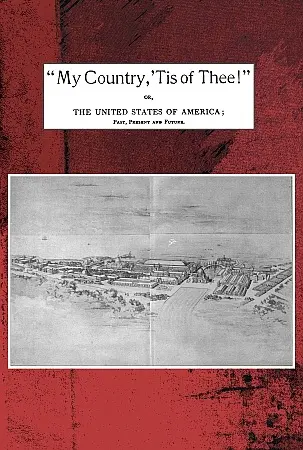
"My Country, 'Tis of Thee!" by Willis Fletcher Johnson is a historical account likely written in the late 19th century. The work provides an expansive view of American history, tracing key events and figures from the Age of Discovery through the implications of the Columbian Exposition. It delves into various themes such as exploration, colonization, and the evolving status of society, particularly highlighting perspectives on women's contributions to American history. The beginning of this literary work introduces the concept of the Age of Discovery, beginning with Columbus's voyage in 1492. It discusses the various theories surrounding the discovery of America, including earlier potential voyages from Asia and Scandinavia, then dramatically transitions into Columbus's quest to explore the unknown western territories. Johnson sets the stage for an exploration of not just the voyages themselves but their significance in shaping the United States, providing a foundation for understanding the historical narratives that follow. The opening emphasizes the complexities of early maritime explorations, mythologized accounts, and the subsequent interactions between European settlers and Indigenous peoples.
Introduction adapted from the source catalogue; source summaries may be automatically generated.
Free to read · English · 137,614 words · No account needed
MAKE TIME FOR A GOOD BOOK
On by default. Untick to stop anonymous reading totals. Each page counts after 10 seconds in view. How this works.
Anonymous counting is on unless you have switched it off.
Alvaredo then led his people westward, hoping to reach the Pacific coast. But after long months of wandering, and dreading to be overtaken by winter on the prairies, they retraced their steps to the Mississippi, where they pitched camp and spent six months building boats in which to go down the river. A terrible voyage of seventeen days, between banks lined with Indians, who plied them pitilessly with poisoned arrows, brought them to the Gulf, and a further weary cruise along the coast of Louisiana and Texas landed them at the Spanish settlement of Panuco, in Mexico. This was in October, 1543; they had been wandering for nearly four years.
The English were rather tardy in following the lead of the Spanish, French, and Portuguese explorers, but, once started, they pursued their researches with great vigor. In 1562 one of their adventurers, Sir John Hawkins, engaged in the slave trade, and carried cargoes of negroes to the West Indies. In 1577, Sir Francis Drake accomplished the circumnavigation of the globe. Attempts were made at the same period to discover the northwestern passage, by Willoughby, Frobisher, Henry Hudson, and others. The only attempt to found a colony in the New World during this century was made by Sir Walter Raleigh; his step-brother, Sir Humphrey Gilbert, had obtained the first charter ever granted an Englishman for a colony, but his project failed, and he himself perished at sea.
A patent was granted Raleigh, constituting him lord proprietary, with almost unlimited powers, according to the Christian Protestant faith, of all land which he might discover between the thirty-third and fortieth degrees of north latitude. Under this patent Raleigh dispatched two vessels under the command of Philip Amidas and Arthur Barlow. They landed on the island of Wococken and took possession in the name of Queen Elizabeth. The country they called Virginia, and such glowing accounts did they send back to England that seven vessels under Sir Richard Grenville were sent out, bearing one hundred and fifty colonists. As soon as these landed, Sir Richard Grenville took the ships back to England, capturing a rich Spanish prize on the way. The colony fared very badly after a time, Lane, the governor, being utterly unfit for his office. The Indians wishing to get rid of their visitors, induced them to ascend the Roanoke River, on the upper banks of which, they declared, dwelt a nation skillful in refining gold, whose city was inclosed with a wall of pearls. After the gold rushed the colonists, but they found only famine and distress. The Indians, on their return, refused to give them any more provisions, and even ceased to cultivate corn, hoping to drive out the Englishmen altogether. In revenge, the white men, having invited the chief to a conference, fell upon him and slew him, with many of his people. This was the end of their peaceful relations with the Indians. The colony was on the verge of starvation when Sir Francis Drake, the slave-trading nobleman, appeared outside the harbor with a fleet of twenty-three ships. At the urgent prayer of the starving settlers, Sir Francis carried them back to England. Hardly had they gone before a ship laden with supplies, dispatched by Raleigh, arrived. Finding the colony vanished, the ship returned. Before it reached England, Sir Richard Grenville arrived at Roanoke with three ships. After searching in vain for the missing colony, he also returned, leaving fifteen men on the island to hold possession for the English. Still undiscouraged, Raleigh sent out a second colony, this time choosing agriculturists, and sending with them their wives and children. On reaching Roanoke they found the bones of the fifteen men Grenville had left, and the fort in ruins. Meanwhile the Spanish invasion was threatening England. Raleigh was one of the most active in devising schemes for resistance. It was almost a year before he was able to send supplies to his colony at Roanoke; this he did at last, but the captain, instead of proceeding straight on his mission, went in chase of two Spanish prizes, came to grief, and was obliged to return to England. By this time Raleigh’s means were almost exhausted, but he managed to send out the relief ships, but they arrived too late. The island was a desert and the only clue to the fate of the colony was the word “Croatian” on the bark of a tree. It has been conjectured that they escaped, through the kindness of the Indians to Croatian; perhaps they were received into some tribe and became a part of the wild men; the Indians themselves have such a tradition. Raleigh sent five different search parties after his little colony, but none of them ever had the least success.
Your reading position is saved on this browser. Take it to another device with a library code. Reading pages adapt to text, rather than matching a printed edition.
Willis Fletcher Johnson
Willis Fletcher Johnson
Willis Fletcher Johnson
Willis Fletcher Johnson
BEHIND THE BOOK
This eBook is for the use of anyone anywhere in the United States and most other parts of the world at no cost and with almost no restrictions whatsoever. You may copy it, give it away or re-use it under the terms of the Project Gutenberg License included with this eBook or online at www.gutenberg.org. If you are not located in the United States, you will have to check the laws of the country where you are located before using this eBook. Read the source licence.
The original source file, including credits and licence, is retained by this library. Request an original-format copy at no charge. Please include the book title and Project Gutenberg identifier #50036.
KEEP YOUR CURIOSITY GOING
Wilfrid Scawen Blunt
Wilfrid Scawen Blunt

E. W. (Edgar Watson) Howe
Cécile Tormay

Moritz Busch
John L. Ransom