THE CLASSIC COLLECTION✦The Spoilers of the ValleyCLASSIC FREE BOOKS
The Spoilers of the Valley
Robert Watson
THE CLASSIC COLLECTION · 1918
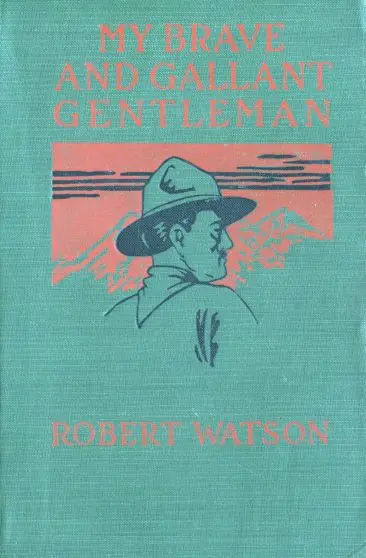
"My Brave and Gallant Gentleman: A Romance of British Columbia" by Robert Watson is a novel written in the early 20th century. The story revolves around George Brammerton, the second son of an aristocratic family, navigating the complexities of love, social standing, and familial loyalty amidst a backdrop of impending marriage announcements and societal expectations. The introductory chapters set up a tension between George's free-spirited disposition and his brother Harry's more traditional pursuits, particularly regarding a charming yet controversial lady, Rosemary Granton. At the start of the narrative, we find George reflecting on Lady Rosemary Granton, who is set to marry his haughty brother, Harry. As George contemplates her dramatic upbringing and the whispers of scandal surrounding her, he grapples with his own feelings about the marriage and his place in a world dictated by social status. The opening also introduces key characters, including his father, who holds steadfast to family traditions, and Harry, who embodies the arrogance of aristocracy. The groundwork is laid for conflict, not only within George's family but also in the romantic tension surrounding Lady Rosemary and the social repercussions of Harry's past entanglements.
Introduction adapted from the source catalogue; source summaries may be automatically generated.
Free to read · English · 76,583 words · No account needed
MAKE TIME FOR A GOOD BOOK
On by default. Untick to stop anonymous reading totals. Each page counts after 10 seconds in view. How this works.
Anonymous counting is on unless you have switched it off.
She spoke with the accent of an Eastern Canadian, although it was evident she had spent many years in the West.
Andrew Clark still held to his mother tongue,--Lowland Scots. But his speech was also punctuated with Western slang and dialect.
Every article of furniture in that kitchen was home-made:--chairs, table, picture frames, washstands,--everything, and good solid furniture it was too.
The table was already set for tea. Mrs. Clark busied herself infusing the refreshment, then Rita came in and we all sat down together.
Andrew Clark's grace was quite an event,--as long as the ten commandments, sonorous, impressive and flowery.
I found he could talk, and talk well; and of many out-of-the-common subjects he displayed considerably more than a passing knowledge.
Margaret Clark,--for that was the lady's name,--was quiet and seemed docile and careworn. She impressed me as being the patient bearer of a hidden burden.
There was something in the manner in which our conversation was conducted that I could not fathom. And I was set wondering wherein its strangeness lay. But, try as I liked, I could not reason it out. Everybody was agreeable and pleasant; Rita was almost gay. But at the back of it all, time and again it recurred to me,--what is wrong here?
Not until the tea was over and I was seated between Andrew Clark and Margaret before the fire, did the mystery solve itself.
I approached the business part of my visit.
"Mr. Clark, you have two or three hundred chickens on the ranch here."
"Ay," he nodded reflectively, puffing at his pipe.
"You send all your eggs to Vancouver?"
"Ay!"
"How many do you send per week, on an average?"
"Ask Margaret,--she'll tell you."
I turned and addressed Mrs. Clark, who looked over at her husband sadly.
"When the season is good, maybe fifty dozen a week; sometimes more, sometimes not so many, Mr. Bremner. Of course, in the winter, there's a falling off."
"I understand, Mrs. Clark.
"I have a big demand from the Camps for eggs," I explained. "What I get, I have to order from Vancouver. Now, it costs you money to send your eggs to the market there, and it costs me money to bring mine from the market. Why cannot we create a home exchange? I could afford to pay you at least five cents a dozen more than you are getting from the city dealers, save you and myself the freight charges, and still I could be money ahead and I would always be sure of having absolutely fresh stock. Besides, I would pay cash for what I got."
Your reading position is saved on this browser. Take it to another device with a library code. Reading pages adapt to text, rather than matching a printed edition.
BEHIND THE BOOK
This eBook is for the use of anyone anywhere in the United States and most other parts of the world at no cost and with almost no restrictions whatsoever. You may copy it, give it away or re-use it under the terms of the Project Gutenberg License included with this eBook or online at www.gutenberg.org. If you are not located in the United States, you will have to check the laws of the country where you are located before using this eBook. Read the source licence.
The original source file, including credits and licence, is retained by this library. Request an original-format copy at no charge. Please include the book title and Project Gutenberg identifier #31728.
KEEP YOUR CURIOSITY GOING
Coulson Kernahan

Maurice Baring
Frances Wright
Cécile Tormay

Frederic Jesup Stimson

W. H. P. (William Henry Pope) Jarvis