THE CLASSIC COLLECTION✦The Spoilers of the ValleyCLASSIC FREE BOOKS
The Spoilers of the Valley
Robert Watson
THE CLASSIC COLLECTION · 1918
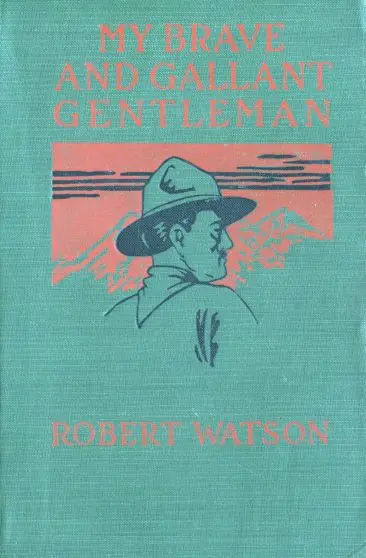
"My Brave and Gallant Gentleman: A Romance of British Columbia" by Robert Watson is a novel written in the early 20th century. The story revolves around George Brammerton, the second son of an aristocratic family, navigating the complexities of love, social standing, and familial loyalty amidst a backdrop of impending marriage announcements and societal expectations. The introductory chapters set up a tension between George's free-spirited disposition and his brother Harry's more traditional pursuits, particularly regarding a charming yet controversial lady, Rosemary Granton. At the start of the narrative, we find George reflecting on Lady Rosemary Granton, who is set to marry his haughty brother, Harry. As George contemplates her dramatic upbringing and the whispers of scandal surrounding her, he grapples with his own feelings about the marriage and his place in a world dictated by social status. The opening also introduces key characters, including his father, who holds steadfast to family traditions, and Harry, who embodies the arrogance of aristocracy. The groundwork is laid for conflict, not only within George's family but also in the romantic tension surrounding Lady Rosemary and the social repercussions of Harry's past entanglements.
Introduction adapted from the source catalogue; source summaries may be automatically generated.
Free to read · English · 76,583 words · No account needed
MAKE TIME FOR A GOOD BOOK
On by default. Untick to stop anonymous reading totals. Each page counts after 10 seconds in view. How this works.
Anonymous counting is on unless you have switched it off.
"Now,--all we require of you and your grandmother is to sit tight and neither to say nor do anything that would interfere. Leave it to--leave it to the minister. He is doing this, and he believes that it is the only way to bring your grand-dad to his senses. Mr. Auld has already tried everything else he can think of."
"It won't kill grand-dad, though?" she inquired.
"Kill him,--no! Why! it won't even hurt him, unless, maybe, his pride.
"Do you agree, Rita?"
"Sure!" she said. "But--if you or Mr. Auld hurt my grand-dad, I guess I'll kill you both,--see."
Her eyes flashed for a second and I could tell she was in deadly earnest over it. But she soon laughed and became happy once more.
"Rita,--would you like to be able to talk English,--proper English,--just as it should be talked? Would you care to learn English Grammar?" I asked, changing the subject partly.
She came close to me on the veranda steps with a jump.
"Say that over again, George. I want to get it right," she said
plaintively.
"Would you like me to teach you English Grammar, Rita?" I repeated.
"Would I? Oh! wouldn't I just!"
She looked away quickly. "You wouldn't waste your time teachin' the
likes of me."
"I have been through college. I know something of English Grammar and English Literature. It would be the pleasure of my life to be permitted to impart some of what I know to you."
"Oh!--but it would take years, and years, and--then some," she put in.
"Not a bit of it! It would take an hour or two of an evening, maybe twice a week. That is all,--provided you went over and learned in between times all that was given you to master."
"Gee! I could do that. You just try me."
"Well, Rita. Here is your first lesson.
"Never say 'gee.' It is not good English."
And I never heard Rita use the expression again.
I had expected to see her smile with happiness, but she was too tremendously in earnest about it. Determination was written all over her sweet little face.
"George,--I'll learn anything you tell me. I'll work hard and I'll learn terrible fast, for I know I ain't no good now at talking slick."
"Here is another for you, Rita. Never say 'ain't no good.' Say, 'I am not any good.' 'Ain't' is not a word; it does not appear in any standard dictionary of English.
Your reading position is saved on this browser. Take it to another device with a library code. Reading pages adapt to text, rather than matching a printed edition.
BEHIND THE BOOK
This eBook is for the use of anyone anywhere in the United States and most other parts of the world at no cost and with almost no restrictions whatsoever. You may copy it, give it away or re-use it under the terms of the Project Gutenberg License included with this eBook or online at www.gutenberg.org. If you are not located in the United States, you will have to check the laws of the country where you are located before using this eBook. Read the source licence.
The original source file, including credits and licence, is retained by this library. Request an original-format copy at no charge. Please include the book title and Project Gutenberg identifier #31728.
KEEP YOUR CURIOSITY GOING
Coulson Kernahan

Maurice Baring
Frances Wright
Cécile Tormay

Frederic Jesup Stimson

W. H. P. (William Henry Pope) Jarvis