THE CLASSIC COLLECTION✦Through the first Antarctic night, 1898-1899CLASSIC FREE BOOKS
Through the first Antarctic night, 1898-1899
Frederick Albert Cook
THE CLASSIC COLLECTION · 1913
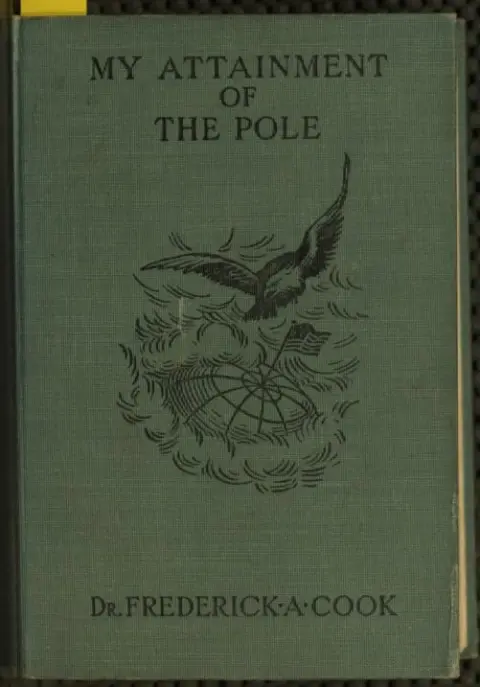
"My Attainment of the Pole" by Dr. Frederick A. Cook is an autobiographical account of his expedition to the North Pole, penned in the early 20th century. This work details his claims of being the first to reach the North Pole in 1909, presenting not only the physical journey but also the surrounding controversies regarding his achievement, particularly his rivalry with Robert Peary. Cook captures the harsh beauty of the Arctic and his experiences with the elements during his adventure. The opening portion of the narrative sets the stage for Cook's journey, revealing his overwhelming emotions upon reaching the North Pole, where he reflects on the surreal landscape and his personal triumph over one of Earth's most formidable frontiers. Cook acknowledges the scientific and emotional complexities of determining his exact location amidst the ever-shifting ice and light. He also hints at the subsequent criticism and allegations he faced from rivals aiming to undermine his achievement, positioning his narrative as both a record of exploration and a defense of his honor as an explorer.
Introduction adapted from the source catalogue; source summaries may be automatically generated.
Free to read · English · 180,498 words · No account needed
MAKE TIME FOR A GOOD BOOK
On by default. Untick to stop anonymous reading totals. Each page counts after 10 seconds in view. How this works.
Anonymous counting is on unless you have switched it off.
"Noona-terronga, neuliarongita, ootah--peterongito" (Land is gone; loved ones are lost; signs of life have vanished).
"Tig-i-lay-waongacedla--nellu ikah-amisua" (Return will I, the sky and weather I do not understand. It is very cold), said Ah-we-lah.
"Attuda-emongwah-ka" (A little farther come), I pleaded. "Attudu-mikisungwah" (Only a little further).
"Sukinut-nellu" (The sun I do not understand), said E-tuk-i-shook.
This had been a daily complaint for some days--the approaching equality of the length of shadows for night and day puzzled them. The failing night dip of the sun left them without a guiding line to give direction. They were lost in a landless, spiritless world, in which the sky, the weather, the sun and all was a mystery.
I knew my companions were brave. I was certain of their fidelity. Could their mental despair be alleviated, I felt convinced they could brace themselves for another effort. I spoke kindly to them; I told them what we had accomplished, that they were good and brave, that their parents and their sweethearts would be proud of them, and that as a matter of honor we must not now fail.
"Tigishu-conitu," I said. (The Pole is near.)
"Sinipa tedliman dossa-ooahtonie tomongma ah youngulok tigilay toy hoy." (At the end of five sleeps it is finished, beyond all is well, we return thereafter quickly.)
"Seko shudi iokpok. Sounah ha-ah!" they replied. (On ice always is not
good. The bones ache.)
Then I said, "The ice is flat, the snow is good, the sky is clear, the Great Spirit is with us, the Pole is near!"
Ah-we-lah dully nodded his head. I noticed, however, he wiped his eyes.
"Ka-bishuckto-emongwah" (Come walk a little further), I went on. "Accou ooahtoni-ahningahna-matluk-tigilay-Inut-noona." (Beyond to-morrow within two moons we return to Eskimo lands.)
"K i s a h iglucto-tima-attahta-annona-neuliasing-wah," said Ah-we-lah. (At last, then it is to laugh! There we will meet father and mother and little wives!)
"Ashuka-alningahna-matluk," I returned. (Yes, in two moons there will be water and meat and all in plenty.)
E-tuk-i-shook gazed at me intently. His eyes brightened.
As I spoke my own spirits rose to the final effort, my lassitude gave way to a new enthusiasm. I felt the fire kindling for many years aglow within me. The goal was near; there remained but one step to the apex of my ambition. I spoke hurriedly. The two sat up and listened. Slowly they became inspired with my intoxication. Never did I speak so vehemently.
E-tuk-i-shook gripped his whip. "Ka, aga" (Come, go!) he said.
Ah-we-lah, determined but grim, braced his body and shouted to the dogs--"Huk, Huk, Huk," and then to us he said, "Aga-Ka!" (Go-come).
Your reading position is saved on this browser. Take it to another device with a library code. Reading pages adapt to text, rather than matching a printed edition.
BEHIND THE BOOK
This eBook is for the use of anyone anywhere in the United States and most other parts of the world at no cost and with almost no restrictions whatsoever. You may copy it, give it away or re-use it under the terms of the Project Gutenberg License included with this eBook or online at www.gutenberg.org. If you are not located in the United States, you will have to check the laws of the country where you are located before using this eBook. Read the source licence.
The original source file, including credits and licence, is retained by this library. Request an original-format copy at no charge. Please include the book title and Project Gutenberg identifier #36962.
KEEP YOUR CURIOSITY GOING
Wilfrid Scawen Blunt
Wilfrid Scawen Blunt

E. W. (Edgar Watson) Howe
Cécile Tormay

Moritz Busch
John L. Ransom