THE CLASSIC COLLECTION✦The Snow Baby: A true story with true picturesCLASSIC FREE BOOKS
The Snow Baby: A true story with true pictures
Josephine Diebitsch Peary
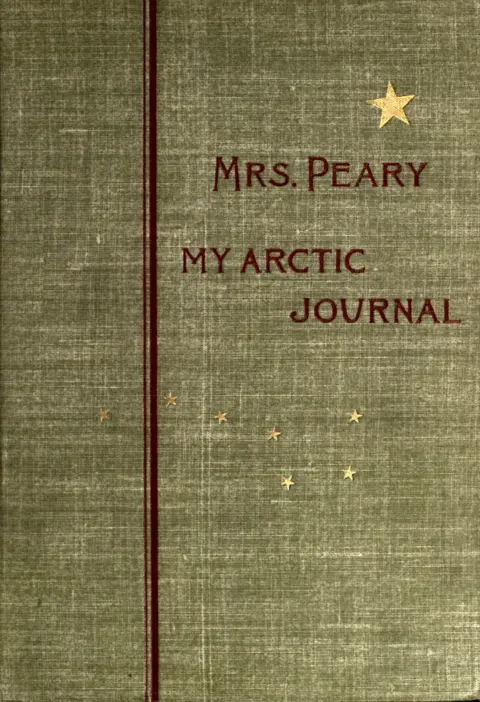
THE CLASSIC COLLECTION · 1893
"My Arctic Journal: A Year Among Ice-Fields and Eskimos" by Josephine Diebitsch Peary is a travel memoir written in the late 19th century. The book chronicles the author's experiences alongside her husband, Robert E. Peary, during their expedition in the Arctic regions of Greenland, where they lived for a year among isolated Eskimo communities. Josephine provides insights into the harsh realities of Arctic life, including survival in extreme conditions and interactions with the local Eskimo tribes. The opening of the memoir sets the scene for an exciting and challenging journey that began with the expedition's departure from New York in June 1891. Josephine describes the beauty and dangers of the expedition, including navigating through ice-filled waters and making landfall in Greenland. As they arrive at McCormick Bay, readers learn about the small Eskimo tribe they encounter, whose way of life is entirely foreign to them. Josephine shares her admiration for the resilience of the Eskimo people and the adversity they face, alongside her own struggles of adapting to the unique, frigid environment while completing daily tasks and exploring the breathtaking landscapes. The beginning suggests a blend of adventure, cultural observation, and personal growth, making it an intriguing read for those interested in exploration narratives and cross-cultural experiences.
Introduction adapted from the source catalogue; source summaries may be automatically generated.
Free to read · English · 59,988 words · No account needed
MAKE TIME FOR A GOOD BOOK
On by default. Untick to stop anonymous reading totals. Each page counts after 10 seconds in view. How this works.
Anonymous counting is on unless you have switched it off.
It was now the end of August, and active preparations were in progress for sending a party with provisions to establish an advance depot on the inland ice for the spring sledge journey across the great ice desert to the northern terminus of Greenland. It was decided that Astrup, Gibson, and Verhoeff should go on this trip, while Dr. Cook and Matt remained with Mr. Peary and myself at Redcliffe.
On September 3, all arrangements having been perfected for the inland ice-party, every one in the settlement, except Matt and Mané with her children, sailed for the head of McCormick Bay, where it had been decided that the boys should ascend the cliffs and attack the ice. Redcliffe House is about fifteen miles from the head of the bay, and this distance had to be rowed, for we got no favoring breeze. It was late in the evening when we rounded a point of land whence we could see the green valley stretching from the water’s edge back to the giant black cliffs, which here form the boundaries of the inland ice. The landscape was a beautiful one. As I looked I beheld moving objects on one of the hillsides, which, seen through the glass, seemed to me to be the size of a cow. We at once knew they were reindeer, and their apparent size was due to mirage. Astrup was landed with a Winchester at a point where he could go round and come upon the grazing herd from behind the hill; it was hoped they would not see him, and that he would bag quite a number. After landing Astrup we kept on until we were opposite the center of the valley; here our boat was run ashore, and we decided to camp.
Mr. Peary told me to take a run over the rocks and down the valley in order to get warm, as I had become chilled from sitting in the boat and not exercising for several hours; so after seeing him safely on the little knoll about twenty feet above the shore-line, where we intended to make camp, I strolled away. Upon climbing the hill, just back of the camping-ground, I came in sight of the herd of deer which we had seen from the boat, and as I watched them I saw the smoke and heard the report of Astrup’s rifle. In an instant they were scampering off in every direction, and although Astrup fired shot upon shot not one dropped. One of the animals, however, after running some distance, stumbled and fell, lay still for an instant, then got up, ran on a few yards, and fell again. As it did not rise I judged it had received one of Astrup’s bullets, and forgetting how deceptive distances are in the pure, clear air, I started on the run toward the prostrate creature, apparently not more than a mile distant. Happening to look back, I saw Dr. Cook and Ikwa coming in my direction, and waited for them. On reaching me the doctor said they were on their way to help Astrup bring in his game. I called his attention to the little white spot on the green grass, and told him it was a deer, and that I had seen it drop. As we could see nothing of Astrup, we decided to take care of the animal. Dr. Cook had his rifle loaded with twelve cartridges, Ikwa had a muzzle-loader charged, and an extra load for it besides, and I had on my cartridge-belt and revolver (a 38–caliber Colt). After walking—or trotting would perhaps express it better—for some distance, we came to a stream that flowed down the center of the valley throughout its length, which we had to cross in order to reach our destination. Fortunately the doctor had on his long-legged rubber boots, for we soon saw that the only way to get on the other side was to wade the stream. We tried it at different places, and finally the doctor found a place where he could cross. First taking his rifle and my revolver and belt of cartridges over, he returned for me and carried me across; then we continued in the direction of the white spot, which all this time had not moved. After traveling for nearly an hour we were near enough to see that beside the prostrate deer stood a tiny black-and-white creature, a fawn. Whether it saw us and whispered to its mother, I do not know; but immediately after we had made out the little one, the mother deer raised her head, looked at us, then rising slowly, started off at a moderate walk. We quickened our steps, and so did she. When within three hundred yards, Dr. Cook discharged his rifle several times, but only succeeded in wounding her in the fore leg, which did not seem to retard her progress in the least. Several times we were near enough to have shot her without any trouble, but we were so excited—a case of buck-fever, I believe the hunters call it—that she escaped every shot. To add to our difficulties the deer made for a neighboring lake, and in the effort to stop her before she reached it, we fired shot after shot until the doctor’s rifle was empty. There was now nothing for us to do but stand around and crouch behind the boulders in the hope that the poor wounded animal would come ashore within pistol-shot range. It was evident that she was too weak to swim across, and it was very touching to see how the little fawn would support its mother in the water. Once or twice she tried to climb out on the ice-foot, but the ice was not strong enough, and broke beneath her weight. We were thoroughly chilled and hungry by this time, but disliked the idea of returning empty-handed to camp after such a long absence. At last, just as we were talking of returning, we saw Astrup in the distance, and called to him to join us. When he came up to us he said he had had no luck. He had a few cartridges left in his rifle, which he expended on our victim without, however, harming her in the least. Astrup then urged us to return, as he, too, was tired out; but we were loath to leave our wounded deer, especially as we now knew it was only a matter of time when we should get her, for she could not hold out much longer. Nearer and nearer she came to the ice, finally leaning against the edge as if to gather strength, when suddenly the doctor darted over the ice-foot into the icy water, and before the startled animal realized his intention, he had her by her short horns, which were still in the velvet, and was pulling her slowly ashore. The little one then left its mother for the first time, ran as fast as it could over the rocks, and disappeared behind the cliffs.
Your reading position is saved on this browser. Take it to another device with a library code. Reading pages adapt to text, rather than matching a printed edition.
BEHIND THE BOOK
This eBook is for the use of anyone anywhere in the United States and most other parts of the world at no cost and with almost no restrictions whatsoever. You may copy it, give it away or re-use it under the terms of the Project Gutenberg License included with this eBook or online at www.gutenberg.org. If you are not located in the United States, you will have to check the laws of the country where you are located before using this eBook. Read the source licence.
The original source file, including credits and licence, is retained by this library. Request an original-format copy at no charge. Please include the book title and Project Gutenberg identifier #64549.
KEEP YOUR CURIOSITY GOING
Wilfrid Scawen Blunt
Wilfrid Scawen Blunt

E. W. (Edgar Watson) Howe
Francis Greenleaf Allinson & Anne C. E. (Anne Crosby Emery) Allinson
Cyrenus Cole

John Martineau