THE CLASSIC COLLECTION✦The Snow Baby: A true story with true picturesCLASSIC FREE BOOKS
The Snow Baby: A true story with true pictures
Josephine Diebitsch Peary
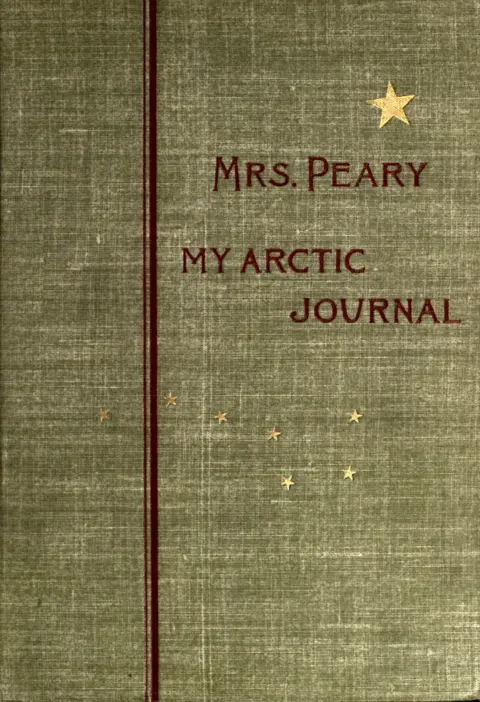
THE CLASSIC COLLECTION · 1893
"My Arctic Journal: A Year Among Ice-Fields and Eskimos" by Josephine Diebitsch Peary is a travel memoir written in the late 19th century. The book chronicles the author's experiences alongside her husband, Robert E. Peary, during their expedition in the Arctic regions of Greenland, where they lived for a year among isolated Eskimo communities. Josephine provides insights into the harsh realities of Arctic life, including survival in extreme conditions and interactions with the local Eskimo tribes. The opening of the memoir sets the scene for an exciting and challenging journey that began with the expedition's departure from New York in June 1891. Josephine describes the beauty and dangers of the expedition, including navigating through ice-filled waters and making landfall in Greenland. As they arrive at McCormick Bay, readers learn about the small Eskimo tribe they encounter, whose way of life is entirely foreign to them. Josephine shares her admiration for the resilience of the Eskimo people and the adversity they face, alongside her own struggles of adapting to the unique, frigid environment while completing daily tasks and exploring the breathtaking landscapes. The beginning suggests a blend of adventure, cultural observation, and personal growth, making it an intriguing read for those interested in exploration narratives and cross-cultural experiences.
Introduction adapted from the source catalogue; source summaries may be automatically generated.
Free to read · English · 59,988 words · No account needed
MAKE TIME FOR A GOOD BOOK
On by default. Untick to stop anonymous reading totals. Each page counts after 10 seconds in view. How this works.
Anonymous counting is on unless you have switched it off.
We retraced our steps past old Tooktoo Camp to the mouth of the river. Here we found that the tide had already risen a foot, and we continued our walk along the river-bank toward the head of the lake. On reaching it we found that it communicated with a second lake by a deep, roaring torrent, which, although narrower than the river below, was still too wide and deep to be crossed; so on we went till we reached the end of the second lake, and here it seemed as if we might walk around it by climbing along the lower edge of two glaciers, although we were by no means sure that a raging stream did not sweep down on the other side. Great rocks were continually rolling from the top of the glaciers, and I did not think it safe to venture. The scene was an impressive one. Black cliffs raise their heads over four great white glaciers, smooth as marble, and at their feet roars a furious torrent, till it merges into a broad lake, which looks as calm and unruffled as if this stream were only a drop in its depths. On each side of this stretch of water the valley is carpeted with soft green moss and yellow poppies, and fairly alive with the chirping and flitting of birds. We tarried here quite a while. I could not make up my mind to leave so beautiful a scene; besides, the only thing left for us to do now was to wait for low tide, which would be about one A. M., and then ford the river where we had crossed it in the morning. It was 8.45 P. M. when we again reached the mouth of the stream. The tide was high, but falling. Had we had something to eat we should not have minded the waiting. We kept moving in order to keep warm, until we thought that the tide had reached its ebb. As we neared the shore we could see no familiar line of rocks which indicated low tide, and on closer examination we were horrified to find a “high low tide.” Still we felt we must attempt to cross, and Matt started in, while I followed at his heels. The first step was over our knees, the next came mid-thigh on Matt, and then I backed out, for I knew that we were not near the deepest part yet; besides, the current was so strong that I could hardly keep my footing. We tried lower down, but with the same result. Even had we made up our minds to bear the cold water, we could not possibly have stood up against the current. We then determined to try it in the lake, but were baffled there as well. By this time we were pretty well drenched, almost to our waists, and yet the only thing for us to do was to wait for the noon low tide of the morrow. We sat down on a rock, took off our stockings and kamiks, and wrung the water out as best we could, then put them on again. I knew it would never do for us to sleep, or even sit still in our wet clothes, for there is always a cool breeze blowing, and the night temperatures average about 40°; yet the prospect of twelve hours more of tramping, when we had already tramped twelve and a half hours, with nothing to eat—we had only had coffee and a cracker before starting—and a cold fog settling down upon us, was anything but encouraging. I suggested that we go to the cache, where we had left the brandy and milk for the inland ice-party, and mix a drink of some of it, and then begin the climb to Nunatak Cache. This we did. I had my old enemy, the sick-headache, brought on by lack of food and the excitement, and consequently every step was agony, yet I knew I must keep on. Thoughts came crowding in upon me of my husband and my mother. We walked and walked until almost ready to drop with hunger, fatigue, and lack of sleep; then, as we climbed above the fog into the warm sunshine, we would sit down a few minutes, wrapping our heads in our handkerchiefs to keep off the mosquitos, which swarmed about us. As soon as one of us saw the other dozing we pushed on again. In this way we climbed through the ravine and in sight of Nunatak Cache, but it was impossible for me to go farther; my limbs trembled under me, and refused to act at my bidding. We returned to the river. At 11.30 this morning the welcome line of rocks indicating low tide made its appearance, and, to our great relief, we found that we were able to cross the stream. Two more thankful creatures never were than we when we found ourselves on dry land on our side of the “kook” (river) again. We were perfectly numb with cold from mid-thigh down, and so ran and pounded our feet and limbs for the three miles that intervened between the river and the tent, which we reached in an hour. Thus far we feel no ill results from our icy adventure.
Your reading position is saved on this browser. Take it to another device with a library code. Reading pages adapt to text, rather than matching a printed edition.
BEHIND THE BOOK
This eBook is for the use of anyone anywhere in the United States and most other parts of the world at no cost and with almost no restrictions whatsoever. You may copy it, give it away or re-use it under the terms of the Project Gutenberg License included with this eBook or online at www.gutenberg.org. If you are not located in the United States, you will have to check the laws of the country where you are located before using this eBook. Read the source licence.
The original source file, including credits and licence, is retained by this library. Request an original-format copy at no charge. Please include the book title and Project Gutenberg identifier #64549.
KEEP YOUR CURIOSITY GOING
Wilfrid Scawen Blunt
Wilfrid Scawen Blunt

E. W. (Edgar Watson) Howe
Francis Greenleaf Allinson & Anne C. E. (Anne Crosby Emery) Allinson
Cyrenus Cole

John Martineau