THE CLASSIC COLLECTION✦An outlaw’s diary: the CommuneCLASSIC FREE BOOKS
An outlaw’s diary: the Commune
Cécile Tormay
THE CLASSIC COLLECTION · 1875
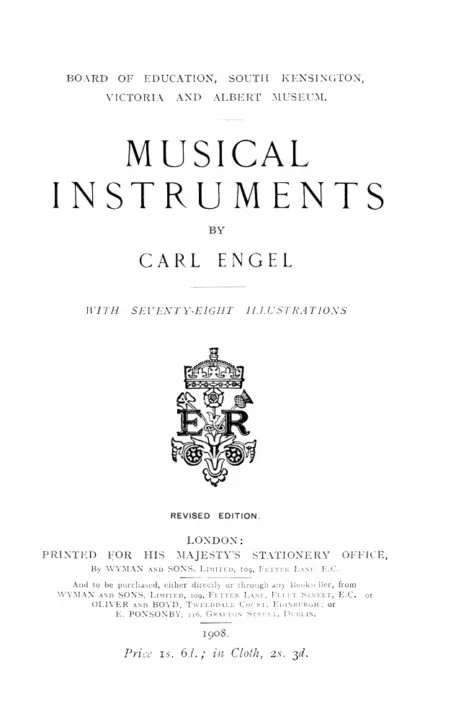
"Musical Instruments" by Carl Engel is a historical account written in the early 20th century. The work provides an in-depth exploration of musical instruments across various cultures and time periods, highlighting their evolution and significance throughout history. The book’s topic revolves around the extensive history of music and the diverse range of instruments that have been developed globally. The opening of the book begins with an introduction that emphasizes the universal appreciation for music as a fine art and traces the origin of musical instruments back to humanity's earliest inventions. Engel discusses the materials used in constructing instruments, noting how even primitive tribes possess unique instruments of their own. He touches on the cultural significance of these instruments, revealing how they reflect the identity of their respective societies, with specific examples like the incorporation of human skulls in African drums and the carved forms of instruments in other cultures. Overall, the beginning sets the stage for a detailed historical survey, showcasing the diverse global tapestry of musical heritage that the subsequent chapters will seek to expand upon.
Introduction adapted from the source catalogue; source summaries may be automatically generated.
Free to read · English · 43,460 words · No account needed
MAKE TIME FOR A GOOD BOOK
On by default. Untick to stop anonymous reading totals. Each page counts after 10 seconds in view. How this works.
Anonymous counting is on unless you have switched it off.
Handel’s harpsichord, 135.
Harmonica, 97.
Harmonicon, Chinese, 2, 37, 40.
Harmonicon, The, quoted, 126.
Harps, Anglo-Saxon, 87.
” Arabian, 53.
” Assyrian, 16, 28.
” Burmese, 16.
” Celtic, 87.
” Egyptian, 11.
” Finnish, 88.
” French, 112.
” German, 87.
” Greek, 28, 29.
” Hebrew, 19.
” Hindu, 50.
” Irish, 88, 110-112.
” mediæval, 89, 100-102.
” Persian, 53.
” Scandinavian, 87.
Harp-guitar, 110.
” lute, 110.
Harpsichord, 116, 121, 123.
” Handel’s, authenticity of, 135 seq.
Harpsichord-makers, 123, 136.
Harp-theorbo, 110.
Harpu, 88.
Harp-ventura, 110.
Hautboy, 126.
Haydn, 116.
Hebrew instruments, 19 seq.
Hentzner, Paul, quoted, 131.
Hichiriki, 45.
Hindu instruments, 3, 46, 52, 88, 89, 93.
Hindus, musical scale of, 50.
Holmos or mouth-piece, 35.
Horn, English, 127.
” Greek, 32.
” Hebrew, 24.
Hsiao, 42.
Hsüan, 42.
Hsüan-chung, 39.
Huanca, 72.
Huayllaca, 62.
Huayra-puhura, 63, 79.
Huehuetl, 71, 80.
Hydraulis, 32.
Icelandic instrument, 114.
Ikuta-goto, 44, 45.
Instrument makers, 106, 111, 114-116, 118, 122-126, 128, 129, 136,
137.
Instruments, decoration of, 2, 8, 11, 16, 39, 41, 42, 109, 112, 113,
115, 116, 123, 136.
Intervals, diatonic, 112.
” in American Indian instruments, 79.
Intervals in Chinese instruments, 39.
Intervals in Persian instruments, 53.
Irish bards, meetings of, 111.
” instruments, 89.
Isis, worship of, 36.
Italian instruments, 106-109, 113, 120, 123, 130.
Japanese instruments, 3, 4, 44 seq.
Jars, musical, 69.
Javanese instruments, 2, 3.
Jerusalem, Temple of, 19, 23.
Jew’s harp, 102.
Jinagovi, 52.
Jobel, 25.
Jones, Edward, quoted, 90.
Junk, 53.
Juruparis, 66.
Kach’-hapi, 47.
Kalmuks, trumpet of the, 80.
Kane, 46.
Kantele, 47, 88.
Kei, 45.
Kemángeh, 55.
Ken, 42.
Keras, 32.
Keren, 24.
Keyboards, instruments with, 120-125.
Khorsabad, 16.
Kinnor, 20.
Kiōto, bell at, 46.
Kithara, Asiatic, 27.
” Greek, 28, 29.
K’iu (wood), 41.
Ko-kiū, 44.
Kosà, 130.
Koto, 44.
Kouyunjik, 16.
Kratzenstein, 6.
Krotala, 32.
Ku, 41.
Kuan-tzŭ, 42.
K’uei, musician, 37.
Kuitra, 56, 108.
Kymbala, 32.
Langspiel, 114.
Laos, instruments of, 4, 42.
Launedda, 36.
Lay, T., quoted, 43.
Lei-ku, 41.
Leighton, Sir W., quoted, 130.
Lidl, Anton, 115.
Lionedda, 36.
Lira di braccio, 101.
Lituus, 35.
Lombrive, 10.
Lute, 104, 105, 116.
” Arab, 54.
” Hindu, 89.
” Japanese, 44.
” mediæval, 102.
” Moorish, 56.
” Tibetan, 43.
Lute-makers, principal, 106, 116.
Lutists, Arabian, 54, 55, 56.
Lydians, Kithara of, 28.
Lyra, German, 90.
” Greek, 28.
” Roman, 33.
Lyre, 84.
” Assyrian, 18.
” Greek, 27 seq.
” Hebrew, 20.
” Roman, 33.
Mace, Thomas, quoted, 104, 105, 119.
Machalath, 22, 25, 26.
Machol, 26.
Magadis, 27, 30, 52.
Magoudi, 52.
Magrepha, 23, 24.
Mam, 13.
Mandoline, 107, 108.
Mandora, 108.
Mandorina, 108.
Marimba, 82.
Martin, instrument-maker, 118.
Mattheson, quoted, 105.
Melozzo da Forlì, painting by, 97.
Melrose Abbey, sculpture at, 97.
Melville, Sir James, quoted, 120.
Menaaneim, 25.
Metzilloth, 25.
Metzilthaim, 25.
Mexican instruments, 59, 80 seq.
Miao-tsze, 43.
Middle Ages, instruments of the, 83.
Minnim, 22, 23.
Miriam, 25.
Mishrokitha, 23.
Monaulos, 31.
Monochord, 31, 92.
Moorish instruments, 56, 108.
Mosul, bas-relief from, 16.
Mozart, 107.
Munich Museum, vase in, 28.
Music, ancient books on, 48, 84.
” supposed origin of, 47.
Nabla, 30.
Nablas, 27.
Nablia, 34.
Nablum, 86, 100.
Naker, 56.
Naḳḳárah, 56.
Nakrys, 56.
Nara, bell near, 46.
Nebuchadnezzar, 18.
Nechiloth, 25, 26.
Nefer, 12.
Nekeb, 23.
Nevel, 19, 22, 30.
New Guinea, instruments of, 2.
New Zealand, instruments of, 2.
“Nibelungenlied,” The, 90.
Nimroud, 16, 18.
Nineveh, 16.
Nootka Sound, instrument of, 2.
Norwegian instruments, 113.
Nuy, 55.
Oboe da caccia, 127.
” d’amore, 127.
” Hindu, 79.
” lungo, 127.
” Persian, 55.
” piccolo, 127.
Ocarina, Chinese, 42.
Octave, Arabian, 54.
” Chinese, 39.
Octavina (Ottavino), 120.
Oliphant, 94.
Organ, Burmese, 42.
” Chinese, 42.
” English, 129.
” French, 129.
” Gamba stop in, 115.
” German, 129.
” Hebrew, 24.
” hydraulic, 32.
” pneumatic, 94.
” portative, 129, 130.
” positive, 129.
” Siamese, 42.
Organ-builders, German, 129.
Organ-harpsichord, 124.
Organistrum, 92, 99, 101.
Orchestras, mediæval, 99.
Orpheus, Chinese, 37.
Ottavino, or Octavina, 120.
Ovalle, Alonso de, quoted, 62.
Your reading position is saved on this browser. Take it to another device with a library code. Reading pages adapt to text, rather than matching a printed edition.
BEHIND THE BOOK
This eBook is for the use of anyone anywhere in the United States and most other parts of the world at no cost and with almost no restrictions whatsoever. You may copy it, give it away or re-use it under the terms of the Project Gutenberg License included with this eBook or online at www.gutenberg.org. If you are not located in the United States, you will have to check the laws of the country where you are located before using this eBook. Read the source licence.
The original source file, including credits and licence, is retained by this library. Request an original-format copy at no charge. Please include the book title and Project Gutenberg identifier #65505.
KEEP YOUR CURIOSITY GOING
Cécile Tormay

Moritz Busch
John L. Ransom
Frances Wright
Cécile Tormay

Mabel Potter Daggett