
Love and liberty
Alexandre Dumas
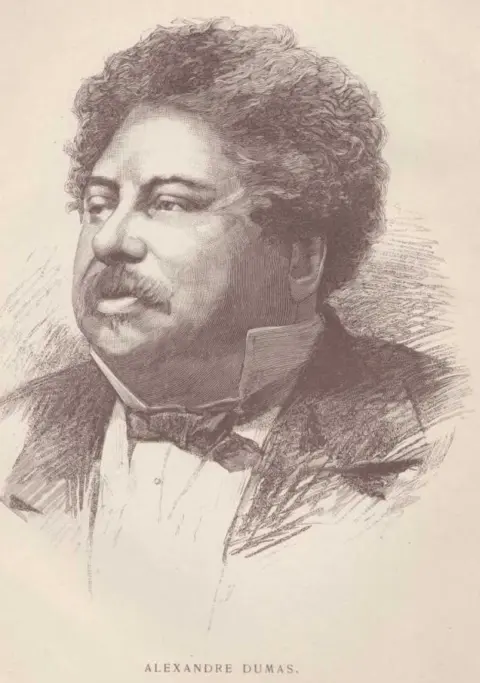
THE CLASSIC COLLECTION · 1838
"Murat" by Alexandre Dumas is a historical fiction novel written in the early 20th century. This captivating narrative revolves around Joachim Murat, a key figure in the Napoleonic era, and explores themes of loyalty, betrayal, and the quest for identity amidst political turmoil. Dumas takes us through Murat's dramatic life, particularly focusing on his exile and final attempts to reclaim his lost kingdom. The story begins just after the Battle of Waterloo when Murat finds himself cast out from power and struggling for survival. As he navigates his precarious position, he seeks refuge in places like Corsica with the help of loyal followers. As the plot unfolds, we witness his desperate maneuvers to return to Naples, the complexities of his past allegiances, and the tragic circumstances leading to his eventual capture and execution in Pizzo. Through this gripping portrayal, Dumas sheds light on Murat's internal conflicts and the historical context that shaped his fate, ultimately presenting a poignant reminder of the fleeting nature of power and glory.
Introduction adapted from the source catalogue; source summaries may be automatically generated.
Free to read · English · 14,649 words · No account needed
MAKE TIME FOR A GOOD BOOK
On by default. Untick to stop anonymous reading totals. Each page counts after 10 seconds in view. How this works.
Anonymous counting is on unless you have switched it off.
"General," he said, "believe that I distinguish in my mind the instrument which strikes me and the hand that wields that instrument. I should never have thought that Ferdinand would have had me shot like a dog; he does not hesitate apparently before such infamy. Very well. We will say no more about it. I have challenged my judges, but not my executioners. What time have you fixed for my execution?"
"Will you fix it yourself, sir?" said the general.
Murat pulled out a watch on which there was a portrait of his wife; by chance he turned up the portrait, and not the face of the watch; he gazed at it tenderly.
"See, general," he said, showing it to Nunziante; "it is a portrait of the queen. You know her; is it not like her?"
The general turned away his head. Murat sighed and put away the watch.
"Well, sire," said the registrar, "what time have you fixed?"
"Ah yes," said Murat, smiling, "I forgot why I took out my watch when I saw Caroline's portrait."
Then he looked at his watch again, but this time at its face.
"Well, it shall be at four o'clock, if you like; it is past three o'clock. I ask for fifty minutes. Is that too much, sir?"
The registrar bowed and went out. The general was about to follow him.
"Shall I never see you again, Nunziante?" said Murat.
"My orders are to be present at your death, sire, but I cannot do it."
"Very well, general. I will dispense with your presence at the last moment, but I should like to say farewell once more and to embrace you."
"I will be near, sire."
"Thank you. Now leave me alone."
"Sire, there are two priests here."
Murat made an impatient movement.
"Will you receive them?" continued the general.
"Yes; bring them in."
The general went out. A moment later, two priests appeared in the doorway. One of them was called Francesco Pellegrino, uncle of the man who had caused the king's death; the other was Don Antonio Masdea.
"What do you want here?" asked Murat.
"We come to ask you if you are dying a Christian?"
"I am dying as a soldier. Leave me."
Don Francesco Pellegrino retired. No doubt he felt ill at ease before Joachim. But Antonio Masdea remained at the door.
"Did you not hear me?" asked the king.
"Yes, indeed," answered the old man; "but permit me, sire, to hope that it was not your last word to me. It is not, the first time that I see you or beg something of you. I have already had occasion to ask a favour of you."
Your reading position is saved on this browser. Take it to another device with a library code. Reading pages adapt to text, rather than matching a printed edition.
Alexandre Dumas
Alexandre Dumas & Auguste Maquet
Alexandre Dumas
Alexandre Dumas
BEHIND THE BOOK
This eBook is for the use of anyone anywhere in the United States and most other parts of the world at no cost and with almost no restrictions whatsoever. You may copy it, give it away or re-use it under the terms of the Project Gutenberg License included with this eBook or online at www.gutenberg.org. If you are not located in the United States, you will have to check the laws of the country where you are located before using this eBook. Read the source licence.
The original source file, including credits and licence, is retained by this library. Request an original-format copy at no charge. Please include the book title and Project Gutenberg identifier #2755.
KEEP YOUR CURIOSITY GOING
Cécile Tormay

Moritz Busch
Coulson Kernahan
John L. Ransom

Maurice Baring
Frances Wright