
Transplanted
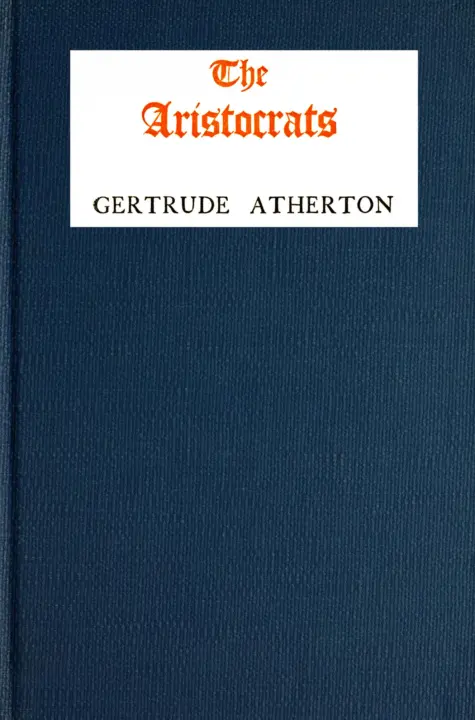
Gertrude Franklin Horn Atherton
THE CLASSIC COLLECTION · 1902
"Mrs. Pendleton's Four-in-hand" by Gertrude Franklin Horn Atherton is a novel written in the early 20th century. This engaging work explores themes of love, power dynamics, and the complexities of social relationships through the lens of a widow navigating romantic interests. The story unfolds as Mrs. Jessica Pendleton, recently bereaved, receives four simultaneous marriage proposals from her former admirers, unveiling a blend of humor and drama as she decides how to respond. The narrative centers on Mrs. Pendleton's clever manipulation of the situation after receiving the insincere proposals from her four suitors, who initially appear to be in jest. As Jessica navigates the unwitting competition between the men—Clarence Trent, Norton Boswell, Edward Dedham, and John Severance—she delights in maintaining her ruse while asserting her independence and intelligence. Each man's unique characteristics and responses add layers to Jessica's interactions, showcasing her wit and cunning. Ultimately, the story culminates in a confrontation at a seaside cliff, where Jessica's true intentions are exposed, leading to unexpected resolutions and revelations about her relationships and desires.
Introduction adapted from the source catalogue; source summaries may be automatically generated.
Free to read · English · 10,817 words · No account needed
MAKE TIME FOR A GOOD BOOK
On by default. Untick to stop anonymous reading totals. Each page counts after 10 seconds in view. How this works.
Anonymous counting is on unless you have switched it off.
“How odd that you should all find your way here the very first evening of your arrival!” And Jessica held out her hand with a placid smile. Miss Decker was more nervous, but five seasons were behind her. “Ah!” continued Mrs. Pendleton, “and Mr. Dedham, too! This is a most charming reunion!”
“Charming beyond expression!” said Severance.
Trent and Boswell being obliged to rise when Miss Decker went forward to meet the newcomers, Severance took the former’s chair, Dedham that of the future statesman.
“You are better?” whispered Severance. “I have been anxious.”
“Oh, I have been worried to death!” murmured Teddy in her other ear. “That wretched doctor had not only moved but gone out of town; and when I came back at last and found—”
“Mr. Severance,” exclaimed Trent, “you have my chair.”
“Is this your chair? You have good taste. A remarkably comfortable
chair.”
“You would oblige me—”
“By keeping it? Certainly. You were ever generous, but that I believe is a characteristic of genius.”
“Mrs. Pendleton,” said Boswell, plaintively, “as Mr. Dedham has taken my chair, I will take this stool at your feet.”
Trent was obliged to lean his elbow on the mantelpiece, for want of a better view of Mrs. Pendleton, and Miss Decker sat on the other side of Dedham.
“How are you, Teddy?” she said.
“Young and happy. You must let me congratulate you.”
“For what?”
“I see you wear Severance’s ring. Ah, Sev, did the ring suit your
sister?”
“To a T. Said it was her favourite stone.” He stopped abruptly. “What the deuce—” below his breath; and Jessica whispered hurriedly:—
“Edith was looking at it when Mr. Trent came in, and forgot to return
it.”
“Ah! Boswell, I am sure you are sitting on Mrs. Pendleton’s foot. By the way, how is your aunt?”
“Dead—better.”
“I wonder you could tear yourself away so soon,” said Trent, viciously. “You’d better be careful. She might make a new will.”
“Don’t worry. I spent the happiest fifteen minutes of my life with her this afternoon. She promised me all.” He turned to Severance. “You have been breaking hearts on the beach, I suppose.”
“Which is better, at all events, than breaking one’s head against a
stone wall.”
“Politics brought you here, I suppose, Mr. Trent,” interrupted Miss Decker. “I hear you made a stirring speech the other night.”
“I did. It was on the question of Radicalism in the Press versus Civil Service Reform. Something must be done to revolutionise this hotbed of iniquity, American politics. Such principles need courage, but when the hour comes the man must not be wanting—”
Your reading position is saved on this browser. Take it to another device with a library code. Reading pages adapt to text, rather than matching a printed edition.
Gertrude Franklin Horn Atherton
Gertrude Franklin Horn Atherton
Gertrude Franklin Horn Atherton
Gertrude Franklin Horn Atherton
BEHIND THE BOOK
This eBook is for the use of anyone anywhere in the United States and most other parts of the world at no cost and with almost no restrictions whatsoever. You may copy it, give it away or re-use it under the terms of the Project Gutenberg License included with this eBook or online at www.gutenberg.org. If you are not located in the United States, you will have to check the laws of the country where you are located before using this eBook. Read the source licence.
The original source file, including credits and licence, is retained by this library. Request an original-format copy at no charge. Please include the book title and Project Gutenberg identifier #51059.
KEEP YOUR CURIOSITY GOING
Coulson Kernahan

Maurice Baring
Frances Wright
Cécile Tormay

Frederic Jesup Stimson

W. H. P. (William Henry Pope) Jarvis