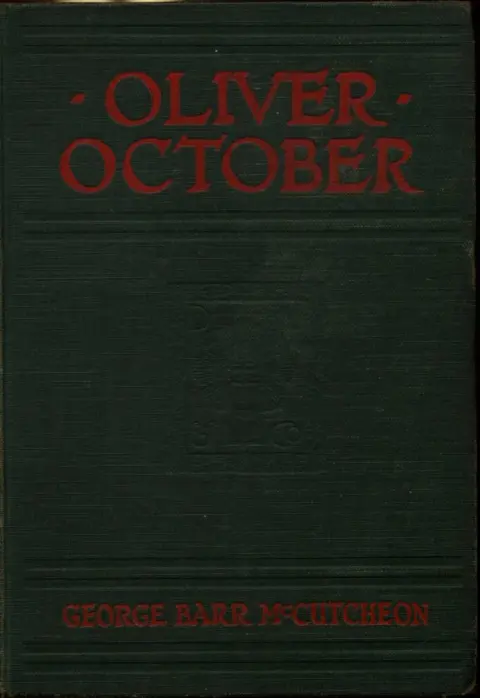
Oliver October
George Barr McCutcheon
THE CLASSIC COLLECTION · 1915
"Mr. Bingle" by George Barr McCutcheon is a novel written during the early 20th century, likely around the 1910s. The story centers around Mr. Thomas S. Bingle, a kind-hearted and gentle bookkeeper living in New York City, who shares a home with his wife, Mary. Despite their love for each other, they grapple with the heart-wrenching absence of children in their lives, which shapes their Christmas traditions and prompts them to invite the less fortunate into their home during the holidays, highlighting themes of kindness, loneliness, and the joy of giving. The opening of the novel introduces Mr. and Mrs. Bingle on Christmas Eve, filled with anticipation for their yearly gathering of children from the local community to celebrate the holiday. As they prepare their apartment and reflect on their longing for children, we meet the Sykes family, particularly the five excitable youngsters that bring vibrant energy to their otherwise quiet lives. Mr. Bingle is portrayed as a devoted man with a passion for reading "A Christmas Carol" to his guests, showcasing his sentimental nature and belief in the goodness of people. The narrative begins to build a backdrop that explores family, community, and the deep-seated yearning for parental connection, creating an emotional resonance that hints at the challenges and joys the Bingles will face as the story progresses.
Introduction adapted from the source catalogue; source summaries may be automatically generated.
Free to read · English · 86,385 words · No account needed
MAKE TIME FOR A GOOD BOOK
On by default. Untick to stop anonymous reading totals. Each page counts after 10 seconds in view. How this works.
Anonymous counting is on unless you have switched it off.
"How dare you speak to me?" she said in low, intense tones. Her eyes
were cold, unfriendly.
"I've been searching for you--" he began, eagerly, but her disdainful
laugh cut him short.
"Go away, please. I don't want to see you. There is nothing more to be said between us. It's all over, Dick. Don't speak to me again. I--I don't want the Bingles to know that I--"
"I must see you, Amy," he persisted. "It isn't all over. Now that I've found you, I'll see that I don't lose track of you again. We can't talk here. Where can I see you alone--"
"Sh!" she cautioned, and he respected the appeal in her dark, distressed eyes. Mr. Bingle had entered the room, and was greeted by a shout of delight from the children. The governess moved swiftly away from the young man's side, mingling with the nurses by the fireplace.
Mr. Bingle, hurrying toward the semi-circle of youngsters was surprised by a genial slap on the back from the visibly excited Flanders.
"Wonderful!" exclaimed the young man, his face radiant. "Wonderful!"
"Aren't they?" cried Mr. Bingle, pleased.
"I don't mean the--Ahem! They certainly are, Mr. Bingle. I expect this to be the most beautiful Christmas Eve in all my life, sir. I shall never be able to thank you for--"
"Tush, tush! Now come along. I want to introduce you to the young ladies and gentlemen. Imogene, my dear, this is Mr. Flanders. Kathleen, shake hands with--oh, I beg pardon, I ought to have presented you to the Fairy Princess. Miss Fairweather, just a moment, please. I want you to meet my friend, Mr. Flanders, of the Banner. Well, well, are we all here? Let me see: one, two, three--no, hold up your hands as I call the roll. Strict attention, Mr. Flanders, and you'll know which is which--I say, Flanders, would you mind looking this way, please? Children first, on an occasion like this, sir. Grown-ups don't count. How is your headache, Miss Fairweather? Now, speak up, children. Answer to your names--and how to Mr. Flanders, while you're about it."
Planting himself in front of the row of eager children, grasping Flanders's arm with one hand, and employing the other in a sort of counting-off process, he called the roll.
Kathleen, exquisitely dressed and radiant with joy, a dainty miss who looked to be fourteen but was said to be twelve, curtsied to Flanders, who bowed low, his roving eye unwilling to relax its interest in the flushed face of the governess. Then came Frederick, a sturdy youngster; Marie Louise, a solemn-eyed ten-year-old; Wilberforce, Reginald, Henrietta, Guinevere, Harold, Rosemary, Rutherford, and last of all Imogene, who whimpered.
Your reading position is saved on this browser. Take it to another device with a library code. Reading pages adapt to text, rather than matching a printed edition.
George Barr McCutcheon
George Barr McCutcheon
George Barr McCutcheon
George Barr McCutcheon
BEHIND THE BOOK
This eBook is for the use of anyone anywhere in the United States and most other parts of the world at no cost and with almost no restrictions whatsoever. You may copy it, give it away or re-use it under the terms of the Project Gutenberg License included with this eBook or online at www.gutenberg.org. If you are not located in the United States, you will have to check the laws of the country where you are located before using this eBook. Read the source licence.
The original source file, including credits and licence, is retained by this library. Request an original-format copy at no charge. Please include the book title and Project Gutenberg identifier #5963.
KEEP YOUR CURIOSITY GOING
Coulson Kernahan

Maurice Baring
Frances Wright
Cécile Tormay

Frederic Jesup Stimson

W. H. P. (William Henry Pope) Jarvis