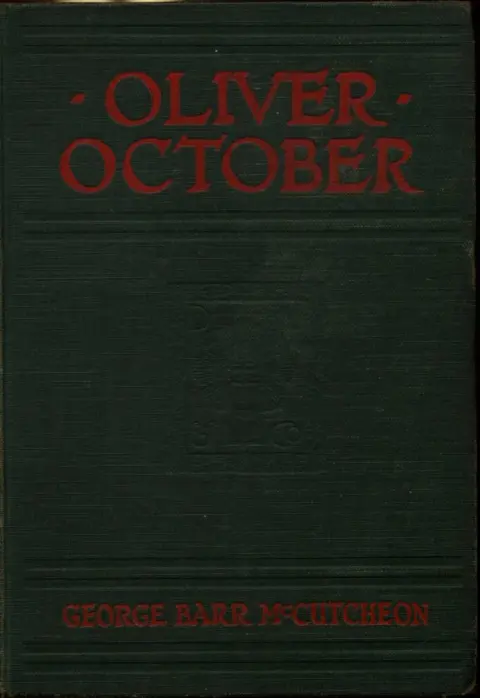
Oliver October
George Barr McCutcheon
THE CLASSIC COLLECTION · 1915
"Mr. Bingle" by George Barr McCutcheon is a novel written during the early 20th century, likely around the 1910s. The story centers around Mr. Thomas S. Bingle, a kind-hearted and gentle bookkeeper living in New York City, who shares a home with his wife, Mary. Despite their love for each other, they grapple with the heart-wrenching absence of children in their lives, which shapes their Christmas traditions and prompts them to invite the less fortunate into their home during the holidays, highlighting themes of kindness, loneliness, and the joy of giving. The opening of the novel introduces Mr. and Mrs. Bingle on Christmas Eve, filled with anticipation for their yearly gathering of children from the local community to celebrate the holiday. As they prepare their apartment and reflect on their longing for children, we meet the Sykes family, particularly the five excitable youngsters that bring vibrant energy to their otherwise quiet lives. Mr. Bingle is portrayed as a devoted man with a passion for reading "A Christmas Carol" to his guests, showcasing his sentimental nature and belief in the goodness of people. The narrative begins to build a backdrop that explores family, community, and the deep-seated yearning for parental connection, creating an emotional resonance that hints at the challenges and joys the Bingles will face as the story progresses.
Introduction adapted from the source catalogue; source summaries may be automatically generated.
Free to read · English · 86,385 words · No account needed
MAKE TIME FOR A GOOD BOOK
On by default. Untick to stop anonymous reading totals. Each page counts after 10 seconds in view. How this works.
Anonymous counting is on unless you have switched it off.
Melissa, crimson to her throat, fled. Mr. Diggs passed his hand over his brow, as if to clear his brain, and then stammered in a voice that strove hard to regain its former impressiveness:
"Yes, sir, it--it is all right, sir. Quite all right, sir. As right as
can be, sir."
"Right as rain," proclaimed Mr. Bingle, resorting to a habit of imitation that had marked his progress during the past few years of observation. He had heard the imposing Diggs say it, many times over. It was quite the proper thing to say, of course--apparently on any and all occasions--but, for the life of him, Mr. Bingle couldn't grasp the significance of the simile. "And now, Diggs, THAT being settled, is everything else all right?" He surveyed the great, gaily bedecked room with an eye that took in the smallest detail.
"I think so, sir," said Diggs, slowly recovering. "You will hobserve, sir, that I have added the necessary new chair--the 'igh-chair over here, sir, for little Miss Him--Imogene."
"I see. We make it a point, Mr. Flanders, to get a new baby at least once a year. The first year, as I explained, we had three. Two or three years ago, one came in May and another in September."
"Mental arithmetic gives you twelve in all," said young Mr. Flanders.
"Eleven. We lost one in 1906. Little Harriet."
"Eleanor, sir, begging your pardon," corrected Diggs.
"Right. Thank you, Diggs. Malnutrition. We never should have had her. There goes the door-bell, Tell Mrs. Bingle that Mr. and Mrs. Force have arrived, and give Mr. Force a drink before she comes down."
"Very good, sir." Diggs retired with gravity.
"President of our bank, you know. Mr. Sydney Force," explained Mr.
Bingle.
"I know. The husband of Mrs. Sydney Force," said Flanders, a twinkle in
his grey eyes.
"Sit down, Mr. Flanders. I'd ask you to have a cigar, but the nurses say that smoke isn't good for the children. Force always smokes here. I can't tell him not to, you see. He wouldn't come again." In that bit of ingenuousness, Mr. Bingle exposed the family state of mind in respect to their aristocratic neighbours. "Now, this is where we have the reading. Permit me to call your attention to the way we arrange the--er--the auditorium, you might say. That's where I sit--over there. I'm glad you've decided to stay and hear The Christmas Carol. It will do you good, Mr. Flanders. You'll be a better man for it. There is a train in at nine-fifty-five. We'll not be interrupted here, so fire away. I'm ready to be interviewed."
Your reading position is saved on this browser. Take it to another device with a library code. Reading pages adapt to text, rather than matching a printed edition.
George Barr McCutcheon
George Barr McCutcheon
George Barr McCutcheon
George Barr McCutcheon
BEHIND THE BOOK
This eBook is for the use of anyone anywhere in the United States and most other parts of the world at no cost and with almost no restrictions whatsoever. You may copy it, give it away or re-use it under the terms of the Project Gutenberg License included with this eBook or online at www.gutenberg.org. If you are not located in the United States, you will have to check the laws of the country where you are located before using this eBook. Read the source licence.
The original source file, including credits and licence, is retained by this library. Request an original-format copy at no charge. Please include the book title and Project Gutenberg identifier #5963.
KEEP YOUR CURIOSITY GOING
Coulson Kernahan

Maurice Baring
Frances Wright
Cécile Tormay

Frederic Jesup Stimson

W. H. P. (William Henry Pope) Jarvis