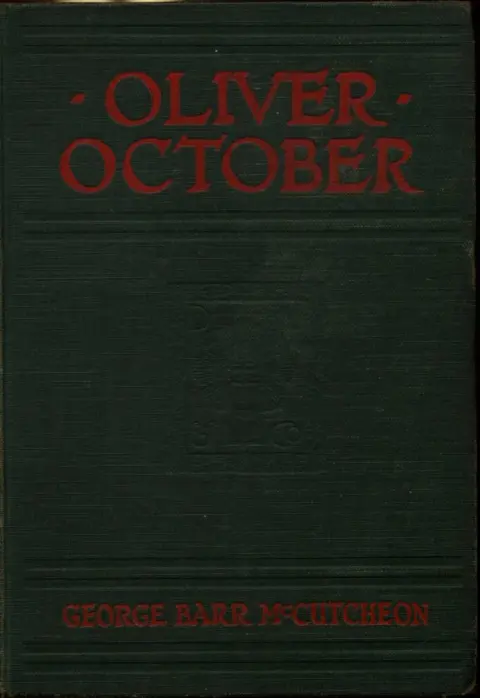
Oliver October
George Barr McCutcheon
THE CLASSIC COLLECTION · 1915
"Mr. Bingle" by George Barr McCutcheon is a novel written during the early 20th century, likely around the 1910s. The story centers around Mr. Thomas S. Bingle, a kind-hearted and gentle bookkeeper living in New York City, who shares a home with his wife, Mary. Despite their love for each other, they grapple with the heart-wrenching absence of children in their lives, which shapes their Christmas traditions and prompts them to invite the less fortunate into their home during the holidays, highlighting themes of kindness, loneliness, and the joy of giving. The opening of the novel introduces Mr. and Mrs. Bingle on Christmas Eve, filled with anticipation for their yearly gathering of children from the local community to celebrate the holiday. As they prepare their apartment and reflect on their longing for children, we meet the Sykes family, particularly the five excitable youngsters that bring vibrant energy to their otherwise quiet lives. Mr. Bingle is portrayed as a devoted man with a passion for reading "A Christmas Carol" to his guests, showcasing his sentimental nature and belief in the goodness of people. The narrative begins to build a backdrop that explores family, community, and the deep-seated yearning for parental connection, creating an emotional resonance that hints at the challenges and joys the Bingles will face as the story progresses.
Introduction adapted from the source catalogue; source summaries may be automatically generated.
Free to read · English · 86,385 words · No account needed
MAKE TIME FOR A GOOD BOOK
On by default. Untick to stop anonymous reading totals. Each page counts after 10 seconds in view. How this works.
Anonymous counting is on unless you have switched it off.
"My Jean is very proud," explained Madame Rousseau, dabbing her nose and eyes with a bit of a powder rag. "He is so obstinate, too. But M'sieur Rouquin will talk sense into his head, never fear."
There was an awkward silence. Finally Mrs. Bingle spoke.
"Is your husband a descendant of the painter?"
Madame Rousseau looked surprised.
"He IS the painter, Madame."
"The--impossible! I refer to the great Rousseau of the 1880 school."
"Oh, I see. No, no--he is not that one. Jean was not yet born. Mon dieu, was there another Rousseau?"
"There was," said Mrs. Bingle tartly. "Jean is the painter of to-day. He is great, he is splendid, he is magnificent. But, la la! he is so poor!"
"That seems to establish him all right," said Mr. Bingle.
Rouquin and Jean reappeared. Both were smiling cheerfully. Jean affected a somewhat degage manner and a perceptible swagger.
"Very well, M'sieur," he said. "I'll swear to it."
"Then I shall leave the details to my attorney, who, you will discover, is a most conscientious, dependable person. In the meantime, when will it be convenient for Dr. Fiddler to examine Napoleon?"
Rouquin explained at some length in rapid French, and Madame Rousseau was once more consoled. Jean appeared to be somewhat bored. He yawned, in fact.
"And now," cried Monsieur Rouquin in a great voice, "I have a plan. Let us celebrate the birth of Monsieur Napoleon Bingle by dining together at Pierre's. This day he is born again--or, at least, prospectively born. Life for him really begins to-day--the sixth of March. It is my treat! I shall be the host on this memorable occasion. Pierre shall give to us the best duckling in his larder and the rarest bottle of--"
"But my dear Rouquin," began Mr. Bingle.
"I implore you, kind friend, to honour me with your presence this evening. The greatest day of my life shall be this one if you but consent to grace my board with your lovely lady. And poor Madame Rousseau and her amiable husband shall not be the ghosts at the feast, as one might suspect, but joyful spirits. To them we will drink a toast of good will and better luck next time, and they may drink to you, madame and sir, the health of one grand Napoleon Bingle, in whose past they both shared but whose future can only be a--"
"Oh, I say, Rouquin," broke in Monsieur Jean languidly, "why not make it 'many happy returns of the day'? That's the real issue."
Your reading position is saved on this browser. Take it to another device with a library code. Reading pages adapt to text, rather than matching a printed edition.
George Barr McCutcheon
George Barr McCutcheon
George Barr McCutcheon
George Barr McCutcheon
BEHIND THE BOOK
This eBook is for the use of anyone anywhere in the United States and most other parts of the world at no cost and with almost no restrictions whatsoever. You may copy it, give it away or re-use it under the terms of the Project Gutenberg License included with this eBook or online at www.gutenberg.org. If you are not located in the United States, you will have to check the laws of the country where you are located before using this eBook. Read the source licence.
The original source file, including credits and licence, is retained by this library. Request an original-format copy at no charge. Please include the book title and Project Gutenberg identifier #5963.
KEEP YOUR CURIOSITY GOING
Coulson Kernahan

Maurice Baring
Frances Wright
Cécile Tormay

Frederic Jesup Stimson

W. H. P. (William Henry Pope) Jarvis