THE CLASSIC COLLECTION✦My diaries, being a personal narrative of events 1888-1914, Part 2 (1900-1914)CLASSIC FREE BOOKS
My diaries, being a personal narrative of events 1888-1914, Part 2 (1900-1914)
Wilfrid Scawen Blunt
THE CLASSIC COLLECTION · 1882
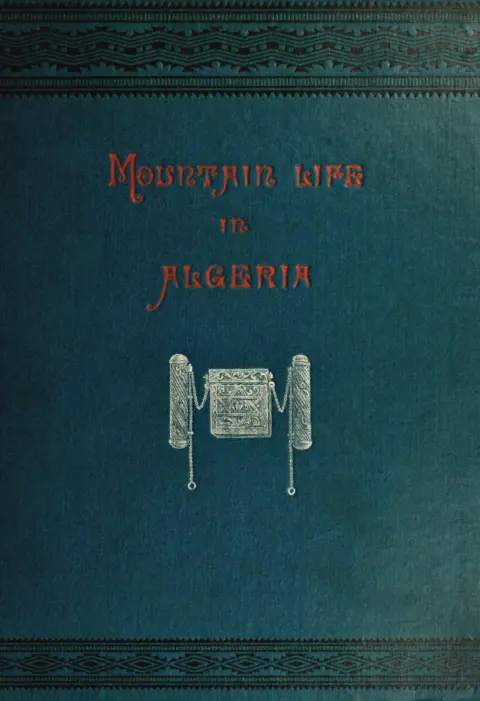
"Mountain Life in Algeria" by Edgar Barclay is a travel account written in the late 19th century. The narrative focuses on the author's exploration of the Kabylie region, a mountainous area inhabited by an indigenous Berber people distinct from the Arabs, and offers insights into their customs, landscape, and daily life. The author aims not only to inspire interest in this lesser-known region among potential tourists but also to document the beauty and simplicity of the kabyle lifestyle. At the start of the book, Barclay introduces the geography of Algeria and the unique culture of the Kabyle people, emphasizing their hospitality customs and traditional dwelling structures. He describes his preparations to traverse the mountainous terrain with his companion Muirhead, as well as their amusing encounters with local inhabitants. The duo sets out on their journey to the Aïth Ménguellath tribe and begins to observe the scenic beauty of the region, noting the flourishing landscapes, the agricultural practices of the Kabyles, and their rustic lifestyle that seems to retain elements of ancient rural communities.
Introduction adapted from the source catalogue; source summaries may be automatically generated.
Free to read · English · 36,329 words · No account needed
MAKE TIME FOR A GOOD BOOK
On by default. Untick to stop anonymous reading totals. Each page counts after 10 seconds in view. How this works.
Anonymous counting is on unless you have switched it off.
One remarkable feature of Kabylia is the fertility even of the high ridges. In the tribe of the Beni Ienni there are fields of wheat and tobacco on the top of the mountain, both crops requiring deep soil. The plough is of the simplest description, and is carried out to the fields on the shoulder of the ploughman, who drives a couple of active oxen before him. The yoke is very long in order to give freedom of action to the beasts when turning on difficult ground.
The Kabyle begins operations by storing grain in his folded burnous; this he sows broadcast over the land; he next proceeds to plough in. The oxen scramble up and down, and in and out, among silvery-stemmed fig-trees; the driver urging them with a long rod, and with constant exhortations to work properly, such as, ‘Now forwards; keep higher, higher, mind the fig-tree, turn, now turn, forwards again, oh sons of infidel ones!’ Sometimes great pains are taken with a field, it is ploughed twice or thrice, and all weeds carefully destroyed. Homer describes ploughing:
So when two lordly bulls, with equal toil,
Force the bright ploughshare through the fallow soil,
Join’d to one yoke the stubborn earth they tear,
And trace large furrows with the shining share:
O’er their huge limbs the foam descends in snow
And streams of sweat down their sour foreheads flow.
A similar picture is given in the ‘Georgics.’
While mountain-snows dissolve against the sun,
And streams yet new from precipices run,
Ev’n in this early dawning of the year
Produce the plough, and yoke the sturdy steer.
And goad him till he groans beneath his toil,
Till the bright share is bury’d in the soil.
I give an illustration of this subject. A plough carves its way slowly through the soil, a crane stands attendant, another flies free along the valley.
Mark well the flow’ring almonds in the wood.
If od’rous blooms the bearing branches load,
The glebe will to answer the Sylvan reign,
Great heats will follow, and large crops of grain.
There is a more detailed account of ploughing in the ‘Works and Days’ of Hesiod; it is so faithful a picture in all particulars of what I have seen in Kabylia, that I cannot refrain from quoting a few sentences. He mentions the arrival of the cranes from Africa as a sign for commencing work. In Kabylia they remain all the winter through.
Your reading position is saved on this browser. Take it to another device with a library code. Reading pages adapt to text, rather than matching a printed edition.
BEHIND THE BOOK
This eBook is for the use of anyone anywhere in the United States and most other parts of the world at no cost and with almost no restrictions whatsoever. You may copy it, give it away or re-use it under the terms of the Project Gutenberg License included with this eBook or online at www.gutenberg.org. If you are not located in the United States, you will have to check the laws of the country where you are located before using this eBook. Read the source licence.
The original source file, including credits and licence, is retained by this library. Request an original-format copy at no charge. Please include the book title and Project Gutenberg identifier #71379.
KEEP YOUR CURIOSITY GOING
Wilfrid Scawen Blunt
Wilfrid Scawen Blunt

E. W. (Edgar Watson) Howe
Francis Greenleaf Allinson & Anne C. E. (Anne Crosby Emery) Allinson
Cyrenus Cole

John Martineau