THE CLASSIC COLLECTION✦My diaries, being a personal narrative of events 1888-1914, Part 2 (1900-1914)CLASSIC FREE BOOKS
My diaries, being a personal narrative of events 1888-1914, Part 2 (1900-1914)
Wilfrid Scawen Blunt
THE CLASSIC COLLECTION · 1882
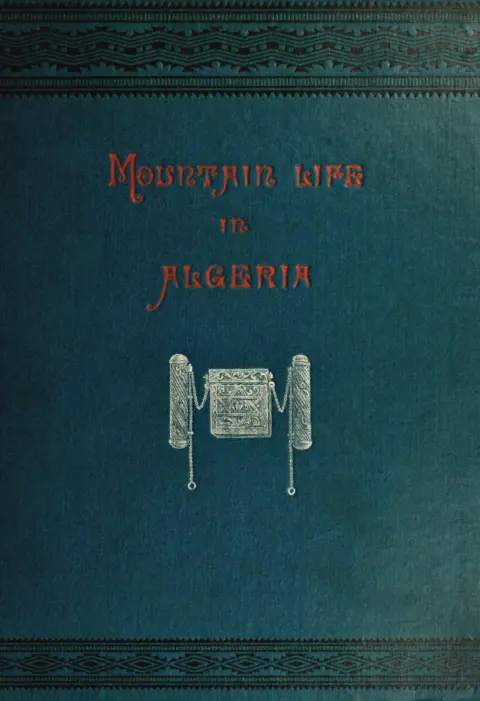
"Mountain Life in Algeria" by Edgar Barclay is a travel account written in the late 19th century. The narrative focuses on the author's exploration of the Kabylie region, a mountainous area inhabited by an indigenous Berber people distinct from the Arabs, and offers insights into their customs, landscape, and daily life. The author aims not only to inspire interest in this lesser-known region among potential tourists but also to document the beauty and simplicity of the kabyle lifestyle. At the start of the book, Barclay introduces the geography of Algeria and the unique culture of the Kabyle people, emphasizing their hospitality customs and traditional dwelling structures. He describes his preparations to traverse the mountainous terrain with his companion Muirhead, as well as their amusing encounters with local inhabitants. The duo sets out on their journey to the Aïth Ménguellath tribe and begins to observe the scenic beauty of the region, noting the flourishing landscapes, the agricultural practices of the Kabyles, and their rustic lifestyle that seems to retain elements of ancient rural communities.
Introduction adapted from the source catalogue; source summaries may be automatically generated.
Free to read · English · 36,329 words · No account needed
MAKE TIME FOR A GOOD BOOK
On by default. Untick to stop anonymous reading totals. Each page counts after 10 seconds in view. How this works.
Anonymous counting is on unless you have switched it off.
Oh alack! alack! Oh dear one, most dear,
Come now—to the place we have spoken of.
Oh grafted apple! thy love kills me!
An old grey head reposes on thy arm.
Oh Thithen! Thithen! with the motley-coloured girdle,
Oh sweet apple! grafted upon a root.
Beauty to marvel at have the Aïth Ouagóuenoun,
Their skin is sleek, their eyes are dark.
Oh winged bird! rest thou near to her upon the figtree,
When Yamina goes forth, kiss me her little cheek.
Even amidst the pomp and splendour of imperial Rome, marriage festivals must have presented some curious resemblances to such primitive customs as I have described, doubtless owing to unrecorded common causes in the remote past.
The bride was brought home in procession, accompanied by the singing of a song and playing on the flute; she was carried over the threshold, and in the evening there was a marriage feast. This habit of carrying the bride was accounted for in various ways.
‘Concerning the bride they do not allow her to step over the threshold of the house, but people sent forward carry her over, perhaps because they in old time seized upon women and compelled them in this manner.’[5]
Another explanation, and I think a far less probable one, is that she thus avoided the chance of tripping at the threshold, which would have been considered an omen of bad fortune. To most people it would appear a sufficiently bad augury if she required help at such a moment to prevent her stumbling. Why should she stumble? ‘Carefully raise over the threshold thy feet, O bride! Without tripping begin this path, in order that for thy husband thou mayest always be secure.’
Let the faithful threshold greet,
With omens fair, those lovely feet,
Lightly lifted o’er;
Let the garlands wave and bow
From the lofty lintel’s brow
That bedeck the door.
See the couch with crimson dress
Where, seated in a deep recess,
With expectation warm,
The bridegroom views her coming near;
The slender youth that led her here
May now release her arm.
In early times, the marriage banquet was not a mere matter of ceremony. It was desirable to have as many witnesses as possible, and such were the guests. At Greek marriages there was likewise a procession with song and flute accompaniment, a feast in the evening, and songs and dance before the nuptial chamber.
Your reading position is saved on this browser. Take it to another device with a library code. Reading pages adapt to text, rather than matching a printed edition.
BEHIND THE BOOK
This eBook is for the use of anyone anywhere in the United States and most other parts of the world at no cost and with almost no restrictions whatsoever. You may copy it, give it away or re-use it under the terms of the Project Gutenberg License included with this eBook or online at www.gutenberg.org. If you are not located in the United States, you will have to check the laws of the country where you are located before using this eBook. Read the source licence.
The original source file, including credits and licence, is retained by this library. Request an original-format copy at no charge. Please include the book title and Project Gutenberg identifier #71379.
KEEP YOUR CURIOSITY GOING
Wilfrid Scawen Blunt
Wilfrid Scawen Blunt

E. W. (Edgar Watson) Howe
Francis Greenleaf Allinson & Anne C. E. (Anne Crosby Emery) Allinson
Cyrenus Cole

John Martineau