THE CLASSIC COLLECTION✦My diaries, being a personal narrative of events 1888-1914, Part 2 (1900-1914)CLASSIC FREE BOOKS
My diaries, being a personal narrative of events 1888-1914, Part 2 (1900-1914)
Wilfrid Scawen Blunt
THE CLASSIC COLLECTION · 1882
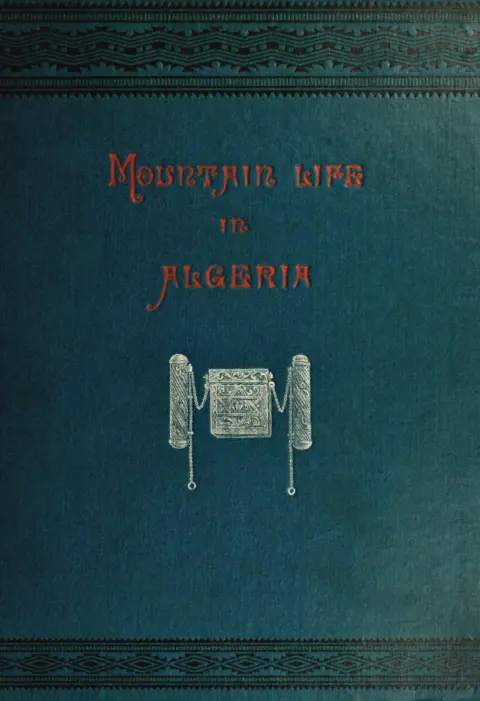
"Mountain Life in Algeria" by Edgar Barclay is a travel account written in the late 19th century. The narrative focuses on the author's exploration of the Kabylie region, a mountainous area inhabited by an indigenous Berber people distinct from the Arabs, and offers insights into their customs, landscape, and daily life. The author aims not only to inspire interest in this lesser-known region among potential tourists but also to document the beauty and simplicity of the kabyle lifestyle. At the start of the book, Barclay introduces the geography of Algeria and the unique culture of the Kabyle people, emphasizing their hospitality customs and traditional dwelling structures. He describes his preparations to traverse the mountainous terrain with his companion Muirhead, as well as their amusing encounters with local inhabitants. The duo sets out on their journey to the Aïth Ménguellath tribe and begins to observe the scenic beauty of the region, noting the flourishing landscapes, the agricultural practices of the Kabyles, and their rustic lifestyle that seems to retain elements of ancient rural communities.
Introduction adapted from the source catalogue; source summaries may be automatically generated.
Free to read · English · 36,329 words · No account needed
MAKE TIME FOR A GOOD BOOK
On by default. Untick to stop anonymous reading totals. Each page counts after 10 seconds in view. How this works.
Anonymous counting is on unless you have switched it off.
The day on which ‘bon soir’ was revealed to us,
We received a blow on the jaw.
We were nailed in prison.
The day on which ‘bon jour’ was revealed to us,
We received a blow on the nose.
Blessings have ceased.
The day on which ‘merci’ was revealed to us,
We were taken by the throat.
A sheep inspires more fear than we.
The day on which ‘cochon’ was revealed to us,
A dog had more honour than we.
The farmer has bought a mule.
The day on which ‘frère’ was revealed to us,
We received a kick on the knee.
We wade in shame up to the breast.
The day on which ‘diable’ was revealed to us,
We received a blow which made us mad.
We have become porters of dung.
One lovely day, bright and cloudless, on approaching the cemetery of Thililit, we heard the chanting of many voices. There was a funeral. The corpse, wrapped closely round in a white sheet and carried on a stretcher, was laid on the ground; a Kabyle sat beside and led the chant, while the friends of the dead man, in picturesque groups, stood round the grave; one carried a crown of oleander. The body was lowered, the earth filled in, and flagstones fastened down on the top; there was another chant, and then the people dispersed. The cattle, sheep, and goats grazed unconcernedly around; the pastoral pipe but halted an hour in its soft-toned warblings. When it recommenced, it might perchance have mourned the loss of a brother piper, in the fashion of antique measures:
‘The fountain nymphs through the wood mourn for thee, and their tears become waters; and echo amid the rocks laments, because thou art mute, and mimics no more thy lips; and at thy death, the trees have cast off their fruit, and the flowers have all withered; good milk hath not flowed from ewes, nor honey from hives, but it has perished in the wax, wasted with grief; for no longer is it meet, now that thy honey is lost, to gather that.’
The long line of mourners issuing from the cemetery was a beautiful spectacle; golden reflections in shadowed burnouses harmonising charmingly with the lichened tombstones. A youth only remained behind, the son of the deceased; he sat upon the tomb wailing.
I have sometimes seen locks of hair laid upon graves, reminding of
similar Greek offerings.
In the play of ‘Electra,’ Orestes says:—
first honouring my father’s grave,
As the god bade us, with libations pure and tresses from our brow.
Electra at her father’s tomb says to her sister:
And then do thou,
Your reading position is saved on this browser. Take it to another device with a library code. Reading pages adapt to text, rather than matching a printed edition.
BEHIND THE BOOK
This eBook is for the use of anyone anywhere in the United States and most other parts of the world at no cost and with almost no restrictions whatsoever. You may copy it, give it away or re-use it under the terms of the Project Gutenberg License included with this eBook or online at www.gutenberg.org. If you are not located in the United States, you will have to check the laws of the country where you are located before using this eBook. Read the source licence.
The original source file, including credits and licence, is retained by this library. Request an original-format copy at no charge. Please include the book title and Project Gutenberg identifier #71379.
KEEP YOUR CURIOSITY GOING
Wilfrid Scawen Blunt
Wilfrid Scawen Blunt

E. W. (Edgar Watson) Howe
Francis Greenleaf Allinson & Anne C. E. (Anne Crosby Emery) Allinson
Cyrenus Cole

John Martineau