THE CLASSIC COLLECTION✦The Romance of His Life, and Other RomancesCLASSIC FREE BOOKS
The Romance of His Life, and Other Romances
Mary Cholmondeley
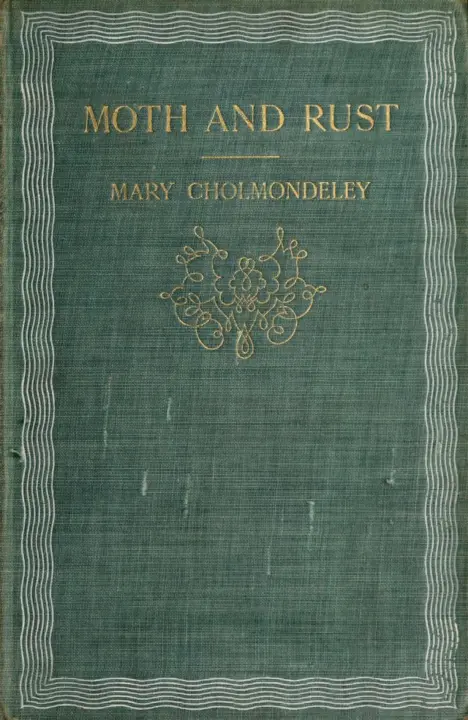
THE CLASSIC COLLECTION · 1902
"Moth and Rust; Together with Geoffrey's Wife and The Pitfall" by Mary Cholmondeley is a collection of stories written in the early 20th century. The work features themes of social class, relationships, and the various perceptions of wealth and morality through the lives of its characters. The central figure, Janet Black, is portrayed as a young woman of notable beauty and a complex character, navigating societal expectations and her romantic entanglements within the context of a traditional English setting. The opening of this collection introduces us to a village church service where the vicar's sermon resonates with the congregation, highlighting the contrast between their simple lives and the affluent Squire's family seated nearby. Janet, engaged to George Trefusis, is depicted as beautiful yet self-conscious about her social standing, particularly in relation to George's family. Their courtship, portrayed with innocence and quiet reflection, sets the stage for the tensions that arise from class differences and societal expectations. As the narrative unfolds, we see early glimpses of Janet's struggles to fit into George's world, alongside the conflicting views of those around her, including the elder Trefusis family members who harbor their own judgments about her background and worthiness. This rich tapestry of personal and social dynamics draws the reader into a story that promises to explore love, class, and identity.
Introduction adapted from the source catalogue; source summaries may be automatically generated.
Free to read · English · 52,035 words · No account needed
MAKE TIME FOR A GOOD BOOK
On by default. Untick to stop anonymous reading totals. Each page counts after 10 seconds in view. How this works.
Anonymous counting is on unless you have switched it off.
"Duchess," he said, "I have only just heard by chance from Lady Anne, that the unknown divinity whom I am turning heaven and earth to find, in order that I may paint her, has actually been staying under your roof, and that you intend to ask her again."
"Mr De Rivaz means Janet Black," said Anne to her mother.
"I implore you to ask me to meet her," said the painter.
"But she is just going to be married," said the Duchess, with genuine regret. Here was an opportunity lost.
"I know it; it breaks my heart to know it," said De Rivaz. "But married or not, maid, wife, or widow, I must paint her. Give me the chance of making her acquaintance."
"I will do what I can," said the Duchess, gently tilting forward her square person on to its flat white satin feet, and looking with calculating approval at her daughter. Surely Anne had never looked so lovely as at this obviously propitious moment.
"Take a turn with me, young man," continued the Duchess, "and I will see what I can do. And Anne," she said with a backward glance at her daughter, "try and persuade Mr Vanbrunt to come to us in September."
"I will do my best," said Anne, and she sat down on the bench.
Stephen, who had risen when she joined them, looked at her with shy,
angry admiration.
It was a new departure for Anne so openly to abet her mother, and it
wounded him.
"Won't you sit down again?" said Anne, meeting his eyes firmly. "I wish
to speak to you."
He sat down awkwardly. He was always awkward in her presence. Perhaps it was only a moment, but it seemed to him an hour while she kept silence.
The same voice sang across the starlit dark:
"Some souls have quickened, eye to eye,
And heart to heart, and hand in hand;
The swift fire leaps, and instantly
They understand."
Neither heard it. Nearer than the song, close between them some mighty enfolding presence seemed to have withdrawn them into itself. There is a moment when Love leaves the two hearts in which He dwells, and stands between them revealed.
So far it has been man and woman and Love--three persons met painfully together, who cannot walk together, not being agreed. But the hour comes when in awe the man and woman perceive, what was always so from the beginning, that they twain are but one being, one foolish creature who, in a great blindness, thought it was two, mistook itself for two.
Your reading position is saved on this browser. Take it to another device with a library code. Reading pages adapt to text, rather than matching a printed edition.
Mary Cholmondeley
Mary Cholmondeley
Mary Cholmondeley
Mary Cholmondeley
BEHIND THE BOOK
This eBook is for the use of anyone anywhere in the United States and most other parts of the world at no cost and with almost no restrictions whatsoever. You may copy it, give it away or re-use it under the terms of the Project Gutenberg License included with this eBook or online at www.gutenberg.org. If you are not located in the United States, you will have to check the laws of the country where you are located before using this eBook. Read the source licence.
The original source file, including credits and licence, is retained by this library. Request an original-format copy at no charge. Please include the book title and Project Gutenberg identifier #40566.
KEEP YOUR CURIOSITY GOING
Coulson Kernahan

Maurice Baring
Frances Wright
Cécile Tormay

Frederic Jesup Stimson

W. H. P. (William Henry Pope) Jarvis