THE CLASSIC COLLECTION✦Love Letters of Nathaniel Hawthorne, Volume 2 (of 2)CLASSIC FREE BOOKS
Love Letters of Nathaniel Hawthorne, Volume 2 (of 2)
Nathaniel Hawthorne
THE CLASSIC COLLECTION · 1846
"Mosses from an Old Manse" by Nathaniel Hawthorne is a short story collection published in 1846. Named after the house where Hawthorne spent the first years of his marriage, this collection features allegorical tales that explore the darker aspects of human nature. Critics noted the work's pervading "blackness of darkness" beneath its bright surface, with only brief moments of light breaking through. The stories probe moral and psychological depths through Hawthorne's characteristic symbolic style, creating what contemporaries considered superior to his earlier work.
Introduction adapted from the source catalogue; source summaries may be automatically generated.
Free to read · English · 158,493 words · No account needed
MAKE TIME FOR A GOOD BOOK
On by default. Untick to stop anonymous reading totals. Each page counts after 10 seconds in view. How this works.
Anonymous counting is on unless you have switched it off.
“O, never mind him!” said the hypochondriac, smiling sourly. “He shall feast from yonder tureen of viper-soup; and if there is a fricassee of scorpions on the table, pray let him have his share of it. For the dessert, he shall taste the apples of Sodom, then, if he like our Christmas fare, let him return again next year!”
“Trouble him not,” murmured the melancholy man, with gentleness. “What matters it whether the consciousness of misery come a few years sooner or later? If this youth deem himself happy now, yet let him sit with us for the sake of the wretchedness to come.”
The poor idiot approached the young man with that mournful aspect of vacant inquiry which his face continually wore, and which caused people to say that he was always in search of his missing wits. After no little examination he touched the stranger’s hand, but immediately drew back his own, shaking his head and shivering.
“Cold, cold, cold!” muttered the idiot.
The young man shivered too, and smiled.
“Gentlemen, and you, madam,” said one of the stewards of the festival, “do not conceive so ill either of our caution or judgment, as to imagine that we have admitted this young stranger—Gervayse Hastings by name—without a full investigation and thoughtful balance of his claims. Trust me, not a guest at the table is better entitled to his seat.”
The steward’s guaranty was perforce satisfactory. The company, therefore, took their places, and addressed themselves to the serious business of the feast, but were soon disturbed by the hypochondriac, who thrust back his chair, complaining that a dish of stewed toads and vipers was set before him, and that there was green ditchwater in his cup of wine. This mistake being amended, he quietly resumed his seat. The wine, as it flowed freely from the sepulchral urn, seemed to come imbued with all gloomy inspirations; so that its influence was not to cheer, but either to sink the revellers into a deeper melancholy, or elevate their spirits to an enthusiasm of wretchedness. The conversation was various. They told sad stories about people who might have been Worthy guests at such a festival as the present. They talked of grisly incidents in human history; of strange crimes, which, if truly considered, were but convulsions of agony; of some lives that had been altogether wretched, and of others, which, wearing a general semblance of happiness, had yet been deformed, sooner or later, by misfortune, as by the intrusion of a grim face at a banquet; of death-bed scenes, and what dark intimations might be gathered from the words of dying men; of suicide, and whether the more eligible mode were by halter, knife, poison, drowning, gradual starvation, or the fumes of charcoal. The majority of the guests, as is the custom with people thoroughly and profoundly sick at heart, were anxious to make their own woes the theme of discussion, and prove themselves most excellent in anguish. The misanthropist went deep into the philosophy of evil, and wandered about in the darkness, with now and then a gleam of discolored light hovering on ghastly shapes and horrid scenery. Many a miserable thought, such as men have stumbled upon from age to age, did he now rake up again, and gloat over it as an inestimable gem, a diamond, a treasure far preferable to those bright, spiritual revelations of a better world, which are like precious stones from heaven’s pavement. And then, amid his lore of wretchedness he hid his face and wept.
Your reading position is saved on this browser. Take it to another device with a library code. Reading pages adapt to text, rather than matching a printed edition.
Nathaniel Hawthorne
Nathaniel Hawthorne
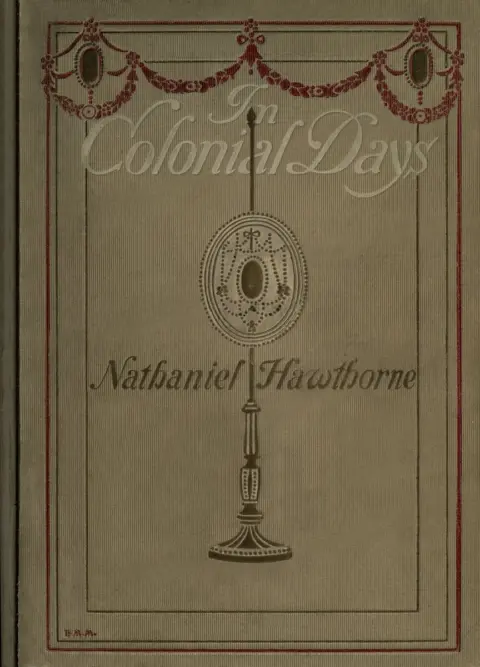
Nathaniel Hawthorne

Rebecca Harding Davis & Thomas De Quincey & Charles Dickens & Nathaniel Hawthorne & Edward Bulwer Lytton, Baron Lytton & Edgar Allan Poe & Harriet Elizabeth Prescott Spofford
BEHIND THE BOOK
This eBook is for the use of anyone anywhere in the United States and most other parts of the world at no cost and with almost no restrictions whatsoever. You may copy it, give it away or re-use it under the terms of the Project Gutenberg License included with this eBook or online at www.gutenberg.org. If you are not located in the United States, you will have to check the laws of the country where you are located before using this eBook. Read the source licence.
The original source file, including credits and licence, is retained by this library. Request an original-format copy at no charge. Please include the book title and Project Gutenberg identifier #512.
KEEP YOUR CURIOSITY GOING

David Patterson (Spirit) Hatch

David Patterson (Spirit) Hatch

David Patterson (Spirit) Hatch
Coulson Kernahan

Ralph Waldo Emerson

Maurice Baring