THE CLASSIC COLLECTION✦An outlaw’s diary: the CommuneCLASSIC FREE BOOKS
An outlaw’s diary: the Commune
Cécile Tormay
THE CLASSIC COLLECTION · 1887
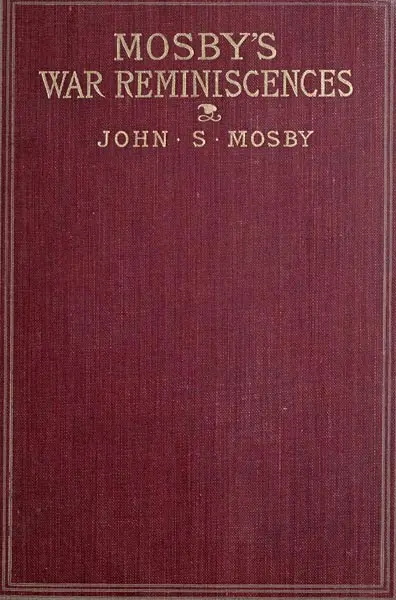
"Mosby's War Reminiscences; Stuart's Cavalry Campaigns" by John Singleton Mosby is a historical account written in the late 19th century. This work captures the experiences and reflections of Mosby, a Confederate cavalry officer, as he details his involvement in the Civil War, particularly his campaigns under General J.E.B. Stuart. The narrative provides insights into the valor and complexities of the cavalry operations that aimed to disrupt Union forces and supply lines. The opening of the book establishes the fervent patriotism and urgency that gripped Virginia at the onset of the Civil War in 1861. Mosby recounts his decision to join the Confederate cavalry, influenced by a strong sense of duty and the excitement surrounding the early efforts of the Confederacy. He vividly describes his first experiences in military preparations, the challenges faced during drills, and the camaraderie among soldiers fueled by high hopes for victory. Through Mosby’s perspective, readers gain a glimpse of the motivations and emotions driving both his decisions and the collective spirit of those engaged in the conflict.
Introduction adapted from the source catalogue; source summaries may be automatically generated.
Free to read · English · 63,579 words · No account needed
MAKE TIME FOR A GOOD BOOK
On by default. Untick to stop anonymous reading totals. Each page counts after 10 seconds in view. How this works.
Anonymous counting is on unless you have switched it off.
Col. Thompson of the California cavalry battalion, who accompanied Col. Lowell in pursuit of me through Leesburg, recently informed me that when they got to Fairfax on their return they found Gen. Stahel's division prepared for battle. Stahel had sent out scouting parties over the country. I had no positive knowledge of the intention of Gen. Lee to invade the North, but all signs pointed that way. First came the news of Milroy's rout by Ewell at Winchester. As I was looking for Stuart every day, I made no more raids that week, but held my men ready to do any work that he wanted. On June 16 Stuart crossed the Rappahannock, and bivouacked near Piedmont station in Fauquier that night. On the same day I went with a few men on a scout in the neighborhood of Thoroughfare, to find out which way Hooker was moving. I saw from the smoke of his camp fires that he was retiring on Washington as Lee advanced toward the Potomac.
Early on the morning of the 17th I visited Stuart's headquarters at Miss Kitty Shacklett's house. As he was mounted on a very indifferent horse, I gave him a fine sorrel that one of my men had recently captured from a Michigan lieutenant. I told him what I knew about the position of the enemy, and that I was ready to perform any service he wanted. The cavalry moved on to Middleburg, and I met him there again in the afternoon. There were 30 or 40 of my men with me. He had never seen them before, and made some jocular remarks about them as they passed. We had a short conference, and he approved of the expedition on which I was going across the Potomac. There had been so many alarms along the enemy's lines that it was difficult for them to reinforce any one point more strongly than it had been; and I knew that they would now rely on the presence of Hooker's troops for the protection of Maryland. I did not think they were expecting me to come back to Seneca. My idea was to create a diversion in favor of Gen. Lee, who was marching into the Shenandoah valley, and also to keep him informed of the movement of the enemy. I bade Stuart "good by," and told him that he would soon hear from me. He had sent Wickham's brigade down to picket the gap in the Bull Run mountain at Aldie. His duty was to observe the enemy, and mask the movements of the Confederate army. My command turned off three miles above there, and moved again toward Seneca. It was a very hot day, and we had stopped a while to rest under the shade of some trees, and refresh ourselves with buttermilk at the house of a farmer named Gulick. Presently we heard artillery firing over toward Aldie, which indicated a collision of the enemy's cavalry with ours. In an instant every man was mounted. From a commanding position on the mountain, which we reached in a few minutes, I could see clouds of dust rising on every road, which showed that Hooker was marching for the Potomac. After going a little farther, we captured a number of prisoners, and I immediately sent a despatch to Stuart, with the information I got from them. I could not now get to Seneca without passing through Hooker's infantry, so I concluded to go down on the Little River turnpike, and operate on the line of communication between Pleasanton's cavalry and the general headquarters. I knew I could gather some prizes there, and probably keep Stahel's cavalry from coming to the front, by giving them plenty to do in their rear. So we kept ourselves concealed, like Robin Hood and his merry men, in the green wood until night, and then sallied out in quest of game. After it was dark, we moved to a point about four miles below Aldie, where Pleasanton and Rosser had been fighting, and on the pike leading to Fairfax Court House, near which Hooker's headquarters were established that evening. My command was now inside of Hooker's lines, and environed on all sides by the camps of his different corps. Along the pike a continuous stream of troops, with all the impedimenta of war, poured along. Taking three men with me--Joe Nelson, Charlie Hall, and Norman Smith--I rode out into the column of Union troops as they passed along. As it was dark, they had no suspicion who we were, although we were all dressed in full Confederate uniform. A man by the name of Birch lived in a house near the roadside, and I discovered three horses standing at his front gate, with a man holding them by their bridles. I was sure that he was an orderly, and that they were officers' horses. We rode up, and asked him to whom they belonged. He replied that they were Maj. Stirling's and Capt. Fisher's, and that they were just from Gen. Hooker's headquarters. I then called him up to me and took him by the collar, and leaning down, whispered in his ear: "You are my prisoner. My name is Mosby." The man, who was an Irishman, understood me to say that he was "Mosby," and indignantly replied, "You are a d--d liar. I am as good a Union man as you are." Just then in the starlight he saw the gleam of a pistol, and had nothing further to say.
Your reading position is saved on this browser. Take it to another device with a library code. Reading pages adapt to text, rather than matching a printed edition.
BEHIND THE BOOK
This eBook is for the use of anyone anywhere in the United States and most other parts of the world at no cost and with almost no restrictions whatsoever. You may copy it, give it away or re-use it under the terms of the Project Gutenberg License included with this eBook or online at www.gutenberg.org. If you are not located in the United States, you will have to check the laws of the country where you are located before using this eBook. Read the source licence.
The original source file, including credits and licence, is retained by this library. Request an original-format copy at no charge. Please include the book title and Project Gutenberg identifier #45436.
KEEP YOUR CURIOSITY GOING
Cécile Tormay

Moritz Busch
John L. Ransom
Frances Wright
Cécile Tormay

Mabel Potter Daggett