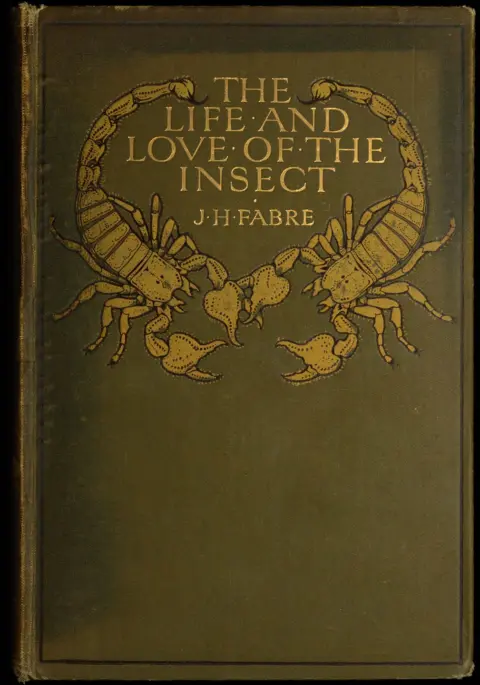
The Life and Love of the Insect
Jean-Henri Fabre
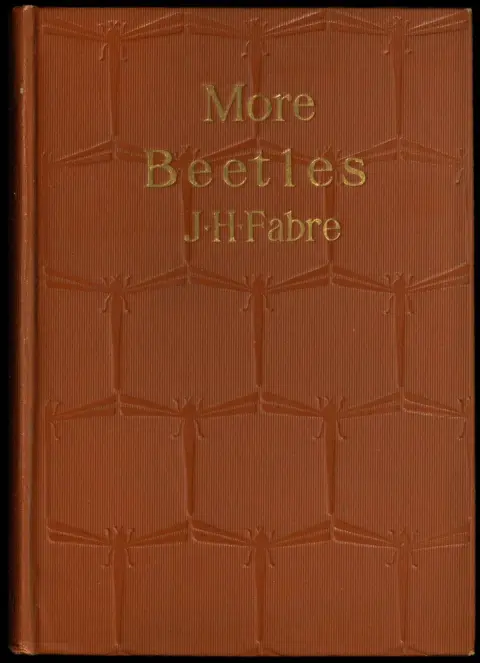
THE CLASSIC COLLECTION · 1922
"More Beetles" by Jean-Henri Fabre is a scientific publication written in the early 20th century. This work is part of Fabre's larger entomological corpus, focusing specifically on various species of beetles and their natural behaviors, life cycles, and habitats. In it, Fabre reflects not only on the intricate lives of these insects but also on his observations and interactions with them, offering readers a glimpse into the world of entomology. The opening of "More Beetles" introduces us to the author's personal reflections during a late spring day amidst lilac blossoms, where he admires the array of insects, particularly the Cetonia, or rose beetle. He describes the vibrant scene of diverse bugs engaging in their natural rituals and highlights the innocence of childhood as his young daughter enjoys catching the beetles, while he contemplates the ethical implications of experimenting on them in pursuit of knowledge. This dual perspective of both a naturalist observing and a father sharing in the joys of nature establishes a thematic exploration of curiosity, discovery, and the sometimes harsh realities of the natural world. The text sets the stage for a detailed study of the behaviours and characteristics of beetles, blending scientific inquiry with poetic imagery.
Introduction adapted from the source catalogue; source summaries may be automatically generated.
Free to read · English · 62,255 words · No account needed
MAKE TIME FOR A GOOD BOOK
On by default. Untick to stop anonymous reading totals. Each page counts after 10 seconds in view. How this works.
Anonymous counting is on unless you have switched it off.
The survivor takes no notice of them. She refuses them burial in her stomach, a burial at one time accorded to the males, dissected alive. She cowers as deep down in the ground as the scanty earth of the cage permits. In November, when Mont Ventoux is white with the first snows, she grows torpid in her hiding-place. Let us henceforth leave her in peace. She will live through the winter, everything seems to tell us, and produce her eggs next spring.
[1] One of the wild Bees. Cf. The Mason-bees, by J. Henri Fabre, translated by Alexander Teixeira de Mattos: chap. viii; and Bramble-bees and Others, by J. Henri Fabre, translated by Alexander Teixeira de Mattos: chaps. ii., iv. and vii.—Translator’s Note.
[2] A parasitic Bee. Cf. The Mason-bees: chap. viii.—Translator’s Note.
[3] For these wild bees, cf. Bramble-bees and others:
passim.—Translator’s Note.
[4] Drone-flies.—Translator’s Note.
[5] Cf. The Hunting Wasps, by J. Henri Fabre, translated by Alexander Teixeira de Mattos: chap. vii.; and The Mason-Wasps, by J. Henri Fabre, translated by Alexander Teixeira de Mattos: chaps. ix and x.—Translator’s Note.
[6] Cf. The Life of the Caterpillar, by J. Henri Fabre, translated by Alexander Teixeira de Mattos: chap. xiv.—Translator’s Note.
[7] The Cetonia is also known as the Rose-chafer (C. aurata). Cf. More Hunting Wasps, by J. Henri Fabre, translated by Alexander Teixeira de Mattos: Translator’s Note.
[8] Cf. The Sacred Beetle and Others, by J. Henri Fabre, translated by Alexander Teixeira de Mattos: chaps. i to vii. and in particular chap. iv.—Translator’s Note.
[9] This Beetle, also known as C. Oxythyrea, Muls., is black and, in the males, covered with white spots, suggesting a pall.—Translator’s Note.
[10] .117 inch.—Translator’s Note.
[11] 732 cubic inches.—Translator’s Note.
[12] The Rhinoceros-Beetle.—Translator’s Note.
[13] René Antoine Ferchault de Réaumur (1683–1757), the French physicist and naturalist, inventor of the Réaumur thermometer and author of Mémoires pour savoir à l’histoire naturelle des insectes.—Translator’s Note.
[14] Cf. The Life of the Fly, by J. Henri Fabre, translated by Alexander Teixeira de Mattos: chap. x.—Translator’s Note.
[15] Cf. idem: chaps. xiv. to xvi.—Translator’s Note.
[16] Carolus Linnæus (Karl von Linné, 1707–1778), the celebrated Swedish botanist and naturalist.—Translator’s Note.
[17] Or Greenbottles. Cf. The Life of the Fly: chap. ix.—Translator’s
Note.
[18] Under carrion: S. subnitidus, De Mars: S. detersus Illig.: S. maculatus, Ros.: S. æneus, Fab.—Author’s Note.
Under dung: S. speculifer, Latr.: S. virescens, Payk.: S. metallescens, Erich: S. furvus, Erich: S. rotundatus, Illig.—Author’s Note.
[19] S. carnaria is the Grey Flesh-fly.—Translator’s Note.
Your reading position is saved on this browser. Take it to another device with a library code. Reading pages adapt to text, rather than matching a printed edition.
Jean-Henri Fabre
Jean-Henri Fabre
Jean-Henri Fabre
Jean-Henri Fabre
BEHIND THE BOOK
This eBook is for the use of anyone anywhere in the United States and most other parts of the world at no cost and with almost no restrictions whatsoever. You may copy it, give it away or re-use it under the terms of the Project Gutenberg License included with this eBook or online at www.gutenberg.org. If you are not located in the United States, you will have to check the laws of the country where you are located before using this eBook. Read the source licence.
The original source file, including credits and licence, is retained by this library. Request an original-format copy at no charge. Please include the book title and Project Gutenberg identifier #67201.
KEEP YOUR CURIOSITY GOING

John Muir

Asa Gray
Asa Gray

Florence Nightingale
Elizabeth Robins Pennell
Denison Olmsted