THE CLASSIC COLLECTION✦Fated to Be Free: A NovelCLASSIC FREE BOOKS
Fated to Be Free: A Novel
Jean Ingelow
THE CLASSIC COLLECTION · 1869
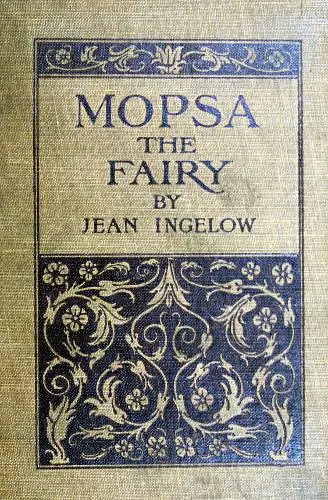
"Mopsa the Fairy" by Jean Ingelow is a children's fantasy novel written in the early 20th century. The story follows a young boy named Jack, who embarks on a whimsical adventure after discovering a hollow tree filled with fairies. His encounters lead him to Fairyland, where he meets various magical beings and explores themes of kindness, bravery, and the consequence of choices. At the start of the book, we are introduced to Jack, who is exploring a meadow with his baby sister and their nurse. His curiosity leads him to a large hawthorn tree, where he finds a nest containing what he initially believes to be baby birds but quickly discovers are young fairies. As Jack interacts with these enchanting creatures during a storm, he is swept into an adventure that includes flying into Fairyland on the back of an albatross, encountering various magical beings, and navigating the intriguing dynamics of this fantastical realm. This opening sets the tone for a story filled with imagination and enchantment, engaging young readers with its delightful narrative and rich descriptions.
Introduction adapted from the source catalogue; source summaries may be automatically generated.
Free to read · English · 41,276 words · No account needed
MAKE TIME FOR A GOOD BOOK
On by default. Untick to stop anonymous reading totals. Each page counts after 10 seconds in view. How this works.
Anonymous counting is on unless you have switched it off.
"It's because he's got a cold in his head," observed one of the washer-women; "he always talks when he's got a cold, and there's no pleasing him; whatever you say, he's not satisfied. Gee, Boney, do!"
"Gee it is, then," said the horse, and began to jog on.
"He spoke again!" said Jack, upon which the horse laughed, and Jack
was quite alarmed.
"It appears that your horses don't talk?" observed the blue-coated
woman.
"Never," answered Jack; "they can't."
"You mean they won't," observed the old horse; and though he spoke the words of mankind, it was not in a voice like theirs. Still Jack felt that his was just the natural tone for a horse, and that it did not arise only from the length of his nose. "You'll find out some day, perhaps," he continued, "whether horses can talk or not."
"Shall I?" said Jack, very earnestly.
"They'll TELL," proceeded the white horse. "I wouldn't be you when they tell how you've used them."
"Have you been ill used?" said Jack, in an anxious tone.
"Yes, yes, of course he has," one of the women broke in; "but he has come here to get all right again. This is a very wholesome country for horses; isn't it, Boney?"
"Yes," said the horse.
"Well, then, jog on, there's a dear," continued the old woman. "Why, you will be young again soon, you know,--young, and gamesome, and handsome; you'll be quite a colt, by and by, and then we shall set you free to join your companions in the happy meadows."
The old horse was so comforted by this kind speech, that he pricked up his ears and quickened his pace considerably.
"He was shamefully used," observed one washer-woman. "Look at him, how lean he is! You can see all his ribs."
"Yes," said the other, as if apologizing for the poor old horse. "He gets low-spirited when he thinks of all he has gone through; but he is a vast deal better already than he was. He used to live in London; his master always carried a long whip to beat him with, and never spoke civilly to him."
"London!" exclaimed Jack; "why that is in my country. How did the
horse get here?"
"That's no business of yours," answered one of the women. "But I can tell you he came because he was wanted, which is more than you are."
"You let him alone," said the horse, in a querulous tone. "I don't
bear any malice."
"No; he has a good disposition, has Boney," observed the red old
woman. "Pray, are you a boy?"
"Yes," said Jack.
Your reading position is saved on this browser. Take it to another device with a library code. Reading pages adapt to text, rather than matching a printed edition.
BEHIND THE BOOK
This eBook is for the use of anyone anywhere in the United States and most other parts of the world at no cost and with almost no restrictions whatsoever. You may copy it, give it away or re-use it under the terms of the Project Gutenberg License included with this eBook or online at www.gutenberg.org. If you are not located in the United States, you will have to check the laws of the country where you are located before using this eBook. Read the source licence.
The original source file, including credits and licence, is retained by this library. Request an original-format copy at no charge. Please include the book title and Project Gutenberg identifier #32867.
KEEP YOUR CURIOSITY GOING
Coulson Kernahan

Maurice Baring
Frances Wright
Cécile Tormay
Francis Greenleaf Allinson & Anne C. E. (Anne Crosby Emery) Allinson

Frederic Jesup Stimson