THE CLASSIC COLLECTION✦A dead man’s diaryCLASSIC FREE BOOKS
A dead man’s diary
Coulson Kernahan
THE CLASSIC COLLECTION · 1915
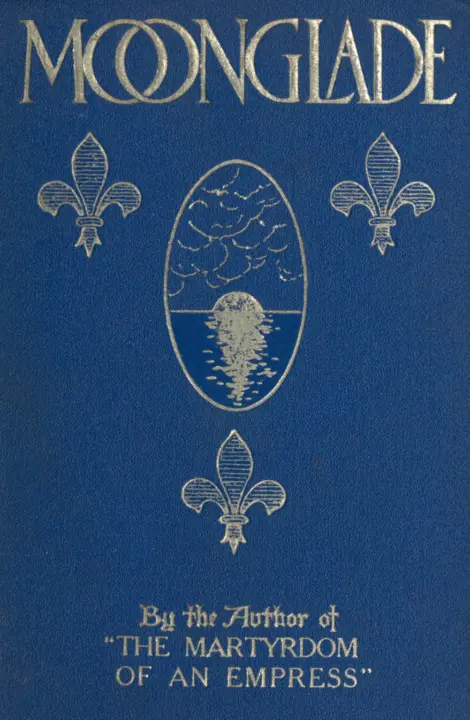
"Moonglade" by Marguerite Cunliffe-Owen is a novel written in the early 20th century. It intricately weaves the personal lives and dynamics of young women within a convent and the looming societal expectations as they transition into adulthood. The story centers around Laurence Seton, a beautiful girl raised in a French convent who is about to leave for the British world that awaits her under the guardianship of her strict aunt and uncle. The opening of "Moonglade" introduces Laurence as she prepares to leave the Sacred Heart Convent, where she has spent several formative years. With mixed emotions, she bids a bittersweet farewell to her friends, particularly to Marguerite de Plenhöel, a younger girl who is distraught over Laurence's departure. As Laurence navigates the complexities of her impending return to England, the narrative hints at her journey towards finding her own identity amidst familial pressures and societal expectations. The relationship between these two characters sets the stage for exploration of themes like friendship, love, and the tension between duty and desire.
Introduction adapted from the source catalogue; source summaries may be automatically generated.
Free to read · English · 108,514 words · No account needed
MAKE TIME FOR A GOOD BOOK
On by default. Untick to stop anonymous reading totals. Each page counts after 10 seconds in view. How this works.
Anonymous counting is on unless you have switched it off.
“Hard, why?” she retorted. “How old are you, anyhow?” And, standing on the very points of her tiny slippers, she pointed at his temples with two accusing fingers.
“One, two, three, four, five, six ... silver threads among the
bronze,” she misquoted.
“And seven!” he coolly admitted, looking smilingly down at her. “Seven or more, what matters? I am thirty-four, you know, my little cousin.”
“What matters indeed! You have enough privileges already, without expecting to remain always young.”
“Privileges! You surprise me!”
“Certainly,” she insisted. “Aren’t you a great Prince, a Serene-Highness--just as in the fairy-tales? Haven’t you huge, big estates in Russia and the Crimea, villas in the south of France, fortins in the Caucasus, mines in Siberia, besides loads and loads of money, jewels, picture-galleries, a private band of musicians, acres of hothouses, horses, stud-farms? A regular Marquis de Carabas, that’s what you are!”
She paused for lack of breath, and once more he laughed.
“You overwhelm me, ma cousine,” he mocked; “but since I am old, quite an old gentleman, you see ... what are these manifold gifts to me?”
“Old! Oh, not so very old, after all!” she suddenly contradicted. “Fortunately you are handsome, and very, very tall. Whew ... ew! You are tall! I love that! I despise small men. They’re always barking and fussing, like black-and-tans. Don’t you think so?”
“Your knowledge is indeed extensive, ‘Gamin,’” he praised. “Yet it is scarcely necessary to be a giant in order to possess a kindly temper. I have met--”
“Never mind what you have met,” she interrupted. “I know that you are good-tempered, and six foot four inches. That’s enough proof of what I said just now.”
“Thank you!” he began, dryly. But in one clean bound she cleared the space between the window and a ponderous oaken bench, upon which she perched herself, her feet ten inches from the immense rug covering all the middle of the room. “And now,” she stated, “I must be reasonable, and grown-up, and all the rest of it, so that the person who first exhorted me to listen to reason may not find me lacking in that desirable quality.”
“Is there really a person bold enough to preach reason to you?” he commenced; but she silenced him by an eminently peremptory gesture.
“Listen!” she admonished. “Do you hear wheels?”
“Wheels?” he questioned, sincerely astonished. “In this storm?”
“And why not? Why shouldn’t people travel in a storm when they are not imprisoned, as I am?”
“You are a prisoner?” Prince Basil asked, with amazement.
Your reading position is saved on this browser. Take it to another device with a library code. Reading pages adapt to text, rather than matching a printed edition.
BEHIND THE BOOK
This eBook is for the use of anyone anywhere in the United States and most other parts of the world at no cost and with almost no restrictions whatsoever. You may copy it, give it away or re-use it under the terms of the Project Gutenberg License included with this eBook or online at www.gutenberg.org. If you are not located in the United States, you will have to check the laws of the country where you are located before using this eBook. Read the source licence.
The original source file, including credits and licence, is retained by this library. Request an original-format copy at no charge. Please include the book title and Project Gutenberg identifier #64546.
KEEP YOUR CURIOSITY GOING
Coulson Kernahan

Maurice Baring
Frances Wright
Cécile Tormay

Frederic Jesup Stimson

W. H. P. (William Henry Pope) Jarvis