THE CLASSIC COLLECTION✦A dead man’s diaryCLASSIC FREE BOOKS
A dead man’s diary
Coulson Kernahan
THE CLASSIC COLLECTION · 1915
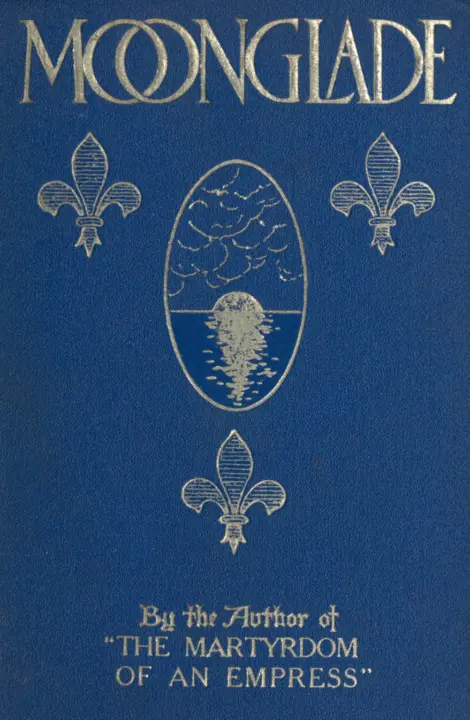
"Moonglade" by Marguerite Cunliffe-Owen is a novel written in the early 20th century. It intricately weaves the personal lives and dynamics of young women within a convent and the looming societal expectations as they transition into adulthood. The story centers around Laurence Seton, a beautiful girl raised in a French convent who is about to leave for the British world that awaits her under the guardianship of her strict aunt and uncle. The opening of "Moonglade" introduces Laurence as she prepares to leave the Sacred Heart Convent, where she has spent several formative years. With mixed emotions, she bids a bittersweet farewell to her friends, particularly to Marguerite de Plenhöel, a younger girl who is distraught over Laurence's departure. As Laurence navigates the complexities of her impending return to England, the narrative hints at her journey towards finding her own identity amidst familial pressures and societal expectations. The relationship between these two characters sets the stage for exploration of themes like friendship, love, and the tension between duty and desire.
Introduction adapted from the source catalogue; source summaries may be automatically generated.
Free to read · English · 108,514 words · No account needed
MAKE TIME FOR A GOOD BOOK
On by default. Untick to stop anonymous reading totals. Each page counts after 10 seconds in view. How this works.
Anonymous counting is on unless you have switched it off.
Régis laughed. He certainly did not give a very grandfatherly impression, for he stubbornly refused to become even middle-aged, and was still the beau-sabreur and passionate sportsman he had always been. His daughter’s ideal existence with Basil was an everlasting joy to him, and now he beamed upon the little group on the terrace. Suddenly his smile disappeared.
“Look out, Chevalier!” he said, precipitately; and to Pavlo’s immense astonishment Marguerite hastily put his small namesake down on the blanket, looking almost fearfully over her shoulder.
“Don’t praise the baby before Piotr!” she whispered to him. “I’ll
explain later.”
His mouth wide open with astonishment, the young Garde-à-Cheval saw Piotr emerge at a lively trot from the long flight of stone steps leading up from a lower terrace and fly like a dart toward him--Piotr transformed into a big boy in long sailor-trousers, a nautical blouse, and a béret, with the words La Mauve in gold gleaming on its ribbon, thrust well to the back of his head.
“Hallo, Cousin Pavlo!” the boy cried. “They told me you had come, so I ran as fast as I could!” And doffing his béret in right gallant fashion, he held out his brown hand in greeting.
“Saperlipopette!” exclaimed Pavlo. “The heir of the House of Palitzin leaves nothing to be desired, it seems to me.”
With an amusing tilt of his eminently patrician nose Piotr looked his cousin up and down, and, preternaturally solemn, declared, “Neither does the heir of the House of Salvières!”
There was a general burst of merriment.
“This comes,” Régis gravely pronounced, as soon as he could speak, “of being brought up entirely among grown people. One knows one’s ropes early.”
“Are you going to stay long with us, Cousin Pavlo?” demanded the
undismayed Piotr.
“Fairly so, if you’ll permit it, my dear cousin.”
“I do! But it’s only because you are too old now to be a playmate that I like your being here.”
“You surprise me, Monsieur Piotr!” said Pavlo, who was quite genuinely amazed. “Might I so far venture as to ask what set objection you have against playmates?”
“It’s little darling Malou’s fault,” imperturbably explained Piotr. “Fancy, Cousin Pavlo, that some months ago she threatened to give me one--a playmate who would take her place and Papa’s, and toss the paume with me.”
“Well?” inquired Pavlo. “Was there anything offensive about that?”
Piotr’s face had turned a little pale, his eyes narrowing almost to
slits.
“No,” he grumbled, “not as it turned out at last. But you see, Cousin Pavlo, it might have been different.”
Your reading position is saved on this browser. Take it to another device with a library code. Reading pages adapt to text, rather than matching a printed edition.
BEHIND THE BOOK
This eBook is for the use of anyone anywhere in the United States and most other parts of the world at no cost and with almost no restrictions whatsoever. You may copy it, give it away or re-use it under the terms of the Project Gutenberg License included with this eBook or online at www.gutenberg.org. If you are not located in the United States, you will have to check the laws of the country where you are located before using this eBook. Read the source licence.
The original source file, including credits and licence, is retained by this library. Request an original-format copy at no charge. Please include the book title and Project Gutenberg identifier #64546.
KEEP YOUR CURIOSITY GOING
Coulson Kernahan

Maurice Baring
Frances Wright
Cécile Tormay

Frederic Jesup Stimson

W. H. P. (William Henry Pope) Jarvis