THE CLASSIC COLLECTION✦A dead man’s diaryCLASSIC FREE BOOKS
A dead man’s diary
Coulson Kernahan
THE CLASSIC COLLECTION · 1915
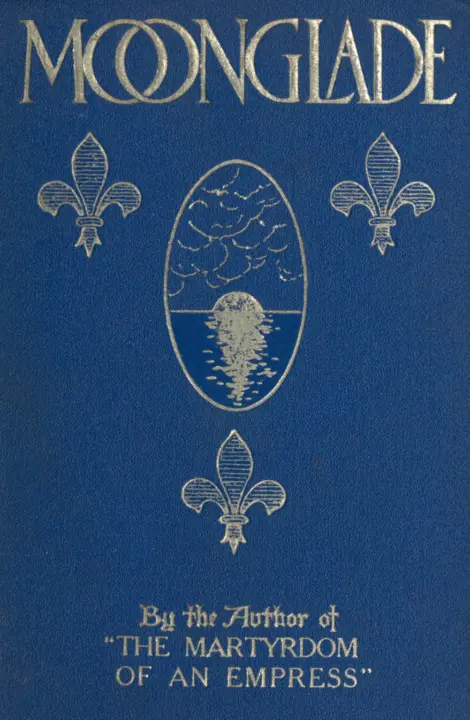
"Moonglade" by Marguerite Cunliffe-Owen is a novel written in the early 20th century. It intricately weaves the personal lives and dynamics of young women within a convent and the looming societal expectations as they transition into adulthood. The story centers around Laurence Seton, a beautiful girl raised in a French convent who is about to leave for the British world that awaits her under the guardianship of her strict aunt and uncle. The opening of "Moonglade" introduces Laurence as she prepares to leave the Sacred Heart Convent, where she has spent several formative years. With mixed emotions, she bids a bittersweet farewell to her friends, particularly to Marguerite de Plenhöel, a younger girl who is distraught over Laurence's departure. As Laurence navigates the complexities of her impending return to England, the narrative hints at her journey towards finding her own identity amidst familial pressures and societal expectations. The relationship between these two characters sets the stage for exploration of themes like friendship, love, and the tension between duty and desire.
Introduction adapted from the source catalogue; source summaries may be automatically generated.
Free to read · English · 108,514 words · No account needed
MAKE TIME FOR A GOOD BOOK
On by default. Untick to stop anonymous reading totals. Each page counts after 10 seconds in view. How this works.
Anonymous counting is on unless you have switched it off.
“My God!” Basil was thinking, “what obscure inheritance is this the result of?” And suddenly the image of Laurence flashed before him, Laurence beautiful and vicious, cankered inwardly like a fruit, splendid to the eye only.
He took a couple of turns up and down before speaking again.
“It is jealousy, then?” he said at length, stopping in front of her.
“Yes,” she admitted, “jealousy of me.”
“Then,” Basil continued, “why isn’t he jealous of my love for you, my presence near you?”
“He just told me,” she said, with the ghost of a smile lurking at the corners of her rosy mouth--for she had already recovered her delicate color--“that I couldn’t possibly love a grown-up gentleman like you as I did him--my little Piotr.”
Basil could not help laughing. “That’s ingenious!” he conceded; “very ingenious and plausible--and fortunate, too! What would we do if he had extended these kindly sentiments to me?”
“I don’t know. Sufficient unto the hour is the wonderment thereof,” she replied, delighted to find that he was not disposed to take the affair too tragically. “A few weeks ago he wanted to fight a duel with Boustifaille, his ex-canot lad, when he came to pay his respects on his return from the Banks, because I was imprudent enough to admire the finely bronzed appearance of the interesting Terre-neuvas.”
“Wanted to fight him? Swords or pistols for two, eh?” asked Basil, amused in spite of himself.
“Clasp-knives, if you please,” she responded. “Clasp-knives, sailor
fashion.”
“Oh,” commented Basil, “nothing if not energetic!”
“Mercy, yes! Blood will tell, you know! You yourself are no milksop, my dearest Basil. Neither were your ancestors, from all I’ve heard and read.”
A shadow passed over his forehead. He could not as yet quite endure being reminded of the horrible period of doubt he had gone through with regard to Piotr’s birthright. During the last days of their sojourn on the Côte-d’Azur they had come unexpectedly, and most unpleasantly for him, across Sir Robert and Lady Seton stepping from the dinghy of their yacht. There had been a moment’s embarrassment, and then all four had sauntered on the promenade together, studiously avoiding any allusion to Laurence. Later on, by a special, if somewhat diffident, request of the nautical baronet, Basil had rowed back with him to the yacht for a short talk--a rather painful experience. Sir Robert, his choleric blue eye cocked up to the saloon skylight of the Phyllis, had roundly denounced his late niece, overbearing Basil’s chivalrous silence, and, glad to be able to let himself go for once, had used language of exceeding saltiness--picturesque, much to the point, and altogether adequate even to that subject.
Your reading position is saved on this browser. Take it to another device with a library code. Reading pages adapt to text, rather than matching a printed edition.
BEHIND THE BOOK
This eBook is for the use of anyone anywhere in the United States and most other parts of the world at no cost and with almost no restrictions whatsoever. You may copy it, give it away or re-use it under the terms of the Project Gutenberg License included with this eBook or online at www.gutenberg.org. If you are not located in the United States, you will have to check the laws of the country where you are located before using this eBook. Read the source licence.
The original source file, including credits and licence, is retained by this library. Request an original-format copy at no charge. Please include the book title and Project Gutenberg identifier #64546.
KEEP YOUR CURIOSITY GOING
Coulson Kernahan

Maurice Baring
Frances Wright
Cécile Tormay

Frederic Jesup Stimson

W. H. P. (William Henry Pope) Jarvis