THE CLASSIC COLLECTION✦A dead man’s diaryCLASSIC FREE BOOKS
A dead man’s diary
Coulson Kernahan
THE CLASSIC COLLECTION · 1915
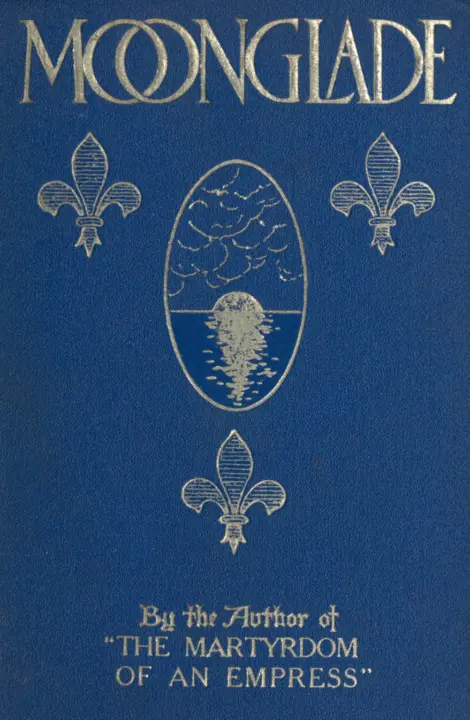
"Moonglade" by Marguerite Cunliffe-Owen is a novel written in the early 20th century. It intricately weaves the personal lives and dynamics of young women within a convent and the looming societal expectations as they transition into adulthood. The story centers around Laurence Seton, a beautiful girl raised in a French convent who is about to leave for the British world that awaits her under the guardianship of her strict aunt and uncle. The opening of "Moonglade" introduces Laurence as she prepares to leave the Sacred Heart Convent, where she has spent several formative years. With mixed emotions, she bids a bittersweet farewell to her friends, particularly to Marguerite de Plenhöel, a younger girl who is distraught over Laurence's departure. As Laurence navigates the complexities of her impending return to England, the narrative hints at her journey towards finding her own identity amidst familial pressures and societal expectations. The relationship between these two characters sets the stage for exploration of themes like friendship, love, and the tension between duty and desire.
Introduction adapted from the source catalogue; source summaries may be automatically generated.
Free to read · English · 108,514 words · No account needed
MAKE TIME FOR A GOOD BOOK
On by default. Untick to stop anonymous reading totals. Each page counts after 10 seconds in view. How this works.
Anonymous counting is on unless you have switched it off.
“Thank you, Piotr; so now listen. In a little while your father and I--if you are very good--are going to make you a present of a little playmate. He will be very tiny and awkward at the beginning, but he will grow up fast, and be able to romp with you, and toss the paume like Henri-Quatre. Won’t you be pleased, Piotr?”
The boy, leaning against her knees, looked slowly up at her, his eyes
heavy with doubt.
“Is that another fairy-tale, like the ones you tell me every day, little darling Malou?” he asked, the corners of his mouth beginning to droop.
“A fairy-tale? Why, no, Piotr, it’s a true, true story!”
“And,” the child continued, “will you truly, truly bring another Piotr here to play with me instead of you and Papa and Uncle Régis?”
Marguerite was not quite reassured. She knew her Piotr too well, and her thumbs began to prick oddly, as she claimed they invariably did when trouble was afoot.
“I imagined you’d like it very much,” she cautiously hazarded, not by any means certain of her ground and feeling her way about, so to speak.
Piotr’s strongly marked dark brows came together above his imperious little nose and his nostrils quivered.
“I would hate it!” he said, decisively; “so don’t bring a disgusting brat here, little darling Malou, or I’ll pitch him in the oubliettes under the great round tower. I swear I will!”
She noticed a nervous twitching of his left eyebrow, which she was acquainted with as a very bad sign of the weather, and she hastened to try and smooth things down.
“Don’t talk like that, darling,” she said, stroking the rebellious head. “You know very well that you would never do anything so wicked; besides, you might get to be awfully fond of your little playmate.”
With a sudden brutality of gesture utterly disconcerting, Piotr snatched the starry branches from Marguerite’s lap and threw them helter-skelter across the room. Then turning, he fled toward the door.
“Piotr,” she called, very calmly, “come back to Malou!”
She had not stirred, her face was white; but there was no quiver in her voice, and the child, his hand already on the knob, paused at full tension, his back toward her.
“Come back here, please!” Again she did not raise her tone, but there was a new quality in it; and very reluctantly, his face dark as thunder, Piotr retraced his steps one by one until he stood within a foot of her.
“My little Piotr,” she murmured, very tenderly, “are you going to be bad
with me, too?”
Your reading position is saved on this browser. Take it to another device with a library code. Reading pages adapt to text, rather than matching a printed edition.
BEHIND THE BOOK
This eBook is for the use of anyone anywhere in the United States and most other parts of the world at no cost and with almost no restrictions whatsoever. You may copy it, give it away or re-use it under the terms of the Project Gutenberg License included with this eBook or online at www.gutenberg.org. If you are not located in the United States, you will have to check the laws of the country where you are located before using this eBook. Read the source licence.
The original source file, including credits and licence, is retained by this library. Request an original-format copy at no charge. Please include the book title and Project Gutenberg identifier #64546.
KEEP YOUR CURIOSITY GOING
Coulson Kernahan

Maurice Baring
Frances Wright
Cécile Tormay

Frederic Jesup Stimson

W. H. P. (William Henry Pope) Jarvis