THE CLASSIC COLLECTION✦A dead man’s diaryCLASSIC FREE BOOKS
A dead man’s diary
Coulson Kernahan
THE CLASSIC COLLECTION · 1915
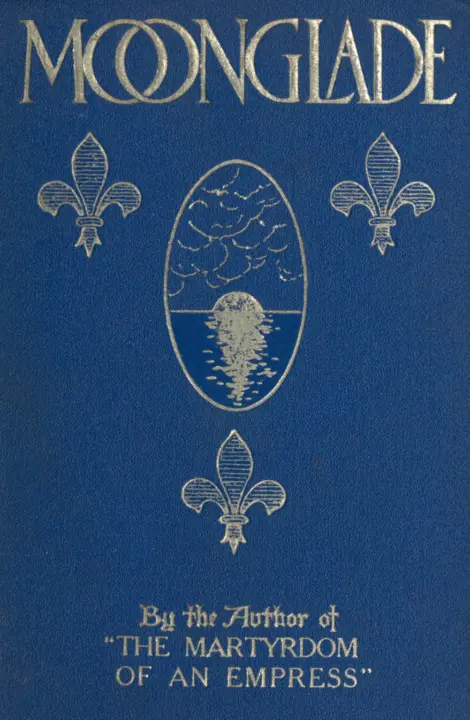
"Moonglade" by Marguerite Cunliffe-Owen is a novel written in the early 20th century. It intricately weaves the personal lives and dynamics of young women within a convent and the looming societal expectations as they transition into adulthood. The story centers around Laurence Seton, a beautiful girl raised in a French convent who is about to leave for the British world that awaits her under the guardianship of her strict aunt and uncle. The opening of "Moonglade" introduces Laurence as she prepares to leave the Sacred Heart Convent, where she has spent several formative years. With mixed emotions, she bids a bittersweet farewell to her friends, particularly to Marguerite de Plenhöel, a younger girl who is distraught over Laurence's departure. As Laurence navigates the complexities of her impending return to England, the narrative hints at her journey towards finding her own identity amidst familial pressures and societal expectations. The relationship between these two characters sets the stage for exploration of themes like friendship, love, and the tension between duty and desire.
Introduction adapted from the source catalogue; source summaries may be automatically generated.
Free to read · English · 108,514 words · No account needed
MAKE TIME FOR A GOOD BOOK
On by default. Untick to stop anonymous reading totals. Each page counts after 10 seconds in view. How this works.
Anonymous counting is on unless you have switched it off.
“Deprived of hair!” he could not help exclaiming. “I should think not; but what’s that got to do with it?”
“Everything! Can’t you see that when it’s all tightly piled atop of my head, a well-made sailor-hat just fits over it? Its crown, filled to the edges, can’t stir; it isn’t like a modern crown, you see, which is a comfort.”
Basil did not laugh outright, but he looked as if he were very near doing so, and this, too, was by way of being a comfort to the rider of “Narses.”
They were now following a narrower path on the summit of a low hill, away inland, and, having slackened speed to let their horses breathe, it was difficult to avoid a chat.
“I am leaving to-morrow,” began Basil, with that startling lack of the most ordinary tact which is displayed by men of his stamp under certain conditions.
“Indeed!”
“Yes. I did not expect to stay so long, but circumstances--”
“Over which you had no control,” finished the “Gamin,” calmly.
“What did you say?” he asked, turning to look at her with a sudden suspicion that she was laughing at him.
“I said, circumstances over which you had no control--that’s the accepted formula, isn’t it?” she retorted.
Basil rode in silence for a full two minutes, then began again, stiffly: “As I am leaving Normandy to-morrow--”
“When you discover a subject of conversation you push it to its furthest possibilities,” Marguerite interrupted. “Well, it is gradually dawning on me that you really intend to leave Normandy, Salvières, and the be-neighboring regions to-morrow, although wiseacres pretend that to-morrow does not exist.”
This unwonted flippancy caught Basil on the raw, and his teeth closed so grimly that the muscles became vaguely apparent beneath the tan of his lean cheeks; a signal his tyro-tormentor perceived clearly, and was exasperated enough to appreciate profoundly.
“If you will deign to grant me your attention for a few short moments, I will explain why I make a point of bringing this inconsiderable event to your notice.”
“Imbecile!” flashed through Marguerite’s mind amid a flood of remorse for such a desecration. “I grant you my attention,” she, however, persevered, and Basil viciously bit one end of his mustache, which he had drawn into his mouth.
“I will be gone for a wholly indeterminate period of time,” he pursued. “Years, probably.”
With extreme aptness “Narses” shied at a rabbit frolicking in the lush grass, and indulged in a series of risky gambades that afforded Marguerite an opportunity of strictly attending to his misdeeds.
Your reading position is saved on this browser. Take it to another device with a library code. Reading pages adapt to text, rather than matching a printed edition.
BEHIND THE BOOK
This eBook is for the use of anyone anywhere in the United States and most other parts of the world at no cost and with almost no restrictions whatsoever. You may copy it, give it away or re-use it under the terms of the Project Gutenberg License included with this eBook or online at www.gutenberg.org. If you are not located in the United States, you will have to check the laws of the country where you are located before using this eBook. Read the source licence.
The original source file, including credits and licence, is retained by this library. Request an original-format copy at no charge. Please include the book title and Project Gutenberg identifier #64546.
KEEP YOUR CURIOSITY GOING
Coulson Kernahan

Maurice Baring
Frances Wright
Cécile Tormay

Frederic Jesup Stimson

W. H. P. (William Henry Pope) Jarvis