THE CLASSIC COLLECTION✦An outlaw’s diary: the CommuneCLASSIC FREE BOOKS
An outlaw’s diary: the Commune
Cécile Tormay
THE CLASSIC COLLECTION · 1911
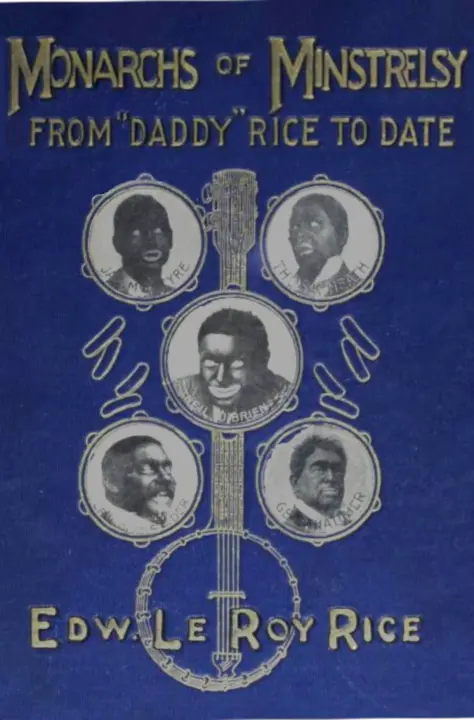
"Monarchs of Minstrelsy, from 'Daddy' Rice to Date" by Edw. Le Roy Rice is a historical account written in the early 20th century. The book explores the evolution of minstrel shows, focusing on the significant figures and performers from the inception of this entertainment style to the present day of its writing. It delves into the lives and careers of celebrated performers while capturing the unique cultural narratives of the minstrel art form. The opening of the book sets the stage for an exploration of minstrelsy, questioning its relevance and survival amid changing societal views. It reflects on the notable artists who have passed away in recent years and highlights the contributions of both older and younger generations of performers. Through a combination of personal anecdotes and researched accounts, the author aims to preserve the legacy of these artists, emphasizing the significance of their stories in the broader context of American entertainment history.
Introduction adapted from the source catalogue; source summaries may be automatically generated.
Free to read · English · 137,676 words · No account needed
MAKE TIME FOR A GOOD BOOK
On by default. Untick to stop anonymous reading totals. Each page counts after 10 seconds in view. How this works.
Anonymous counting is on unless you have switched it off.
His first professional appearance was with Robinson’s Minstrels at Hannibal, Mo., in 1898. Subsequently he was with Ward and Wade’s, and George Van’s Minstrels; also did he tour with his own minstrel company.
Mr. McGee joined Al. G. Field’s Minstrels in 1909 for the season; the following year he was in vaudeville with Russell and Smith’s Minstrels.
He is a comedian of original methods, and a dancer of more than
ordinary merit.
Joe B. McGee was born in Florida, Mo., February 20, 1881.
GEORGE JONES, one of the original members of “That Quartette,” was a “boy singer” with Al. G. Field’s Minstrels in 1896.
Subsequently he did meritorious work as a comedian with Wm. H. West’s
(Ricaby’s) Minstrels.
After the dissolution of “That Quartette” in 1909, Mr. Jones continued in vaudeville as one of the team of Jones and Deely.
George Jones was horn in St. Louis, Mo., September 22, 1883.
WILL OAKLAND (Harry Hinrichs) possesses that extremely rare quality of voice that is known as a contra-tenor, which he uses to the best advantage, his enunciation being well nigh perfect.
Mr. Oakland made his professional debut with George Primrose’s Minstrels in Rochester, N. Y., February, 1905, and continued with that company until he joined Lew Dockstader’s Minstrels in 1907; he remained with Mr. Dockstader two seasons, after which he joined Cohan and Harris’ Minstrels.
Early in 1910 Mr. Oakland joined Wm. H. Thompson in a high-class singing act, reviving a well-known trade-mark of two decades ago.
Will Oakland was born in Jersey City, N. J., January 15, 1883.
JULIAN ELTINGE (Dalton) is usually billed as “the artist without a peer;” and you may believe it, every word.
The scion of an old Boston family, Mr. Eltinge adopted his present calling for the avowed purpose of “killing time;” that he made a “killing” there is no dispute.
He was a member of the First Corps Cadets in his native city, and when this notable organization produced “My Lady” in 1899, Eltinge was cast for the soubrette role.
In 1895 the play of “Miss Simplicity” was written around Mr. Eltinge’s talents; subsequently it became a vehicle for Frank Daniels; afterwards he appeared in “Baron Humbug” and other plays.
His first Metropolitan appearance was at the Bijou Theatre in New York City in 1903, with “Mr. Wix of Wickham.” Later, and until July 27, 1908, he played vaudeville engagements in the United States and Europe.
On the latter date he made his first minstrel appearance with the Cohan and Harris Company, at Atlantic City, N. J.; his success with this organization was nothing short of phenomenal; he remained the entire season, appearing with darkened features in the after-piece.
Your reading position is saved on this browser. Take it to another device with a library code. Reading pages adapt to text, rather than matching a printed edition.
BEHIND THE BOOK
This eBook is for the use of anyone anywhere in the United States and most other parts of the world at no cost and with almost no restrictions whatsoever. You may copy it, give it away or re-use it under the terms of the Project Gutenberg License included with this eBook or online at www.gutenberg.org. If you are not located in the United States, you will have to check the laws of the country where you are located before using this eBook. Read the source licence.
The original source file, including credits and licence, is retained by this library. Request an original-format copy at no charge. Please include the book title and Project Gutenberg identifier #69826.
KEEP YOUR CURIOSITY GOING
Cécile Tormay

Moritz Busch
John L. Ransom
Frances Wright
Cécile Tormay

Mabel Potter Daggett