THE CLASSIC COLLECTION✦An outlaw’s diary: the CommuneCLASSIC FREE BOOKS
An outlaw’s diary: the Commune
Cécile Tormay
THE CLASSIC COLLECTION · 1911
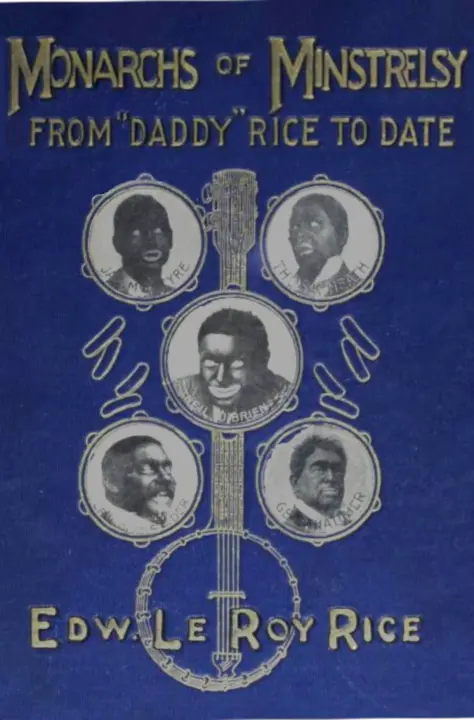
"Monarchs of Minstrelsy, from 'Daddy' Rice to Date" by Edw. Le Roy Rice is a historical account written in the early 20th century. The book explores the evolution of minstrel shows, focusing on the significant figures and performers from the inception of this entertainment style to the present day of its writing. It delves into the lives and careers of celebrated performers while capturing the unique cultural narratives of the minstrel art form. The opening of the book sets the stage for an exploration of minstrelsy, questioning its relevance and survival amid changing societal views. It reflects on the notable artists who have passed away in recent years and highlights the contributions of both older and younger generations of performers. Through a combination of personal anecdotes and researched accounts, the author aims to preserve the legacy of these artists, emphasizing the significance of their stories in the broader context of American entertainment history.
Introduction adapted from the source catalogue; source summaries may be automatically generated.
Free to read · English · 137,676 words · No account needed
MAKE TIME FOR A GOOD BOOK
On by default. Untick to stop anonymous reading totals. Each page counts after 10 seconds in view. How this works.
Anonymous counting is on unless you have switched it off.
CHARLES DOCKSTADER was one of the most prolific producers in minstrelsy. He was something besides being a good song and dance performer, and was the author of many sketches, acts and songs.
His first appearance on the stage was in his native city as the child in “Pizarro,” with Edwin Forrest; his debut as a minstrel was also made in Cleveland some years later.
In September, 1878, he formed a partnership with Lew Clapp, opening in Jersey City, where they remained several weeks at a variety theatre as the Dockstader Bros. December 30, same year, they played their first minstrel engagement with Jerry Thomas’ Company in New York.
They began the season of 1880 with Carncross’ Minstrels in Philadelphia, and remained there, until December, 1881, when they opened with George Thatcher’s Minstrels in Philadelphia for a brief engagement. Subsequently they were with Haverly, and a return to Carncross, where early in March, 1883, owing to Mr. Dockstader’s illness he was compelled to separate from Lew Dockstader.
Later he did an act with William Lee as the “Dockstader’s;” also a sketch with Billy and Ella Watson in 1889. Of late years previous to his retirement he had been with dramatic companies.
Charles Dockstader was born in Cleveland, Ohio, September 28, 1849; he died in Pleasantville, N. J., October 20, 1907.
FRANK “POP” WARD, known everywhere as the “Terrible Judge” of vaudeville, began his professional career with Lent’s Circus in Newark, N. J., in 1871 as a trapeze performer.
In 1873 he became a member of the Orpheus Quartette, and remained with them until he organized the original Clipper Quartette in 1879, opening at Tony Pastor’s in New York City. Mr. Ward continued with the quartette through the various changes until its dissolution, about 1893, playing with Snellbaker’s “Majestics”; Hyde and Behman’s Company; McIntyre and Heath’s Minstrels; Thatcher, Primrose and West’s Minstrels; Nat Goodwin and many high-class farcical organizations.
Mr. Ward formed a partnership with John P. Curran in 1893, since which he has been most successfully appearing in vaudeville.
“Pop” Ward is considered a wonder in the profession he so ably represents, possessing all the energy and vim of a performer of half his years.
Francis T. Ward was born in New York City, January 4, 1849.
FRANK TURNER (Trainor) was one of the Three Turner Brothers who appeared successfully in the variety theatres for several seasons.
In Cincinnati, September 3, 1877, he formed a partnership with Albert Geyer, one of the three Geyer Brothers, doing black-face song and dances. His last appearance was at the Olympic Theatre, New York, November 12, 1877.
He died in New York City, November 17, 1877.
DENT. DELMANNING was one of the well-known Delmanning Brothers, a prominent song and dance team, who entered the profession about 1871.
Your reading position is saved on this browser. Take it to another device with a library code. Reading pages adapt to text, rather than matching a printed edition.
BEHIND THE BOOK
This eBook is for the use of anyone anywhere in the United States and most other parts of the world at no cost and with almost no restrictions whatsoever. You may copy it, give it away or re-use it under the terms of the Project Gutenberg License included with this eBook or online at www.gutenberg.org. If you are not located in the United States, you will have to check the laws of the country where you are located before using this eBook. Read the source licence.
The original source file, including credits and licence, is retained by this library. Request an original-format copy at no charge. Please include the book title and Project Gutenberg identifier #69826.
KEEP YOUR CURIOSITY GOING
Cécile Tormay

Moritz Busch
John L. Ransom
Frances Wright
Cécile Tormay

Mabel Potter Daggett