THE CLASSIC COLLECTION✦An outlaw’s diary: the CommuneCLASSIC FREE BOOKS
An outlaw’s diary: the Commune
Cécile Tormay
THE CLASSIC COLLECTION · 1911
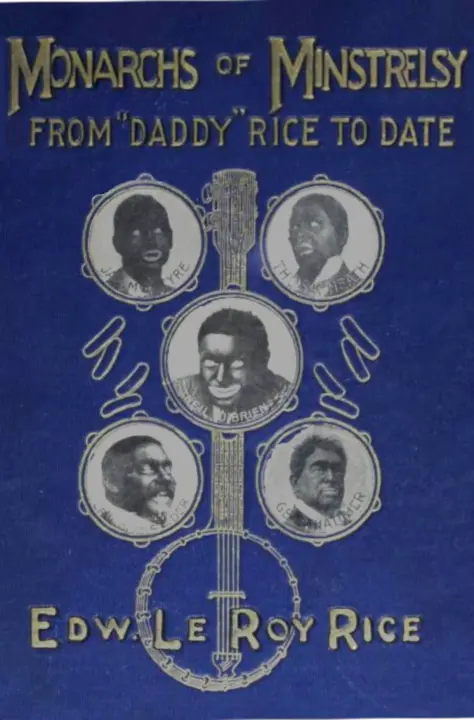
"Monarchs of Minstrelsy, from 'Daddy' Rice to Date" by Edw. Le Roy Rice is a historical account written in the early 20th century. The book explores the evolution of minstrel shows, focusing on the significant figures and performers from the inception of this entertainment style to the present day of its writing. It delves into the lives and careers of celebrated performers while capturing the unique cultural narratives of the minstrel art form. The opening of the book sets the stage for an exploration of minstrelsy, questioning its relevance and survival amid changing societal views. It reflects on the notable artists who have passed away in recent years and highlights the contributions of both older and younger generations of performers. Through a combination of personal anecdotes and researched accounts, the author aims to preserve the legacy of these artists, emphasizing the significance of their stories in the broader context of American entertainment history.
Introduction adapted from the source catalogue; source summaries may be automatically generated.
Free to read · English · 137,676 words · No account needed
MAKE TIME FOR A GOOD BOOK
On by default. Untick to stop anonymous reading totals. Each page counts after 10 seconds in view. How this works.
Anonymous counting is on unless you have switched it off.
Mr. Heywood made his debut with an amateur minstrel company in Newark, N. J., in 1867, at the famous old Library Hall.
In January, 1868, he appeared professionally in New York with Kelly and
Leon’s Minstrels.
Later he was identified with Buckley’s, Duprez and Benedict; Emerson’s; Simmons and Slocum’s; Haverly’s, and several other notable organizations.
In 1881 he was with Thatcher and Ryman’s Minstrels in Philadelphia, and the following year with Clark and Ryman’s Minstrels he went to Australia--with his pigeons; for Heywood wouldn’t travel without his pigeons, and the pigeons wouldn’t travel without Heywood; so there you are.
After the pigeon engagement, which lasted sixty weeks, Mr. Heywood joined Haverly’s Mastodons in London, in 1884; again using the pigeons, 100 strong, as a feature of his act.
After several notable engagements in the music halls on the Continent, he returned to this country, and subsequently built a theatre in Newark, N. J. As a builder Mr. Heywood admits he wasn’t a success, but as a hustler he is second to none. And then he opened a conservatory, where several who since achieved success in their profession received their tuition. Of late years Mr. Heywood’s talents have been devoted chiefly to concert work.
Charles Heywood was born in New York City, October 24, 1848.
BARRY MAXWELL (Maxey) has been famous for many years for his delineation of the aged “darky,” of which he is a master.
His stage career began in his native city as a member of the Crescent City Serenaders, in which he was one of the end men.
With Ed Gibson, as Gibson and Maxwell, he joined Spalding and Manning’s Minstrels; other minstrel organizations he was identified with were Hooley’s; Haverly’s; Emerson and Reed’s, in San Francisco; Dockstader’s, in New York, from 1886 to 1889, and Schoolcraft and Maxwell’s Minstrels.
Mr. Maxwell was also of the team of Maxwell and Carroll.
For ten years he appeared successfully with the Chas. H. Hoyt shows, where he was called upon to play both white and black face characters, which he did with equal facility.
His portrayal of the black-face character of Othello, in the “Texas Steer,” and Sassafras Livingstone, in the “County Chairman,” received the highest encomiums from press and public.
Barry Maxwell was born in New Orleans, La., October 29, 1848.
QUILTER and GOLDRICH ranked with the best song and dance teams of
minstrelsy.
They made their first appearance in 1869 at Pittsburgh, Pa., with Harry
Williams.
During their partnership they played practically every first-class variety house in the country, as well as many of the principal minstrel companies, including Harry Robinson’s, Neil Bryant’s, and Kelly and Leon’s.
Your reading position is saved on this browser. Take it to another device with a library code. Reading pages adapt to text, rather than matching a printed edition.
BEHIND THE BOOK
This eBook is for the use of anyone anywhere in the United States and most other parts of the world at no cost and with almost no restrictions whatsoever. You may copy it, give it away or re-use it under the terms of the Project Gutenberg License included with this eBook or online at www.gutenberg.org. If you are not located in the United States, you will have to check the laws of the country where you are located before using this eBook. Read the source licence.
The original source file, including credits and licence, is retained by this library. Request an original-format copy at no charge. Please include the book title and Project Gutenberg identifier #69826.
KEEP YOUR CURIOSITY GOING
Cécile Tormay

Moritz Busch
John L. Ransom
Frances Wright
Cécile Tormay

Mabel Potter Daggett