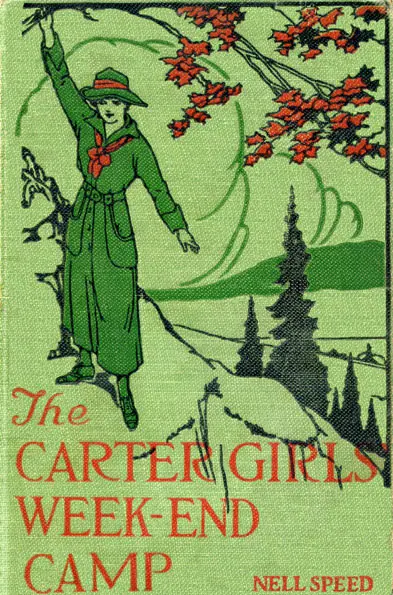
The Carter Girls’ Week-End Camp
Nell Speed
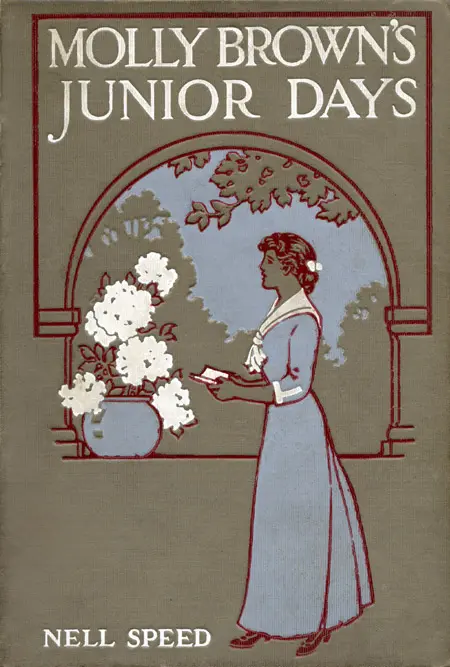
THE CLASSIC COLLECTION · 1912
"Molly Brown's Junior Days" by Nell Speed is a novel written in the early 20th century. This work is part of a series focusing on the life of a spirited protagonist named Molly Brown, following her college adventures alongside her friends at Wellington College. The narrative highlights themes of friendship, self-discovery, and the challenges of transitioning from youth to adulthood amid academic and social pressures. The opening portion of the book introduces the chaotic arrival of students back at Wellington College, particularly focusing on Nance Oldham, who finds herself overwhelmed by the tumult of settling in. As she navigates her surroundings and encounters her diverse classmates, including her friend Otoyo Sen, Nance reflects on her fondness for the college and the excitement of the new academic year. The chapter sets the stage for the dynamics of friendship among the girls and hints at forthcoming challenges, including the treatment of a brash newcomer, Minerva Higgins, whose confidence may not align with the college's established social norms. This introduction establishes a lively college atmosphere filled with humorous interactions and the promise of growth and adventure for the characters involved.
Introduction adapted from the source catalogue; source summaries may be automatically generated.
Free to read · English · 47,712 words · No account needed
MAKE TIME FOR A GOOD BOOK
On by default. Untick to stop anonymous reading totals. Each page counts after 10 seconds in view. How this works.
Anonymous counting is on unless you have switched it off.
Margaret then delivered a learned discourse on "Poise of Body and Poise of Mind," which was skillfully expressed in such deep and intricate language that nobody could understand what she was talking about.
"Very, very interesting, indeed," observed Edith.
"Remarkable; wonderful; so clearly put," came from the others.
Minerva rubbed her eyes and frowned.
Nance recited "The Raven," translated into very bad French. This was almost more than their gravity could endure, and when she ended each verse with "Dit le corbeau: jamais plus," many of the girls stooped under the table for lost handkerchiefs and Japanese napkins.
But it was not until Judy had sung a lullaby in Sanskrit--so called--that Minerva became at all suspicious. Even then it was the wrong kind of suspicion. She thought that perhaps she should have laughed, and the others had politely refrained because she hadn't.
After a great deal of learned talk, Molly stood on a soap box and recited "Curfew Shall Not Ring To-night."
This was the crowning joy of that famous evening, but still Minerva appeared seriously impressed.
"I recited that once at Mill Town High School," she remarked.
"Can't you give us something to-night?" asked Molly kindly, feeling that in some way the unfortunate Minerva ought to be allowed to join in.
"I don't know that I ought to give another poem by the same man," she replied, "except that Miss Oldham gave 'The Raven' in French."
"Don't tell us you know 'The Bells'?" demanded Edith Williams, in a
trembling whisper.
"Oh, yes. I've given it at lots of school entertainments."
"We had better turn down the lights," said Margaret. "The room should be in darkness except the side light where Miss Higgins will stand. That will be the spot light."
This was a fortunate arrangement because, while Minerva recited "The Bells," with all proper gestures, intonations and echoes, according to Cleveland's recitation book, the girls silently collapsed. When she had finished, they were reduced to that exhausted state that arrives after a supreme effort not to laugh.
At last the entertainment came to an end. Minerva departed with some of the others, while those who lived close by remained to chat for a few minutes.
"I give up," exclaimed Margaret Wakefield. "Minerva is beyond teaching. She must remain forever the smartest girl in Mill Town High School."
"The only pity of it is that it was all wasted on one humorless person. We really furnished her with a most delightful entertainment and she never even guessed it," declared Nance.
"I'm glad she didn't," remarked Molly. "It was cruel, I think. Suppose she had caught on? Do you think it would have helped her? And we would have been uncomfortable."
Your reading position is saved on this browser. Take it to another device with a library code. Reading pages adapt to text, rather than matching a printed edition.
Nell Speed

Nell Speed
Nell Speed
Nell Speed
BEHIND THE BOOK
This eBook is for the use of anyone anywhere in the United States and most other parts of the world at no cost and with almost no restrictions whatsoever. You may copy it, give it away or re-use it under the terms of the Project Gutenberg License included with this eBook or online at www.gutenberg.org. If you are not located in the United States, you will have to check the laws of the country where you are located before using this eBook. Read the source licence.
The original source file, including credits and licence, is retained by this library. Request an original-format copy at no charge. Please include the book title and Project Gutenberg identifier #36717.
KEEP YOUR CURIOSITY GOING
Coulson Kernahan

Maurice Baring
Frances Wright
Cécile Tormay

Frederic Jesup Stimson

W. H. P. (William Henry Pope) Jarvis