THE CLASSIC COLLECTION✦A dead man’s diaryCLASSIC FREE BOOKS
A dead man’s diary
Coulson Kernahan
THE CLASSIC COLLECTION · 1927
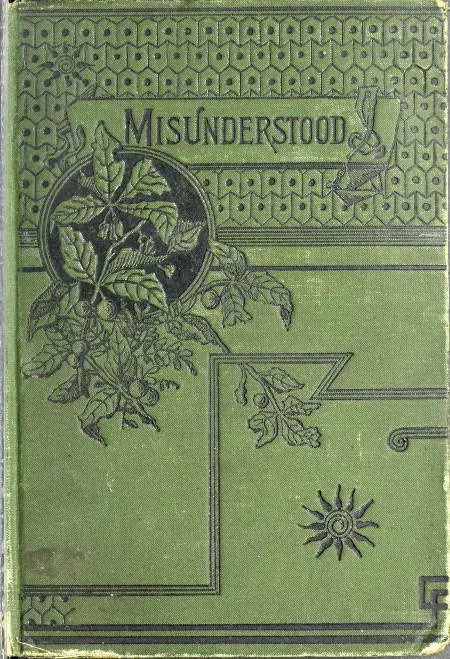
"Misunderstood" by Florence Montgomery is a novel written in the late 19th century. The story centers around two young brothers, Humphrey and Miles Duncombe, who navigate the complexities of childhood within the backdrop of their home at Wareham Abbey. Through their adventures, the book explores themes of childhood innocence, the misunderstandings that arise in familial relationships, and the longing for parental attention after the loss of their mother. At the start of the novel, the brothers are waiting eagerly for their father’s return, while reflecting on the rainy weather that has thwarted their plans to meet him. Each brother has a distinctive personality; Humphrey is adventurous and bold, often leading Miles into mischief, while Miles is more timid and sensitive. They interact with their caretakers and ponder their late mother, revealing glimpses of their affection and the void her absence has left in their lives. As they await their father’s arrival, their innocent conversations and imaginative play highlight the joys and trials of childhood, setting the tone for their adventures ahead.
Introduction adapted from the source catalogue; source summaries may be automatically generated.
Free to read · English · 45,809 words · No account needed
MAKE TIME FOR A GOOD BOOK
On by default. Untick to stop anonymous reading totals. Each page counts after 10 seconds in view. How this works.
Anonymous counting is on unless you have switched it off.
Sir Everard did not catch the last words, but the boy's face reminded him that he had touched on a painful subject, and he hastened to change it by proposing they should start for the village.
Humphrey brightened up directly, and was soon talking as gaily as usual. The painfulness of the subject consisted in this.
One day, Humphrey and Miles were amusing themselves in their gardens, when the jackdaw, then young and active, came flying past.
Humphrey without the slightest idea of touching it, flung a stone at it, exclaiming, "Get away, old fellow!"
But so unerring was his aim, that the stone struck the bird on the wing, and brought it struggling and fluttering to the ground.
Dolly, the laundry-maid, was close at hand, and she never forgot Humphrey's burst of grief and remorse, when, on picking up the jackdaw, they found both leg and wing broken. That a living creature should be deprived of its powers by his means was more than the tender-hearted child could bear, and for a long while he was inconsolable.
In due time the bird had been supplied with a wooden leg through Dolly, by whom it had ever since been carefully tended, but its life, in Humphrey's eyes, was over; and he never passed the cage without a pang. He seldom spoke of it, it was too sore a subject; but his attention to the lame bird had from that day to this never relaxed for an instant.
On the way to the village, Sir Everard questioned him on his progress
with his lessons.
Humphrey always gave a capital account of himself; reading, writing, French, everything, according to him, was going on as swimmingly as possible.
Sir Everard's faith in these reports had been rather shaken since the memorable occasion when, relying on Humphrey's confident assertion, that he now knew the auxiliary verbs perfectly, he had, with a father's pride, called upon him suddenly to repeat the verb "avoir" to his grandmother. She was a lady of the old school, and a great stickler for early education: and he had been rather nettled by an observation that had dropped from her, to the effect that Humphrey was rather backward.
"Indeed, mother," he had answered, "I think few boys of his age know so much of French. He speaks it perfectly, and is well grounded in the grammar."
To prove which, Humphrey had been called out of the garden, and, to his father's dismay, had conjugated the first tense of the verb in the following manner:--
J'ai
Tu as
Il a
Nous sommes
Vous étes
Ils sont.
Conversation did not flag for a moment as they walked along.
Your reading position is saved on this browser. Take it to another device with a library code. Reading pages adapt to text, rather than matching a printed edition.
BEHIND THE BOOK
This eBook is for the use of anyone anywhere in the United States and most other parts of the world at no cost and with almost no restrictions whatsoever. You may copy it, give it away or re-use it under the terms of the Project Gutenberg License included with this eBook or online at www.gutenberg.org. If you are not located in the United States, you will have to check the laws of the country where you are located before using this eBook. Read the source licence.
The original source file, including credits and licence, is retained by this library. Request an original-format copy at no charge. Please include the book title and Project Gutenberg identifier #55222.
KEEP YOUR CURIOSITY GOING
Coulson Kernahan

Maurice Baring
Frances Wright
Cécile Tormay

Frederic Jesup Stimson

W. H. P. (William Henry Pope) Jarvis