THE CLASSIC COLLECTION✦A dead man’s diaryCLASSIC FREE BOOKS
A dead man’s diary
Coulson Kernahan
THE CLASSIC COLLECTION · 1927
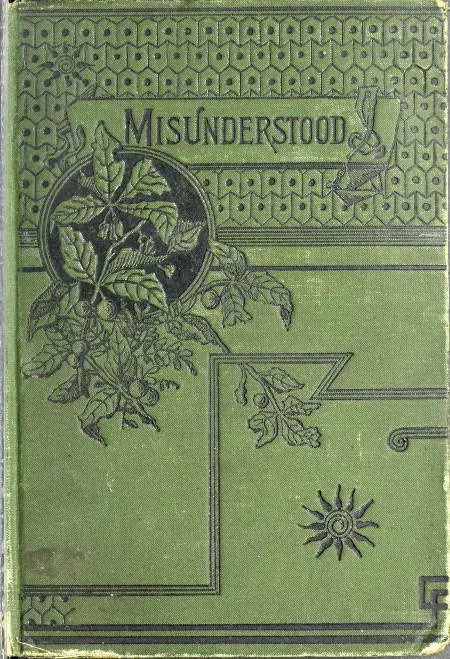
"Misunderstood" by Florence Montgomery is a novel written in the late 19th century. The story centers around two young brothers, Humphrey and Miles Duncombe, who navigate the complexities of childhood within the backdrop of their home at Wareham Abbey. Through their adventures, the book explores themes of childhood innocence, the misunderstandings that arise in familial relationships, and the longing for parental attention after the loss of their mother. At the start of the novel, the brothers are waiting eagerly for their father’s return, while reflecting on the rainy weather that has thwarted their plans to meet him. Each brother has a distinctive personality; Humphrey is adventurous and bold, often leading Miles into mischief, while Miles is more timid and sensitive. They interact with their caretakers and ponder their late mother, revealing glimpses of their affection and the void her absence has left in their lives. As they await their father’s arrival, their innocent conversations and imaginative play highlight the joys and trials of childhood, setting the tone for their adventures ahead.
Introduction adapted from the source catalogue; source summaries may be automatically generated.
Free to read · English · 45,809 words · No account needed
MAKE TIME FOR A GOOD BOOK
On by default. Untick to stop anonymous reading totals. Each page counts after 10 seconds in view. How this works.
Anonymous counting is on unless you have switched it off.
With the tears still standing in them, the eyes suddenly sparkled with a new feeling, and Humphrey sprang to the window, exclaiming,--
"A hawk! I do declare; and he'll have the sparrow in a minute!"
Sir Everard looked disappointed, and drew Miles closer to him.
"He's not thinking about us, is he, darling?"
"Eh!" exclaimed Humphrey, starting, "were you speaking to me? What did
you say, Miles?"
"It was about the glass, Humphie; I said we should like so much to see what Fardie is doing in London sometimes."
"Oh, wouldn't it be fun!" said Humphrey, seating himself by his brother; "sometimes we should see him in his club, and sometimes in a Hansom cab, and sometimes we should see you making a speech in the House of Parliament, shouldn't we, father, with your arm out, and a great sheet all round you, like the statue of Mr. Pitt down-stairs?"
Sir Everard laughed.
"Not very often," I think.
"How should we see you, Fardie?"
"I'm afraid, if you looked late in the evening, you would often see me so," he answered, folding his arms, and shutting his eyes.
"What, asleep!" exclaimed the children.
"Fast asleep," returned their father.
"Isn't the Queen very angry with you?" inquired Miles.
"The Queen is generally asleep herself at such hours."
"What! in the House of Parliament?"
"No; but in one or other of her palaces."
"But she isn't always asleep at night," said Humphrey, in a superior tone; "sometimes she sits up very late, and has a ball. I know a picture of her giving a ball, in the old book of prints down-stairs."
The volume in question bore the date of 1710, and the engraving
represented the court of Queen Anne, but it was all the same to
Humphrey.
"Do you ever go to the Queen's ball Fardie?" inquired Miles.
"Yes, dear, I have been, but not for a long time."
"Father's too old for balls now," observed Humphrey. "Ain't you,
father?"
"My dancing days are over, yes," said Sir Everard, absently. He was thinking how lovely his wife had looked at the last court ball he had been to.
"Do they dance 'Up the middle and down again,' Fardie?"
"No," answered Sir Everard, smiling, "quadrilles and valses mostly."
"I suppose when you were young and went to balls, they used to dance the minuet?" said Humphrey. "Used you to wear a pig-tail, father?"
"Upon my word!" said Sir Everard, "why, how old do you think I am?"
The children had no idea, and amused themselves for the next ten minutes by trying to guess, their conjectures varying between sixty and ninety.
"Will you come for a run, father?" said Humphrey, presently.
Your reading position is saved on this browser. Take it to another device with a library code. Reading pages adapt to text, rather than matching a printed edition.
BEHIND THE BOOK
This eBook is for the use of anyone anywhere in the United States and most other parts of the world at no cost and with almost no restrictions whatsoever. You may copy it, give it away or re-use it under the terms of the Project Gutenberg License included with this eBook or online at www.gutenberg.org. If you are not located in the United States, you will have to check the laws of the country where you are located before using this eBook. Read the source licence.
The original source file, including credits and licence, is retained by this library. Request an original-format copy at no charge. Please include the book title and Project Gutenberg identifier #55222.
KEEP YOUR CURIOSITY GOING
Coulson Kernahan

Maurice Baring
Frances Wright
Cécile Tormay

Frederic Jesup Stimson

W. H. P. (William Henry Pope) Jarvis