THE CLASSIC COLLECTION✦A dead man’s diaryCLASSIC FREE BOOKS
A dead man’s diary
Coulson Kernahan
THE CLASSIC COLLECTION · 1927
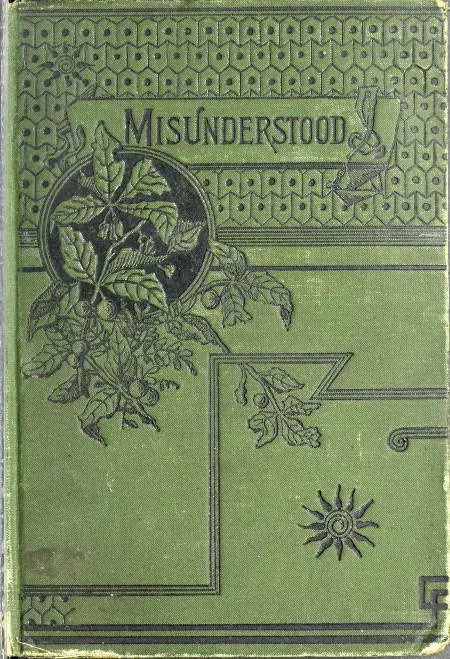
"Misunderstood" by Florence Montgomery is a novel written in the late 19th century. The story centers around two young brothers, Humphrey and Miles Duncombe, who navigate the complexities of childhood within the backdrop of their home at Wareham Abbey. Through their adventures, the book explores themes of childhood innocence, the misunderstandings that arise in familial relationships, and the longing for parental attention after the loss of their mother. At the start of the novel, the brothers are waiting eagerly for their father’s return, while reflecting on the rainy weather that has thwarted their plans to meet him. Each brother has a distinctive personality; Humphrey is adventurous and bold, often leading Miles into mischief, while Miles is more timid and sensitive. They interact with their caretakers and ponder their late mother, revealing glimpses of their affection and the void her absence has left in their lives. As they await their father’s arrival, their innocent conversations and imaginative play highlight the joys and trials of childhood, setting the tone for their adventures ahead.
Introduction adapted from the source catalogue; source summaries may be automatically generated.
Free to read · English · 45,809 words · No account needed
MAKE TIME FOR A GOOD BOOK
On by default. Untick to stop anonymous reading totals. Each page counts after 10 seconds in view. How this works.
Anonymous counting is on unless you have switched it off.
"Sailors are the men for stories," was his answer; "you had better ask
your uncle."
Uncle Charlie proved a charming story teller. He told them of sharks and crocodiles, of boar-hunting, and of wonderful adventures by land and sea.
The children hung on his every word.
The shadows grew long, and the sun began to sink over the cornfields, and still they were absorbed in listening, and their father in watching their sparkling eyes and varying countenances.
"Come," said Sir Everard at last, jumping up, "no more stories, or we shall be here all night. It is past six, and Virginie will be wondering what has become of us."
"Oh!" said Humphrey, drawing a long breath, as he descended from those heights of wonder to the trifling details of everyday life, recalled by the mention of Virginie, "how delicious it has been! I hope, father, you will let me be a sailor when I grow up?"
"Well, I don't think that will exactly be your vocation," answered Sir Everard; "but there is plenty of time before you."
"Me, too," said little Miles; "I want to be a sailor too."
"You, my darling," said Sir Everard, fondly; "no, not you; I couldn't spare you my sweet little fellow."
And he stooped, as he spoke, to kiss the little face that was uplifted so pleadingly to his, the lips that were always so ready to respond to his caresses.
Humphrey had turned away his head, and was gazing intently at his ears
of corn.
"Is he jealous, I wonder?" thought Uncle Charlie, peering at the little face under the straw hat, and wondering whether it was a tear he saw shining among the long dark eyelashes.
But before he could make up his mind if it were so, the child's eyes were sparkling with excitement over a curious creature with a thousand legs, which had crawled out of the corn in his hand.
"And now jump up, boys, and come home." Sir Everard, as he spoke, picked up his cane, and taking his brother-in-law's arm, walked slowly on. "We shall have all these feats reproduced, Charlie, of that I am quite sure. Virginie has a nice time before her."
There was very little tea eaten that evening, the children were in such a hurry to get down again to the delectable anecdotes.
But Sir Everard took alarm at Miles's flushed cheeks and bright eyes, and would allow no more exciting stories so close upon bed-time.
"Will you finish about the crocodile to-morrow?" asked Humphrey, creeping up his uncle's leg, as he came to wish him good-night.
"To-morrow I go, my boy," he answered.
"Going to-morrow!" said Humphrey. "What a very short visit!"
Your reading position is saved on this browser. Take it to another device with a library code. Reading pages adapt to text, rather than matching a printed edition.
BEHIND THE BOOK
This eBook is for the use of anyone anywhere in the United States and most other parts of the world at no cost and with almost no restrictions whatsoever. You may copy it, give it away or re-use it under the terms of the Project Gutenberg License included with this eBook or online at www.gutenberg.org. If you are not located in the United States, you will have to check the laws of the country where you are located before using this eBook. Read the source licence.
The original source file, including credits and licence, is retained by this library. Request an original-format copy at no charge. Please include the book title and Project Gutenberg identifier #55222.
KEEP YOUR CURIOSITY GOING
Coulson Kernahan

Maurice Baring
Frances Wright
Cécile Tormay

Frederic Jesup Stimson

W. H. P. (William Henry Pope) Jarvis