THE CLASSIC COLLECTION✦A dead man’s diaryCLASSIC FREE BOOKS
A dead man’s diary
Coulson Kernahan
THE CLASSIC COLLECTION · 1927
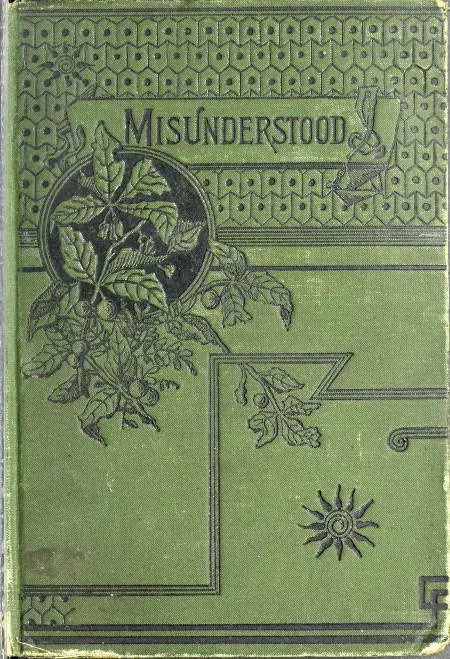
"Misunderstood" by Florence Montgomery is a novel written in the late 19th century. The story centers around two young brothers, Humphrey and Miles Duncombe, who navigate the complexities of childhood within the backdrop of their home at Wareham Abbey. Through their adventures, the book explores themes of childhood innocence, the misunderstandings that arise in familial relationships, and the longing for parental attention after the loss of their mother. At the start of the novel, the brothers are waiting eagerly for their father’s return, while reflecting on the rainy weather that has thwarted their plans to meet him. Each brother has a distinctive personality; Humphrey is adventurous and bold, often leading Miles into mischief, while Miles is more timid and sensitive. They interact with their caretakers and ponder their late mother, revealing glimpses of their affection and the void her absence has left in their lives. As they await their father’s arrival, their innocent conversations and imaginative play highlight the joys and trials of childhood, setting the tone for their adventures ahead.
Introduction adapted from the source catalogue; source summaries may be automatically generated.
Free to read · English · 45,809 words · No account needed
MAKE TIME FOR A GOOD BOOK
On by default. Untick to stop anonymous reading totals. Each page counts after 10 seconds in view. How this works.
Anonymous counting is on unless you have switched it off.
"It is getting very dark," he murmured, and Sir Everard's heart sank within him, for the sun was only just beginning to set. "It is time for us to go to bed. Where's Miles?"
For a few brief moments the throbbing has ceased, and with its cessation, voices and visions have fled away.
Sir Everard stole away to fetch the little fellow, and found him in his nightgown repeating his evening prayer to Virginie. With a few hasty explanations, Sir Everard took him in his arms, and carried him away.
"But, Fardie," said Miles, as they hurried downstairs "I hadn't quite finished; I have not said my hymn."
"Never mind, darling! you shall say it to Humphrey to-night."
He carried him gently into the drawing room, and set him down upon the
sofa.
Miles was frightened at the silence and darkness, and nestled up closer
to his brother.
"Humphie! Humphie! wake up and give me your hand."
"Don't be frightened, Miles," murmured Humphrey, dreamily: "come close to me, I'll take care of you."
He strove to move to the edge of the sofa, as if he thought his little brother's bed was close up against it, and he threw his feeble arm round Miles in the dear old protecting way.
"We won't talk much to-night, Miles, because I'm so very sleepy.
Good-night."
He said something faintly about seeing his mother, but Miles couldn't
catch the words.
"Didn't quite understand, Humphie."
Something of a movement of impatience passed over Humphrey's face.
"Of course you don't--because--you can't--remember her."
"No," said little Miles, meekly, "but you'll tell me, Humphie?"
"To-morrow," he murmured, "I shall be able to explain--better--to-morrow--good-night--good-night."
And in the silence that reigned, every one present heard the little brothers exchange their last kiss.
"I can't see them," said Sir Everard, huskily; "some one draw up the
blind."
The setting sun outside was illumining the landscape ere it sank to rest, and shedding its beams on the haunts and the companions of the boy's young life. On the lambs he had chased in the meadows, on the birds he had watched since they had learned to fly, on the fields and the gardens which seemed so empty without him, it was shining with a softened glow;--but it seemed to have reserved its richest glory for the children, for, as the blind went slowly up, such a flood of light poured into the room, that the eyes of the father were dazzled, and it was some minutes before he could distinguish them.
Your reading position is saved on this browser. Take it to another device with a library code. Reading pages adapt to text, rather than matching a printed edition.
BEHIND THE BOOK
This eBook is for the use of anyone anywhere in the United States and most other parts of the world at no cost and with almost no restrictions whatsoever. You may copy it, give it away or re-use it under the terms of the Project Gutenberg License included with this eBook or online at www.gutenberg.org. If you are not located in the United States, you will have to check the laws of the country where you are located before using this eBook. Read the source licence.
The original source file, including credits and licence, is retained by this library. Request an original-format copy at no charge. Please include the book title and Project Gutenberg identifier #55222.
KEEP YOUR CURIOSITY GOING
Coulson Kernahan

Maurice Baring
Frances Wright
Cécile Tormay

Frederic Jesup Stimson

W. H. P. (William Henry Pope) Jarvis