Reuben Sachs
Amy Levy
THE CLASSIC COLLECTION · 1889
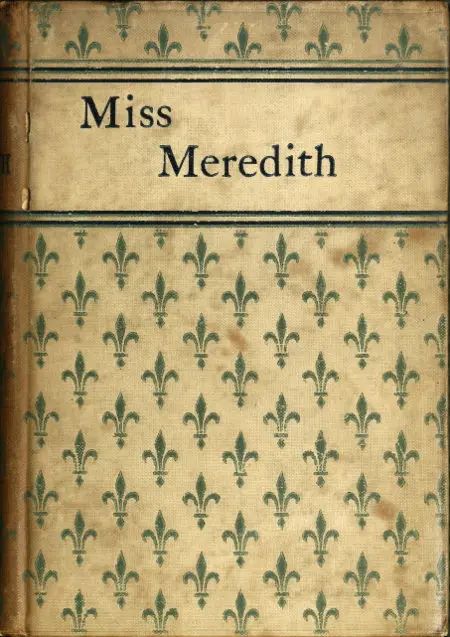
"Miss Meredith" by Amy Levy is a novel written in the late 19th century. The story revolves around Elsie Meredith, a young woman from a struggling family in England who accepts a position as a governess in Italy for the Marchesa Brogi. The narrative delves into her experiences as she navigates the complexities of her new life, including familial relationships, cultural differences, and budding feelings of love amidst her sense of isolation. The opening of the novel introduces us to Elsie's family dynamics as she contemplates the opportunity that could take her to Pisa. The atmosphere is infused with a mixture of warmth and melancholy as Elsie bids farewell to her mother and sisters. As she travels to her new life, her initial excitement is quickly tempered by feelings of uncertainty and homesickness. Upon arriving at the grand Palazzo Brogi, she is met with a chilly reception and gets to know her pupils and new surroundings, setting the stage for her struggle with loneliness and the challenges that lie ahead in her Italian adventure.
Introduction adapted from the source catalogue; source summaries may be automatically generated.
Free to read · English · 23,143 words · No account needed
MAKE TIME FOR A GOOD BOOK
On by default. Untick to stop anonymous reading totals. Each page counts after 10 seconds in view. How this works.
Anonymous counting is on unless you have switched it off.
"We don't dance the same way," she said, releasing me after a brief but
breathless interval.
Annunziata in apple-green brocade and a pearl stomacher was the next arrival, laughing heartily, and flourishing her lace handkerchief as she came. Behind her strolled her husband, handsome, indolent, and grave as a judge. The old Marchese brought up the rear.
The guests began now to arrive; smart, dignified, voluble matrons; smart, expectant girls; slight, serious young civilians, dandling their hats as they came; pretty little officers in uniform, with an air of being very much at home in a ball-room. Romeo brought me a programme, and wrote his name down for the lancers.
Then I stood there rather forlornly while the musicians struck up the
first waltz.
At the first notes of the music Andrea left Costanza's side and came
towards me.
"He is going to ask me to dance," was my involuntary reflection; "how nice! I am sure he dances well."
"Let me introduce il signor capitano," said Romeo's voice in my ear; and there stood a trim little person in uniform before me, bowing and requesting the honour of the first dance.
"One moment," said Andrea, quietly, as, rather disappointed, I began to move away with my partner; "Miss Meredith, may I see your card?"
I handed him the little bit of gilt pasteboard, virgin, save for his
brother's name.
"Will you give me six and ten?"
"Yes."
He returned to Costanza, his partner for the dance, and I and my officer plunged into the throng.
It was not a success. There were no points of agreement in our practice of waltzing, and after a few turns we subsided on to one of the damask sofas, exchanging commonplaces and watching the dancers, whose rapid twists and bounding action filled my heart with despair.
"I shall never be able to dance like that," I reflected. It was by no means an ungraceful performance. They leapt high, it is true, but in no vulgar fashion of mere jumping; rather they rose into the air with something of the ease and elasticity of an indiarubber ball, maintaining throughout an appearance of great seriousness and dignity.
At the end of the dance, my partner bowed himself away, and I withdrew rather forlornly to a corner, hoping to escape unnoticed. Here, however, Romeo again espied me, and led up to me a rather despondent young gentleman--a student at the University of Pisa, I afterwards learned--whom I had observed nursing his tall silk hat in solitude throughout the previous dance.
I explained earnestly that I could not dance Italian fashion; that I preferred, indeed, to be a spectator, and settled down into my corner with some philosophy.
Your reading position is saved on this browser. Take it to another device with a library code. Reading pages adapt to text, rather than matching a printed edition.
BEHIND THE BOOK
This eBook is for the use of anyone anywhere in the United States and most other parts of the world at no cost and with almost no restrictions whatsoever. You may copy it, give it away or re-use it under the terms of the Project Gutenberg License included with this eBook or online at www.gutenberg.org. If you are not located in the United States, you will have to check the laws of the country where you are located before using this eBook. Read the source licence.
The original source file, including credits and licence, is retained by this library. Request an original-format copy at no charge. Please include the book title and Project Gutenberg identifier #59990.
KEEP YOUR CURIOSITY GOING
Coulson Kernahan

Maurice Baring
Frances Wright
Cécile Tormay

Frederic Jesup Stimson

W. H. P. (William Henry Pope) Jarvis