THE CLASSIC COLLECTION✦A dead man’s diaryCLASSIC FREE BOOKS
A dead man’s diary
Coulson Kernahan
THE CLASSIC COLLECTION · 1886
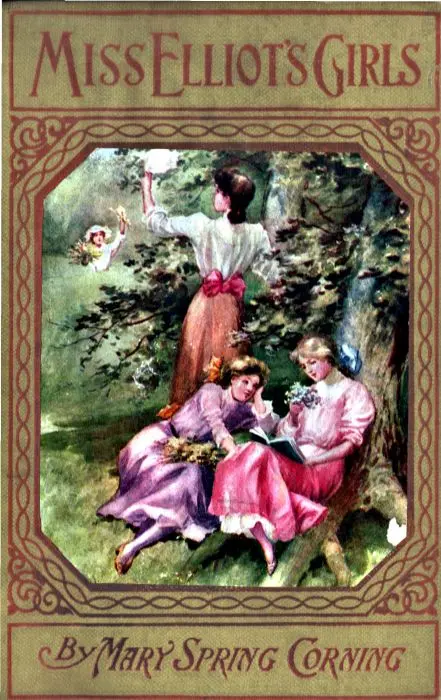
"Miss Elliot's Girls: Stories of Beasts, Birds, and Butterflies" by Mrs. Mary Spring Corning is a collection of children's stories likely written in the late 19th century. The book features themes of nature and animal life, focusing on the interactions between children and the creatures they observe, particularly through the eyes of the character Miss Ruth Elliot, who shows a keen curiosity and an affectionate connection to the natural world. The opening of the book introduces young Sammy Ray, who is enlisted by Miss Ruth to find tobacco worms for her to keep and observe. Throughout their interactions, Ruth demonstrates a nurturing spirit, as she prepares to accommodate the worms, naming them Greeny and Blacky. The narrative delves into the process of transformation, drawing a parallel between the metamorphosis of the worms into butterflies and the broader theme of change in life. The lively conversations between Ruth and the children about the worms provide a charming glimpse into their world, establishing connections between nature, education, and personal growth, setting the tone for the delightful stories that follow.
Introduction adapted from the source catalogue; source summaries may be automatically generated.
Free to read · English · 40,072 words · No account needed
MAKE TIME FOR A GOOD BOOK
On by default. Untick to stop anonymous reading totals. Each page counts after 10 seconds in view. How this works.
Anonymous counting is on unless you have switched it off.
The next time Sammy and Roy met at the parsonage, three flower-pots of moist sand stood in a row under the bench.
"Winter quarters," Miss Ruth explained when she saw the boys looking at them; "and it's about time for my tenants to move in. Greeny and Blacky have stopped eating, and Sly-boots is turning pale."
"A worm turn pale!"
"Yes, indeed; look at him."
It was quite true; the green on his back had changed to gray-white, and his pretty spots were fading.
"He looks awfully; is he going to die?"
"Yes--and no. Come this afternoon and see what will happen."
But when they came, Blacky and Sly-boots were not to be seen. Their summer residence, empty and uncovered, stood out in the sun, and two of the flower-pots were covered with netting.
"I couldn't keep them, boys," Miss Ruth said; "they were in such haste to be gone. Only Greeny is above ground."
Greeny was in his flower-pot. He was creeping slowly round and round, now and then stretching his long neck over the edge, but not trying to get out. Soon he began to burrow. Straight down, head first, he went into the ground. Now he was half under, now three quarters, now only the end of his tail and the tip of his horn could be seen. When he was quite gone, Sammy drew a long breath and Roy said, "I swanny!"
"How long will he have to stay down there?"
"All winter, Roy."
"Poor fellow!"
"Happy fellow! I say. Why, he has done being a worm. His creeping days are over. He has only to lie snug and quiet under the ground a while; then wake and come up to the sunshine some bright morning with a new body and a pair of lovely wings to spread and fly away with."
"Why, it's like--it's like"--
"What is it like, Sammy?"
"Ain't it like folks, Miss Ruth?" Grandma sings:--
'I'll take my wings and fly away
In the morning,'
"Yes," she said; "it is like folks." Then glancing at her crutch, repeated, smiling: "In the morning."
When the woodbine in the porch had turned red, and the maples in the door-yard yellow, the flower-pots were removed to the warm cellar, and one winter evening Sammy Ray wrote Greeny's epitaph:--
"A poor green worm, here I lie;
But by-and-by
I shall fly,
Ever so high,
Into the sky."
He came often in the spring to ask if any thing had happened, and one day Miss Ruth took from a box and laid in his hand a shining brown chrysalis, with a curved handle.
"What a funny little brown jug!" said Sammy.
Your reading position is saved on this browser. Take it to another device with a library code. Reading pages adapt to text, rather than matching a printed edition.
BEHIND THE BOOK
This eBook is for the use of anyone anywhere in the United States and most other parts of the world at no cost and with almost no restrictions whatsoever. You may copy it, give it away or re-use it under the terms of the Project Gutenberg License included with this eBook or online at www.gutenberg.org. If you are not located in the United States, you will have to check the laws of the country where you are located before using this eBook. Read the source licence.
The original source file, including credits and licence, is retained by this library. Request an original-format copy at no charge. Please include the book title and Project Gutenberg identifier #14610.
KEEP YOUR CURIOSITY GOING
Coulson Kernahan

Maurice Baring
Frances Wright
Cécile Tormay

Frederic Jesup Stimson

W. H. P. (William Henry Pope) Jarvis