THE CLASSIC COLLECTION✦The Mother of ParliamentsCLASSIC FREE BOOKS
The Mother of Parliaments
Harry Graham
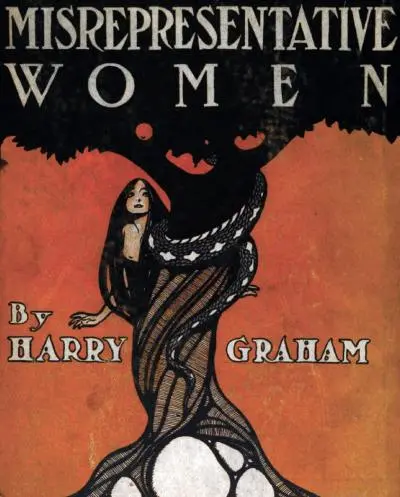
THE CLASSIC COLLECTION · 1906
"Misrepresentative Women" by Harry Graham is a collection of humorous poems written during the early 20th century. The book presents a satirical examination of various women, using wit and caricature to explore societal norms and expectations. The poems often highlight the absurdities and contradictions in the perceptions of femininity of the time, providing a playful critique of well-known figures as well as archetypal women from history and society. The content of the book consists of cleverly crafted verses that portray women such as Eve, Lady Godiva, and Mrs. Mary Baker Eddy, each characterized through a unique lens of Graham's comedic style. The poems offer a mix of historical context, literary allusions, and social commentary, depicting these women in ways that both celebrate and poke fun at their attributes and the roles they played. Through exaggerated and witty narratives, the author invites readers to reflect on the stereotypes and varying roles of women in society, balancing between admiration and critique in a light-hearted manner that encourages laughter and introspection alike.
Introduction adapted from the source catalogue; source summaries may be automatically generated.
Free to read · English · 6,884 words · No account needed
MAKE TIME FOR A GOOD BOOK
On by default. Untick to stop anonymous reading totals. Each page counts after 10 seconds in view. How this works.
Anonymous counting is on unless you have switched it off.
And this must surely be the hour
For Anglo-Saxons, ev’rywhere,
With cousinly regard, to show’r
Good wishes on the pair;
Borne on the bosom of the breeze,
Our blessings speed across the seas!
Hail, Bride and Bridegroom of the West!
(Pray pardon my redundant lyre)
May your united lives be blest
With all your hearts’ desire!
Accept the warm felicitations
Of fond, if distant, blood-relations!
The Self-Made Father to His Ready-Made Son
My Offspring:--Ere you raise the glass,
To irrigate your ardent throttle;
Ere once again you gladly pass
The bottle;
Take heed that your prevailing passion
Be not completely out of fashion.
No longer does the Prodigal
Expend his nights in drunken frolic;
Or pass his days in revels al-Coholic;
For, nowadays, a glass de trop
Is not considered comme il faut.
No longer do the youthful fall,
Like leaf or partridge in October;
For they, if anything at all,
Are sober.
(I mean the boys,--don’t be absurd!
And not the foliage or the bird.)
No longer arm-in-arm they roam,
Despite constabulary warning,
Declaring that they won’t go home
Till morning!
With bursts of bacchanalian song,
And jokes as broad as they are long.
No more they wander to-and-fro,
Exchanging incoherent greetings--
The kind in vogue at Caledo-
-Nian Meetings
(Behavior that we all condemn,
Especially at 3 a. m.).
Yes; fashions change--and well they may!
No longer, at the dinner-table,
Do persons drink as much as they
Are able;
And seek the hospitable floor,
When they have drunk a trifle more.
My nasal hue, incarnadine,
Shall not, perhaps, be wholly wasted,
If sons of mine but leave their wine
Untasted;
And vanquish, with deserving merit,
The varied vices they inherit.
Yes, Offspring, I rejoice to think
That, shunning my example truly,
You never may be led to drink
Unduly.
It is indeed a blessèd thought!
Now, will you kindly pass the port?
The Author to His Hostess
[Very few English men of letters enjoy a desirable social position. To be sure, they are frequently invited to functions, where they are treated with insistent affability by persons belonging to the higher classes; but the sort of position to be obtained in this way is insecure, and unpleasant to any save those of adamantine cheek.--Current Magazine.]
Dear Lady,--When you bade me come
To grace your crowded “Kettledrum,”
And mingle in the best society;
When Melba sang, and Elman played,
And waiters handed lemonade
(Tempering music with sobriety),
I never had the least suspicion
Of my precarious position.
Your reading position is saved on this browser. Take it to another device with a library code. Reading pages adapt to text, rather than matching a printed edition.
Harry Graham
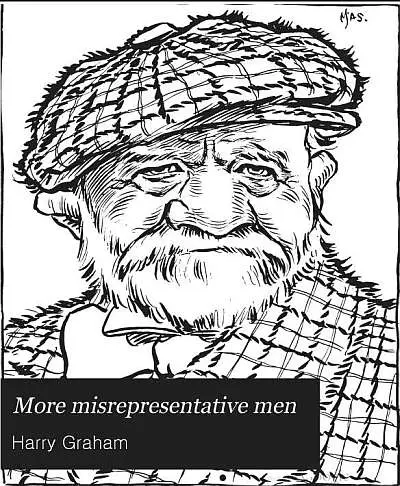
Harry Graham
Harry Graham
Harry Graham
BEHIND THE BOOK
This eBook is for the use of anyone anywhere in the United States and most other parts of the world at no cost and with almost no restrictions whatsoever. You may copy it, give it away or re-use it under the terms of the Project Gutenberg License included with this eBook or online at www.gutenberg.org. If you are not located in the United States, you will have to check the laws of the country where you are located before using this eBook. Read the source licence.
The original source file, including credits and licence, is retained by this library. Request an original-format copy at no charge. Please include the book title and Project Gutenberg identifier #42407.
KEEP YOUR CURIOSITY GOING

Eric Mackay
Edmund Gosse
Sophia Margaretta Hensley
Gilbert Parker
George MacDonald

Elizabeth Bibesco