THE CLASSIC COLLECTION✦The People’s Idea of God: Its Effect On Health And ChristianityCLASSIC FREE BOOKS
The People’s Idea of God: Its Effect On Health And Christianity
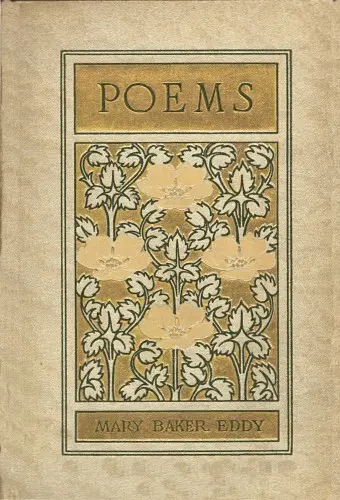
Mary Baker Eddy
THE CLASSIC COLLECTION · 1896
"Miscellaneous Writings, 1883-1896" by Mary Baker Eddy is a collection of essays and addresses focusing on the philosophy and practice of Christian Science, written during the late 19th century. The book explores various themes including healing through spiritual means, the nature of God, and the relationship between mind and body. In this work, Eddy seeks to establish an understanding of Christian Science as a means to heal not only physical ailments but also moral and spiritual issues. The opening of the book includes a dedication to "Loyal Christian Scientists" and a preface explaining the purpose of the collection. Eddy describes her intention to compile her writings from "The Christian Science Journal" for clarity and continued instruction. She emphasizes the importance of understanding the spiritual laws governing health and morality and stresses the necessity of divine Love and Truth for healing. Through her writings, she seeks to guide her readers in navigating the challenges of life and to reveal a higher, more spiritual interpretation of Christianity. The introductory chapter sets the stage for deeper exploration into the principles of Christian Science that follow.
Introduction adapted from the source catalogue; source summaries may be automatically generated.
Free to read · English · 126,849 words · No account needed
MAKE TIME FOR A GOOD BOOK
On by default. Untick to stop anonymous reading totals. Each page counts after 10 seconds in view. How this works.
Anonymous counting is on unless you have switched it off.
Truth destroys error. Nothing appears to the physi- cal senses but their own subjective state of thought. The [25] senses join issue with error, and pity what has no right either to be pitied or to exist, and what does not exist in Science. Destroy the thought of sin, sickness, death, and you destroy their existence. “Whatsoever a man soweth, that shall he also reap.” [30]
Because God is Mind, and this Mind is good, all is good and all is Mind. God is the sum total of the
[Page 106.]
universe. Then what and where are sin, sickness, and [1]
death?
Christian Science and Christian Scientists will, must,
have a history; and if I could write the history in poor
parody on Tennyson’s grand verse, it would read [5]
thus:—
Traitors to right of them,
M. D.’s to left of them,
Priestcraft in front of them,
Volleyed and thundered! [10]
Into the jaws of hate,
Out through the door of Love,
On to the blest above,
Marched the one hundred.
Extract From My First Address In The Mother Church, May 26, 1895
Friends and Brethren:—Your Sunday Lesson, com- posed of Scripture and its correlative in “Science and Health with Key to the Scriptures,” has fed you. In addi- [20] tion, I can only bring crumbs fallen from this table of Truth, and gather up the fragments.
It has long been a question of earnest import, How shall mankind worship the most adorable, but most unadored,—and where shall begin that praise that shall never end? Beneath, above, beyond, methinks I hear [25] the soft, sweet sigh of angels answering, “So live, that your lives attest your sincerity and resound His praise.”
Music is the harmony of being; but the music of Soul affords the only strains that thrill the chords of feeling and awaken the heart’s harpstrings. Moved by mind, [30] your many-throated organ, in imitative tones of many
[Page 107.]
instruments, praises Him; but even the sweetness and [1] beauty in and of this temple that praise Him, are earth’s accents, and must not be mistaken for the oracles of God. Art must not prevail over Science. Christianity is not superfluous. Its redemptive power is seen in sore trials, [5] self-denials, and crucifixions of the flesh. But these come to the rescue of mortals, to admonish them, and plant the feet steadfastly in Christ. As we rise above the seem- ing mists of sense, we behold more clearly that all the heart’s homage belongs to God. [10]
More love is the great need of mankind. A pure af- fection, concentric, forgetting self, forgiving wrongs and forestalling them, should swell the lyre of human love.
Your reading position is saved on this browser. Take it to another device with a library code. Reading pages adapt to text, rather than matching a printed edition.
Mary Baker Eddy
Mary Baker Eddy
Mary Baker Eddy
Mary Baker Eddy
BEHIND THE BOOK
This eBook is for the use of anyone anywhere in the United States and most other parts of the world at no cost and with almost no restrictions whatsoever. You may copy it, give it away or re-use it under the terms of the Project Gutenberg License included with this eBook or online at www.gutenberg.org. If you are not located in the United States, you will have to check the laws of the country where you are located before using this eBook. Read the source licence.
The original source file, including credits and licence, is retained by this library. Request an original-format copy at no charge. Please include the book title and Project Gutenberg identifier #31427.
KEEP YOUR CURIOSITY GOING

David Patterson (Spirit) Hatch

David Patterson (Spirit) Hatch

David Patterson (Spirit) Hatch

Ralph Waldo Emerson

Maurice Baring

Oscar Wilde & James McNeill Whistler