THE CLASSIC COLLECTION✦The People’s Idea of God: Its Effect On Health And ChristianityCLASSIC FREE BOOKS
The People’s Idea of God: Its Effect On Health And Christianity
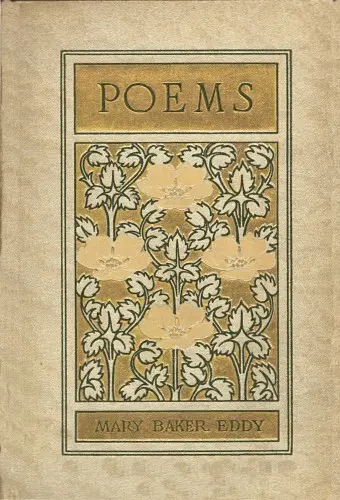
Mary Baker Eddy
THE CLASSIC COLLECTION · 1896
"Miscellaneous Writings, 1883-1896" by Mary Baker Eddy is a collection of essays and addresses focusing on the philosophy and practice of Christian Science, written during the late 19th century. The book explores various themes including healing through spiritual means, the nature of God, and the relationship between mind and body. In this work, Eddy seeks to establish an understanding of Christian Science as a means to heal not only physical ailments but also moral and spiritual issues. The opening of the book includes a dedication to "Loyal Christian Scientists" and a preface explaining the purpose of the collection. Eddy describes her intention to compile her writings from "The Christian Science Journal" for clarity and continued instruction. She emphasizes the importance of understanding the spiritual laws governing health and morality and stresses the necessity of divine Love and Truth for healing. Through her writings, she seeks to guide her readers in navigating the challenges of life and to reveal a higher, more spiritual interpretation of Christianity. The introductory chapter sets the stage for deeper exploration into the principles of Christian Science that follow.
Introduction adapted from the source catalogue; source summaries may be automatically generated.
Free to read · English · 126,849 words · No account needed
MAKE TIME FOR A GOOD BOOK
On by default. Untick to stop anonymous reading totals. Each page counts after 10 seconds in view. How this works.
Anonymous counting is on unless you have switched it off.
In the allegory of Genesis, third chapter and ninth verse, two mortals, walking in the cool of the day midst the stately palms, many-hued blossoms, perfume-laden [15] breezes, and crystal streams of the Orient, pondered the things of man and God.
A sense of evil is supposed to have spoken, been listened to, and afterwards to have formed an evil sense that blinded the eyes of reason, masked with deformity the [20] glories of revelation, and shamed the face of mortals.
What was this sense? Error versus Truth: first, a
supposition; second, a false belief; third, suffering;
fourth, death.
Is man the supposer, false believer, sufferer? [25]
Not man, but a mortal—the antipode of immortal man. Supposing, false believing, suffering are not fac- ulties of Mind, but are qualities of error.
The supposition is, that God and His idea are not all- power; that there is something besides Him; that this [30]
[Page 333.]
something is intelligent matter; that sin—yea, self- [1] hood—is apart from God, where pleasure and pain, good and evil, life and death, commingle, and are for- ever at strife; even that every ray of Truth, of infinity, omnipotence, omnipresence, goodness, could be absorbed [5] in error! God cannot be obscured, and this renders error a palpable falsity, yea, nothingness; on the basis that black is not a color because it absorbs all the rays of light.
The “Alpha and Omega” of Christian Science voices [10] this question: Where do we hold intelligence to be? Is it in both evil and good, in matter as well as Spirit? If so, we are literally and practically denying that God, good, is supreme, all power and presence, and are turn- ing away from the only living and true God, to “lords [15] many and gods many.”
Where art thou, O mortal! who turnest away from the divine source of being,—calling on matter to work out the problem of Mind, to aid in understanding and securing the sweet harmonies of Spirit that relate to the [20] universe, including man?
Paul asked: “What communion hath light with dark- ness? And what concord hath Christ with Belial?” The worshippers of Baal worshipped the sun. They believed that something besides God had authority and power, [25] could heal and bless; that God wrought through matter —by means of that which does not reflect Him in a single quality or quantity!—the grand realities of Mind, thus to exemplify the power of Truth and Love.
The ancient Chaldee hung his destiny out upon the [30] heavens; but ancient or modern Christians, instructed in divine Science, know that the prophet better understood
[Page 334.]
Your reading position is saved on this browser. Take it to another device with a library code. Reading pages adapt to text, rather than matching a printed edition.
Mary Baker Eddy
Mary Baker Eddy
Mary Baker Eddy
Mary Baker Eddy
BEHIND THE BOOK
This eBook is for the use of anyone anywhere in the United States and most other parts of the world at no cost and with almost no restrictions whatsoever. You may copy it, give it away or re-use it under the terms of the Project Gutenberg License included with this eBook or online at www.gutenberg.org. If you are not located in the United States, you will have to check the laws of the country where you are located before using this eBook. Read the source licence.
The original source file, including credits and licence, is retained by this library. Request an original-format copy at no charge. Please include the book title and Project Gutenberg identifier #31427.
KEEP YOUR CURIOSITY GOING

David Patterson (Spirit) Hatch

David Patterson (Spirit) Hatch

David Patterson (Spirit) Hatch

Ralph Waldo Emerson

Maurice Baring

Oscar Wilde & James McNeill Whistler