THE CLASSIC COLLECTION✦An outlaw’s diary: the CommuneCLASSIC FREE BOOKS
An outlaw’s diary: the Commune
Cécile Tormay
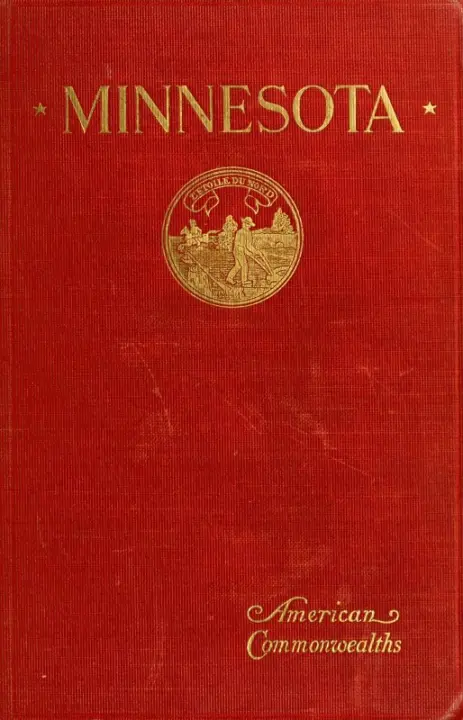
THE CLASSIC COLLECTION · 1908
"Minnesota, the North Star State" by "William Watts Folwell" is a historical account written in the late 19th century. The book serves as a comprehensive examination of Minnesota’s history, tracing its development from the French period through statehood and beyond. Folwell presents a rich tapestry of exploration, settlement, and the political intricacies of the region, making it particularly valuable for those interested in the foundational narrative of Minnesota. The opening of the work introduces the Dakota name "Minnesota," explaining its meaning and significance within the context of U.S. territorial history. Folwell sets the stage for discussing Minnesota's early inhabitants and the transition from French dominion to British and eventually American control. He highlights the arrival of key figures in the exploration of the state, detailing their attempts to chart the land and engage with its Native American tribes. This section offers a glimpse into the interactions between European settlers and Indigenous peoples, laying the groundwork for the detailed exploration of Minnesota’s complex history that follows.
Introduction adapted from the source catalogue; source summaries may be automatically generated.
Free to read · English · 90,608 words · No account needed
MAKE TIME FOR A GOOD BOOK
On by default. Untick to stop anonymous reading totals. Each page counts after 10 seconds in view. How this works.
Anonymous counting is on unless you have switched it off.
Schoolcraft, Henry R., mineralogist of Cass’s expedition, 71;
narrative of same, 71;
expedition of 1832, 75;
at Lake Itasca, 76;
conceals discovery in report to War Department, 77;
announces discovery in published narrative, 77.
School fund, increase of, 352;
may be loaned for erection of school buildings, constitutional
amendment, 346;
may be invested in municipal bonds, constitutional amendment, 348.
School of Agriculture of University of Minnesota, evolution of, 354.
School tax, 337.
Schools, common, development of, 255.
Second Battery of Light Artillery, 187.
Second Minnesota Infantry, recruited, 181;
at Mill Springs, 181;
gallant stand at Chickamauga, 242;
at Mission Ridge, 243.
Second Minnesota Sharpshooters at Antietam, 181.
Seeger, William, impeachment of, 298.
Selkirk, Earl of, plans colony, 78;
plants settlements in Canada, 78.
Selkirk colonists migrate to the States, 78.
Selkirk refugees, squat about Fort Snelling, 79;
evicted from Fort Snelling reservation, 82;
settle at St. Paul, 82.
Seventh Minnesota Infantry, at Nashville, 244;
at Wood Lake, 219.
Seven Years’ War, effect of, 31.
Sheehan, Timothy J., recalled to Fort Ridgely, 200;
commands there, 205;
gallantry at Nashville, 245;
U. S. marshal, 351.
Sherburne, Moses G., appointed territorial justice (1853), 108; presents plan of union of two factions of constitutional convention, 139; reports constitution to democratic body, 140.
Sherman, Gen. W. T., speaks at celebration of two hundredth anniversary of the discovery of the falls of St. Anthony, 325.
Sherman, John, opposes the admission of Minnesota, 153.
Shields, James, elected U. S. senator, 150;
seated as senator, 153.
Sibley, Henry Hastings:
birth and education, 59;
arrives at Mendota (1834), 59;
Dakota name, 60;
chosen delegate by the Stillwater convention, 86;
delegate from Wisconsin Territory, 87;
secures passage of act creating Minnesota Territory, 88;
protests against Rice’s Winnebago Contract, 105;
elected delegate to Congress from Minnesota Territory, 105;
his notable Indian speech, August 2, 1850, 107;
secures double land grants for common schools and for a university,
107;
speech for reform of Indian policy, 107;
retires from American Fur Company, 197;
drafts new bill for land grants to Minnesota railroads, 124;
in legislature of 1855, 126;
frames report on Minnesota and Northwestern Railroad, 126;
draws memorial to Congress praying for disapproval of Minnesota and
Northwestern Railroad bill, 127;
chairman and president of Democratic end of constitutional
convention, 138;
elected first state governor, 149;
sworn in as governor, 157;
inaugural address, 159;
notifies the four companies as to prior lien, 163;
appointed to Command Indian expedition, 211;
corresponds with Little Crow, 216;
moves against the Sioux, 218;
commands in battle of Wood Lake, 218;
releases captives, 220;
promoted brigadier-general, 222;
appoints military commission, 227;
commands Sioux expedition of 1863, 234;
in legislature of 1871, favors payment of bonds of 1858 in full, 328;
honorary banquet to, 339;
receives degree of LL. D., 339;
death, 339.
Sioux and Chippeways exchange murders, 62.
Sioux campaign of 1864, 236;
expedition of 1863, 234.
Sioux half-breed scrip, story of, 117;
placed on iron ore properties, 119.
Your reading position is saved on this browser. Take it to another device with a library code. Reading pages adapt to text, rather than matching a printed edition.
BEHIND THE BOOK
This eBook is for the use of anyone anywhere in the United States and most other parts of the world at no cost and with almost no restrictions whatsoever. You may copy it, give it away or re-use it under the terms of the Project Gutenberg License included with this eBook or online at www.gutenberg.org. If you are not located in the United States, you will have to check the laws of the country where you are located before using this eBook. Read the source licence.
The original source file, including credits and licence, is retained by this library. Request an original-format copy at no charge. Please include the book title and Project Gutenberg identifier #47725.
KEEP YOUR CURIOSITY GOING
Cécile Tormay

Moritz Busch
John L. Ransom
Frances Wright
Cécile Tormay

Mabel Potter Daggett