THE CLASSIC COLLECTION✦An outlaw’s diary: the CommuneCLASSIC FREE BOOKS
An outlaw’s diary: the Commune
Cécile Tormay
THE CLASSIC COLLECTION · 1908
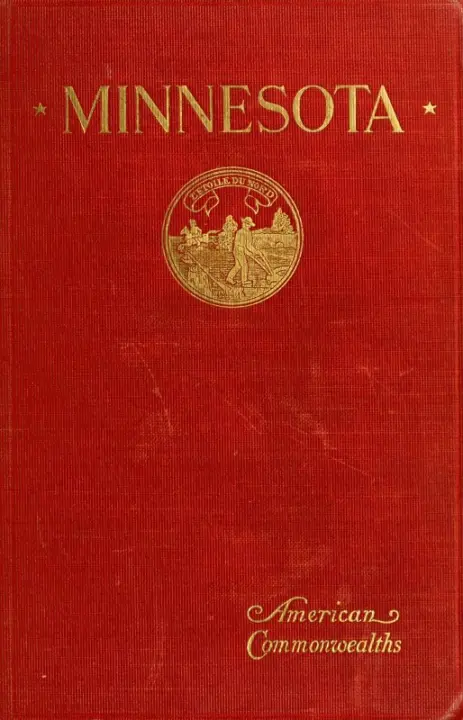
"Minnesota, the North Star State" by "William Watts Folwell" is a historical account written in the late 19th century. The book serves as a comprehensive examination of Minnesota’s history, tracing its development from the French period through statehood and beyond. Folwell presents a rich tapestry of exploration, settlement, and the political intricacies of the region, making it particularly valuable for those interested in the foundational narrative of Minnesota. The opening of the work introduces the Dakota name "Minnesota," explaining its meaning and significance within the context of U.S. territorial history. Folwell sets the stage for discussing Minnesota's early inhabitants and the transition from French dominion to British and eventually American control. He highlights the arrival of key figures in the exploration of the state, detailing their attempts to chart the land and engage with its Native American tribes. This section offers a glimpse into the interactions between European settlers and Indigenous peoples, laying the groundwork for the detailed exploration of Minnesota’s complex history that follows.
Introduction adapted from the source catalogue; source summaries may be automatically generated.
Free to read · English · 90,608 words · No account needed
MAKE TIME FOR A GOOD BOOK
On by default. Untick to stop anonymous reading totals. Each page counts after 10 seconds in view. How this works.
Anonymous counting is on unless you have switched it off.
Hennepin, Father Louis, member of expedition to upper Mississippi, 18;
discovers falls of St. Anthony, 19;
a subordinate to La Salle, 21;
his “Description of Louisiana,” 21;
his “New Discovery,” 21.
Hewitt, Dr. C. N., secretary of state board of health, 334.
High School Board, 322;
effectiveness, 337.
High schools, feed university, 321.
Hill, J. J., an associate for purchase of the St. Paul and Pacific,
309;
becomes general manager of St. Paul, Minneapolis and Manitoba R. R.,
311.
Hinckley forest fire (1894), 349.
Hoag, Charles, proposes the name Min-ne-ha-polis, 131.
Holcomb, William, first lieutenant-governor, 160.
Home rule for cities; constitutional amendment, 348.
Homestead act, operation of, 252.
Hopperdozers, described, 305.
Hospital for insane at St. Peter, fire in 1880, 325.
Hotchkiss, William A., captain of Second Light Battery, 187.
Hubbard, Lucius Fairchild:
in command of Fifth Minnesota, 185;
gallantry at Corinth, 185;
wounded at Nashville, 245;
brevetted brigadier, 245;
declines nomination for member of Congress, 264;
member of special commission on special state railroad bonds, 326;
elected governor (1881), 333;
fosters state institutions, 333;
advises public school for neglected and dependent children, and
reformatory for youthful convicts, 334;
recommends “covering in” of moneys into county treasuries, 335;
recommends railroad law (1885), 335.
Huggins, Alexander, mentioned, 66.
Indian forts, location and object, 190.
Indian treaties:
commissioners to be appointed from Indian officials, 94;
price of, 101;
with Chippeways (1837), 80;
with Sioux (1837), 80;
abortive with Sioux (1849), 92;
with Sioux (1851), 95;
with Chippeways (1854, etc.), 111;
with Sioux (1858), 169.
Indian tribes of Minnesota, account of, 94.
Indians, how affected by traders, 45.
Indians, see Chippeways, Sioux, etc.
Inkpaduta:
murders by, 146;
rescue of captives, 146;
fruitless efforts to capture, 147;
effect of failure to capture, 193.
Interest, rate of (1860), 176.
Internal improvement lands, devoted to redemption of bonds, 331.
Ireland, Archbishop, chaplain of Fifth Minnesota, at Corinth, 186; speaks at celebration of two hundredth anniversary of discovery of falls of St. Anthony, 325.
Iron ore of Minnesota:
nature of, 359;
ranges, discovery and location, 358;
marketable, amount of, 359;
properties, valuation for taxation, 360;
land of state,—royalties, 360;
lands excepted from mineral laws of United States, 360.
Iroquois, subjects of England, 29.
Itasca, Lake, discovered, 76;
making of the word, 76.
Jefferson plans expeditions to west, 47.
Jennison, Lieut.-Colonel, wounded at Nashville, 245.
Jogues, at Sault Ste Marie (1641), 6.
Johnson, John A., governor (1905), 340.
Joliet, on Lake Superior (1669), 14;
at convocation (1671), 15;
discovers the Mississippi (1673), 16.
Jones commission, 116.
Jones, John, sergeant, in charge of artillery at Fort Ridgely, 205.
Keating, Prof. William H., geologist and historian of Long’s
expedition, 7.
Kiehle, David L., state superintendent of public instruction
(1881-1893), 337;
works out plan for school of agriculture, 355.
Kingsbury, W. W., not recognized as delegate from the rump of
Minnesota, 154.
Kittson, N. W., trades at Pembina, 112; an associate for purchase of Saint Paul and Pacific, 309.
Knox, H. M., first public examiner, 314;
his administration commended, 314.
La Framboise, Joseph, rescues whites at upper agency, 201.
Lampson, Nathan, kills Little Crow, 238.
La Perrière, Sieur de, builds Fort Beauharnois (1727), 26.
Your reading position is saved on this browser. Take it to another device with a library code. Reading pages adapt to text, rather than matching a printed edition.
BEHIND THE BOOK
This eBook is for the use of anyone anywhere in the United States and most other parts of the world at no cost and with almost no restrictions whatsoever. You may copy it, give it away or re-use it under the terms of the Project Gutenberg License included with this eBook or online at www.gutenberg.org. If you are not located in the United States, you will have to check the laws of the country where you are located before using this eBook. Read the source licence.
The original source file, including credits and licence, is retained by this library. Request an original-format copy at no charge. Please include the book title and Project Gutenberg identifier #47725.
KEEP YOUR CURIOSITY GOING
Cécile Tormay

Moritz Busch
John L. Ransom
Frances Wright
Cécile Tormay

Mabel Potter Daggett