THE CLASSIC COLLECTION✦Memoirs of a millionaireCLASSIC FREE BOOKS
Memoirs of a millionaire
Lucia True Ames Mead
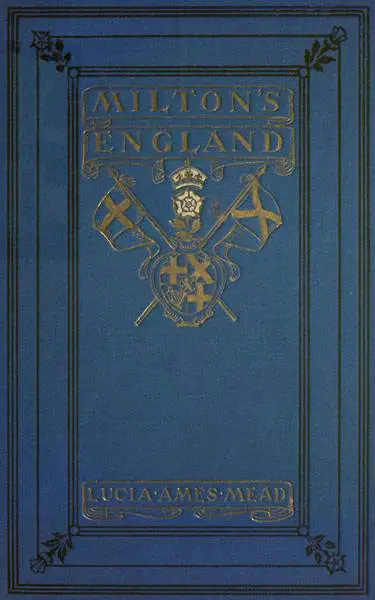
THE CLASSIC COLLECTION · 1902
"Milton's England" by Lucia True Ames Mead is a historical account written in the early 20th century. The book explores the life and context of the renowned poet John Milton, focusing particularly on the London of his youth, as well as significant places connected to him. It delves into the rich historical backdrop that shaped Milton's genius and the societal conditions of England during his lifetime. The opening of "Milton's England" sets the stage for understanding the profound significance of London in the life of John Milton. The author reflects on the city’s evolution and its pivotal historical events, emphasizing the period from the Spanish Armada's destruction in 1588 through Milton's birth in 1608. The text hints at the vibrant intellectual and cultural atmosphere of early 17th century London, characterized by the impact of notable figures in literature and politics who were contemporaries of Milton. Further exploration leads to a description of the everyday sights and influences surrounding the poet, painting a vivid picture of the environment that contributed to his profound literary achievements.
Introduction adapted from the source catalogue; source summaries may be automatically generated.
Free to read · English · 65,578 words · No account needed
MAKE TIME FOR A GOOD BOOK
On by default. Untick to stop anonymous reading totals. Each page counts after 10 seconds in view. How this works.
Anonymous counting is on unless you have switched it off.
Sidney, Algernon, 107.
Sidney Sussex College, 59, 62.
Skinner, Cyriack, 97, 104, 108.
Smithfield, 215-220.
Smith, John, Captain, 200.
Somerset House, 239, 257.
Spencer, Sir John, 166, 174.
Spenser, Edmund, 254.
Sprat, Thomas, dean of Westminster, 258.
Spread Eagle Court, 45.
Spring Gardens, 99, 101, 103.
Staple Inn, 266.
Star Chamber, 270, 272.
Stow, John, 158-163.
Strode, William, 261.
Sutton, Thomas, 204.
Tabard Inn, 286.
Temple, The, 228-235.
Temple Bar, 229.
Temple Church, The, 229.
Thackeray on the Charterhouse, 206.
Throckmorton, Sir Nicholas, 157, 193.
Tower Hill, 139, 144.
Tower of London, The, 126-136.
Toynbee Hall, 156.
Trafalgar Square, 99, 100.
Trinity College Library, Milton manuscript in, 73, 89.
Turner, William, 150.
Tyndale, 201.
Usher, Archbishop, 247, 265.
Vane, Sir Harry, 91, 99, 107, 136-141.
Vane, Milton's Ode to, 104.
Waller, Edmund, 116.
Wendover, 117.
Westminster Abbey, 250-266.
Westminster Assembly, 264.
Westminster Hall, 261, 274.
Westminster Palace, 269.
Westminster School, 266.
Whitechapel, 156.
Whitehall, 99, 101, 240-250.
Whittington's Palace, 145.
Williams, Roger, 61, 188, 204.
Windsor, 79, 248.
Wolsey, Cardinal, 241.
Woodcocke, Katharine, 104, 193, 195, 275.
Wotton, Sir Henry, 85, 124.
Wren, Sir Christopher, 184, 240, 263, 266, 299-304.
York Street, 102.
Young, Milton's early preceptor, 47.
Footnotes:
"Here lies old Hobson. Death hath broke his girt,
And here, alas, hath laid him in the dirt;
Or else, the ways being foul, twenty to one,
He's here stuck in a slough, or overthrown.
'Twas such a shifter, that if truth were known,
Death was half glad when he had got him down;
For he had any time these ten years full,
Dodged with him, betwixt Cambridge and the 'Bull,'
And surely death could never have prevailed,
Had not his weekly course of carriage failed.
But lately finding him so long at home,
And thinking now his journey's end was come,
And that he had ta'en up his latest inn,
In the kind office of a chamberlain,
Showed him his room, where he must lodge that night,
Pulled off his boots and took away the light;
If any ask for him, it shall be said,
'Hobson has supt and's newly gone to bed.'"
[2] It is interesting here to contrast John Morley's judgment with that of
Clarendon:
"Surrounded by men who were often apt to take other views, Pym, if ever English statesmen did, took broad ones; and to impose broad views upon the narrow is one of the things that a party leader exists for. He had the double gift, so rare even among leaders in popular assemblies, of being at once practical and elevated; a master of tactics and organising arts, and yet the inspirer of sound and lofty principles. How can we measure the perversity of a king and counsellors who forced into opposition a man so imbued with the deep instinct of government, so whole-hearted, so keen of sight, so skilful in resource as Pym?"
Transcriber's Notes:
Passages in italics are indicated by italics.
Images have been moved from the middle of a paragraph to the closest
paragraph break.
Punctuation has been corrected without note.
Your reading position is saved on this browser. Take it to another device with a library code. Reading pages adapt to text, rather than matching a printed edition.
BEHIND THE BOOK
This eBook is for the use of anyone anywhere in the United States and most other parts of the world at no cost and with almost no restrictions whatsoever. You may copy it, give it away or re-use it under the terms of the Project Gutenberg License included with this eBook or online at www.gutenberg.org. If you are not located in the United States, you will have to check the laws of the country where you are located before using this eBook. Read the source licence.
The original source file, including credits and licence, is retained by this library. Request an original-format copy at no charge. Please include the book title and Project Gutenberg identifier #34526.
KEEP YOUR CURIOSITY GOING
Cécile Tormay

Moritz Busch
John L. Ransom
Frances Wright
Cécile Tormay

Mabel Potter Daggett