THE CLASSIC COLLECTION✦Memoirs of a millionaireCLASSIC FREE BOOKS
Memoirs of a millionaire
Lucia True Ames Mead
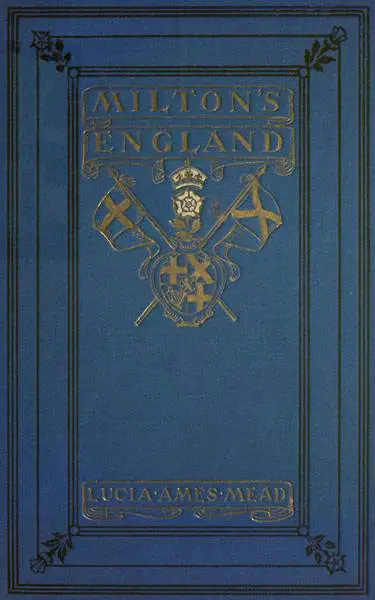
THE CLASSIC COLLECTION · 1902
"Milton's England" by Lucia True Ames Mead is a historical account written in the early 20th century. The book explores the life and context of the renowned poet John Milton, focusing particularly on the London of his youth, as well as significant places connected to him. It delves into the rich historical backdrop that shaped Milton's genius and the societal conditions of England during his lifetime. The opening of "Milton's England" sets the stage for understanding the profound significance of London in the life of John Milton. The author reflects on the city’s evolution and its pivotal historical events, emphasizing the period from the Spanish Armada's destruction in 1588 through Milton's birth in 1608. The text hints at the vibrant intellectual and cultural atmosphere of early 17th century London, characterized by the impact of notable figures in literature and politics who were contemporaries of Milton. Further exploration leads to a description of the everyday sights and influences surrounding the poet, painting a vivid picture of the environment that contributed to his profound literary achievements.
Introduction adapted from the source catalogue; source summaries may be automatically generated.
Free to read · English · 65,578 words · No account needed
MAKE TIME FOR A GOOD BOOK
On by default. Untick to stop anonymous reading totals. Each page counts after 10 seconds in view. How this works.
Anonymous counting is on unless you have switched it off.
From the days when little Dick Whittington, a forlorn runaway, heard from far Bow bells summon him back to London, the bells have played a notable part in the life of Londoners. A true cockney is supposed to be one born within hearing of these bells. Certainly the boy in Spread Eagle Court deserved the title.
The spire of St. Mary le Bow rises a little higher than St. Bride's, and bears a golden dragon nine feet long.
Upon the side of Bow Church, half hidden behind the tower, is an inscription which the pilgrim to Milton's London will step aside to read. It is on the tablet which was transferred from All Hallows Church, in which Milton was baptised, when it was torn down. It closes with the familiar lines of Dryden, the poet whom England most admired when this new spire of Wren's was rising upon the ruins of the old, and close beside the birthplace of the greatest soul ever born to London in all her two millenniums of history.
"Three poets, in three distant ages born,
Greece, Italy, and England did adorn.
The first in loftiness of thought surpassed,
The next in majesty, in both the last;
The force of nature could no farther go,
To make a third she joined the other two."
Index
Aldersgate Street, 89, 122.
Aldgate, 155.
All Hallows, Barking, 143.
All Hallows Church, Bread St., 42, 45, 306.
All Hallows, Staining, tower of, 155.
Amersham, 116.
Andrewes, Bishop, 289.
"Arcades," 81.
"Areopagitica," 94.
Artillery Walk, 110, 119.
Ascham, Roger, 201.
Askew, Anne, 191.
Austin Friars, 24.
Austin Friars' Church, 185-188.
Bacon, Francis, 225.
Bancroft, Francis, 173.
Barbican, 95.
Bartholomew Close, 105.
Bartholomew Fair, 218.
Baroni, Leonora, 87.
Baxter, Richard, 107, 108, 197, 276.
Beaconsfield, 113, 115.
Beaumont, 288.
Bethlehem Hospital, 175, 303.
Billingsgate, 292.
Blake, Admiral, 257.
"Blindness, On His," Milton's ode, 104.
Blue Coat School, 195-199.
Boleyn, Annie, 132, 283.
Bread Street, 42-46, 120.
Browne, Robert, 68.
Buckingham, Duke of, 243, 256.
Buckinghamshire, 112-119.
Bunhill Fields, 111, 120.
Burke, Edmund, 116.
Burleigh, 226.
Caesar, Sir Julius, 174.
Cambridge, 57-77;
university life in Milton's time, 64.
Camden, William, 252, 266.
Caxton, William, 269.
Chalfont St. Giles, 111, 112.
Charles I., 244-248, 272, 274.
Charles II., 250, 262, 298.
Charing Cross, 99.
Charterhouse, 202-208.
Cheever, Ezekiel, 198.
Chenies, 112.
Chequer's Court, 118.
"Cheshire Cheese, The," 229.
Christ's Church, 197.
Christ's College, 59, 62.
Christ's Hospital, 195-199.
Civil War, 87, 92.
Clarendon, Earl of, 259.
"Comus," 80, 82, 96.
Conventual establishments, 22.
Covent Garden, 237-239.
Cranmer, Archbishop, 280.
Cromwell, Oliver, 59, 92, 101, 141, 180, 228, 244, 248, 249, 256-258,
261.
"Cromwell, Ode to," Milton's, 104, 106.
Cromwell, Richard, 105, 111.
Crosby Hall, 164-170.
Danish Remains in London, 20.
Darwin at Christ's College, 64.
Dickens on Old London Churches, 152-154.
Diodati, Charles, 88, 91.
Dryden, John, 122, 248, 297, 306.
Dutch in London, 186.
Education, Milton's Essay on, 94.
Eliot, Sir John, 134-136, 268, 270.
Elizabethan Age, 36.
Elizabeth, Queen, 208, 241, 262.
Ellwood, Thomas, 109, 111, 115.
Ely Cathedral, 71.
Ely Place, 221.
Emmanuel College, 60, 62.
Evelyn, 267, 296.
Exchange, The Royal, 184, 298.
Fire of London, The Great, 120, 145, 189, 295-298.
Fletcher, 288.
Forest Hill, 93.
Fox, George, 120.
Fox, John, 181.
"Fresher's Don't, The," 76.
Frobisher, Martin, 181.
Galileo, 86.
Gatehouse, Westminster, 267.
Geneva, Milton at, 87.
Gill, Alexander, Milton's schoolmaster, 53.
Globe Theatre, 286.
Gog and Magog, 190.
Gothic architecture, 26-30, 34.
Gray's Inn, 225.
Your reading position is saved on this browser. Take it to another device with a library code. Reading pages adapt to text, rather than matching a printed edition.
BEHIND THE BOOK
This eBook is for the use of anyone anywhere in the United States and most other parts of the world at no cost and with almost no restrictions whatsoever. You may copy it, give it away or re-use it under the terms of the Project Gutenberg License included with this eBook or online at www.gutenberg.org. If you are not located in the United States, you will have to check the laws of the country where you are located before using this eBook. Read the source licence.
The original source file, including credits and licence, is retained by this library. Request an original-format copy at no charge. Please include the book title and Project Gutenberg identifier #34526.
KEEP YOUR CURIOSITY GOING
Cécile Tormay

Moritz Busch
John L. Ransom
Frances Wright
Cécile Tormay

Mabel Potter Daggett