THE CLASSIC COLLECTION✦Memoirs of a millionaireCLASSIC FREE BOOKS
Memoirs of a millionaire
Lucia True Ames Mead
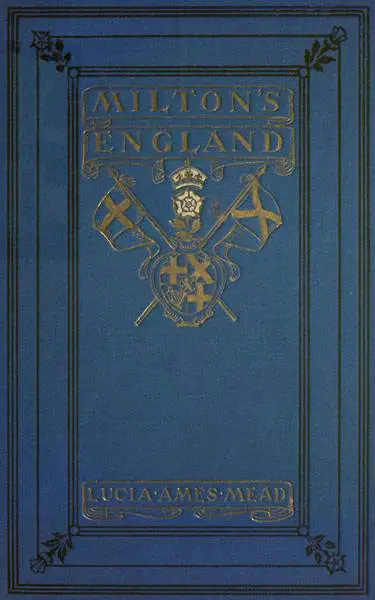
THE CLASSIC COLLECTION · 1902
"Milton's England" by Lucia True Ames Mead is a historical account written in the early 20th century. The book explores the life and context of the renowned poet John Milton, focusing particularly on the London of his youth, as well as significant places connected to him. It delves into the rich historical backdrop that shaped Milton's genius and the societal conditions of England during his lifetime. The opening of "Milton's England" sets the stage for understanding the profound significance of London in the life of John Milton. The author reflects on the city’s evolution and its pivotal historical events, emphasizing the period from the Spanish Armada's destruction in 1588 through Milton's birth in 1608. The text hints at the vibrant intellectual and cultural atmosphere of early 17th century London, characterized by the impact of notable figures in literature and politics who were contemporaries of Milton. Further exploration leads to a description of the everyday sights and influences surrounding the poet, painting a vivid picture of the environment that contributed to his profound literary achievements.
Introduction adapted from the source catalogue; source summaries may be automatically generated.
Free to read · English · 65,578 words · No account needed
MAKE TIME FOR A GOOD BOOK
On by default. Untick to stop anonymous reading totals. Each page counts after 10 seconds in view. How this works.
Anonymous counting is on unless you have switched it off.
In the so-called "Lollards' Tower" at the west end of the chapel, the only part of the existing palace that is built of stone, is a niche in which was placed the image of St. Thomas a Becket, to which Dean Stanley tells us "the watermen of the Thames doffed their caps as they rode in their countless barges."
The small room at the top of the tower is wainscoted with oak over an inch thick, upon which prisoners chained to its iron rings have carved words in early English and Latin. Through the oubliette in the floor dead prisoners were doubtless dropped into the Thames, which in former days washed the very walls of Lambeth, and swept under this tower. Whether any Lollards were ever lodged here is very doubtful, although it is true that Wyclif, the arch-Lollard, was at one time examined for his opinions, by the bishops at Lambeth. The real Lollards' Tower seems to have been an adjunct of old St. Paul's Cathedral. More probably the prisoners here were Episcopalians of Milton's own time.
In the dark crypt, the wretched queen, Anne Boleyn, heard from the lips of Cranmer the annulment of her marriage with Henry, and was forced to affirm the disinheritance of her offspring. From thence she went to the Tower and her doom. In this same palace, where she lay a prisoner in 1533, her predecessor, Katharine of Aragon, was a guest on her arrival in England in 1501. Milton must doubtless sometime have visited this princely residence, and have mused upon the martyred Cranmer and Latimer and Sir Thomas More, and the long list of kings and queens and men, who, as masters, guests, or prisoners, have slept within these walls. Of all the noted men who were connected with Lambeth in his day, none, of course, so stirred his spirit as did Archbishop Laud, who lived here, and exercised his power in the Star Chamber, during the years when Parliament was silenced. From 1633 until his committal to the Tower on the charge of treason in 1641 after the assembling of the Long Parliament, he was master here. It was while here at Lambeth that he supervised the compilation of the Service Book; when this was enforced in 1637 upon the Scottish churches, it was so repugnant to them that the riot begun in Edinburgh, by Jenny Geddes flinging her stool in St. Giles's Cathedral at the bishop's head, initiated a national revolt, which led to the signing of the famous Scottish National Covenant. Milton at this time, at the age of thirty, was living at Horton. Little by little the resolute archbishop came to be looked upon by men of Milton's way of thinking as one whose system demanded submission to absolutism in the state. The student of Milton's prose writings is familiar with the troublous history of Laud's time, and the ludicrously trivial matters that then estranged earnest men. But, while the ceremonies permitted in the church two generations later were practically those that Laud had so zealously striven for, the result, says Gardiner, "was only finally attained by a total abandonment of all Laud's methods. What had been impossible to effect in a church to the worship of which every person in the land was obliged to conform, became possible in a church which any one who pleased was at liberty to abandon." After Laud's execution the see of Canterbury was vacant nearly seventeen years. Among the many portraits of the archbishops which hang at Lambeth, the portrait of Laud by Van Dyck is one of the most admirable. We read that his successor, Sheldon, in 1665, in the time of the Great Plague, "continued in his palace at Lambeth whilst the contagion lasted, preserving by his charities multitudes who were sinking under disease and want, and by his pastoral exertions procured benevolences to a vast amount." Admission to Lambeth must be obtained by written request, but is by no means difficult, yet no important spot in London is so rarely visited by the general public. The enthusiasm and intelligence of the resident guide, who has several times in the last ten years conducted the writer through its historic precincts, makes an hour at Lambeth a memorable lesson in English history. His huge gray cat, whose name, "Massachusetts," in other years brought a smile to the lips of every American who chanced to learn it, no longer purrs a welcome to the dim corridors and towers of the old palace, but has gone the way of all his short-lived contemporaries. Let us hope that his master may for many years to come live to tell the long, romantic tale of these old walls to all of England's kin beyond the sea who journey hither to study with reverent eyes the history of the land from which they came.
Your reading position is saved on this browser. Take it to another device with a library code. Reading pages adapt to text, rather than matching a printed edition.
BEHIND THE BOOK
This eBook is for the use of anyone anywhere in the United States and most other parts of the world at no cost and with almost no restrictions whatsoever. You may copy it, give it away or re-use it under the terms of the Project Gutenberg License included with this eBook or online at www.gutenberg.org. If you are not located in the United States, you will have to check the laws of the country where you are located before using this eBook. Read the source licence.
The original source file, including credits and licence, is retained by this library. Request an original-format copy at no charge. Please include the book title and Project Gutenberg identifier #34526.
KEEP YOUR CURIOSITY GOING
Cécile Tormay

Moritz Busch
John L. Ransom
Frances Wright
Cécile Tormay

Mabel Potter Daggett