THE CLASSIC COLLECTION✦Memoirs of a millionaireCLASSIC FREE BOOKS
Memoirs of a millionaire
Lucia True Ames Mead
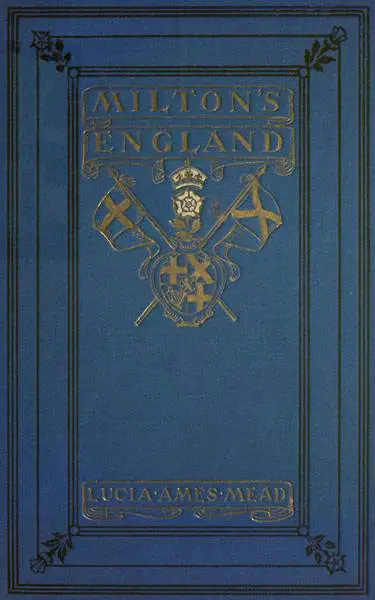
THE CLASSIC COLLECTION · 1902
"Milton's England" by Lucia True Ames Mead is a historical account written in the early 20th century. The book explores the life and context of the renowned poet John Milton, focusing particularly on the London of his youth, as well as significant places connected to him. It delves into the rich historical backdrop that shaped Milton's genius and the societal conditions of England during his lifetime. The opening of "Milton's England" sets the stage for understanding the profound significance of London in the life of John Milton. The author reflects on the city’s evolution and its pivotal historical events, emphasizing the period from the Spanish Armada's destruction in 1588 through Milton's birth in 1608. The text hints at the vibrant intellectual and cultural atmosphere of early 17th century London, characterized by the impact of notable figures in literature and politics who were contemporaries of Milton. Further exploration leads to a description of the everyday sights and influences surrounding the poet, painting a vivid picture of the environment that contributed to his profound literary achievements.
Introduction adapted from the source catalogue; source summaries may be automatically generated.
Free to read · English · 65,578 words · No account needed
MAKE TIME FOR A GOOD BOOK
On by default. Untick to stop anonymous reading totals. Each page counts after 10 seconds in view. How this works.
Anonymous counting is on unless you have switched it off.
After Shakespeare's death there was a strong desire to remove his bones from Stratford to the Abbey, upon which Milton and Jonson both protested. The former wrote:
"What needs my Shakespeare for his honoured bones
The labour of an age in piled stones?"
and Jonson more emphatically exclaimed:
"My Shakespeare rise! I will not lodge thee by
Chaucer or Spenser, or bid Beaumont lie
A little further on to make thee room;
Thou art a monument without a tomb,
And art alive still while thy book doth live
And we have wits to read and praise to give."
In St. Benedict's Chapel may be noted the graves of Bishop Bilson, Doctor Tunson, Sir Robert Anstruther, and Sir Robert Ayton,--famous men of Milton's time.
In St. Edmund's Chapel, farther on, Milton as a lad of fourteen may have seen in 1622 the young man interred whose tomb is surmounted by a beautiful figure of a youth in Roman armour. Hard by under a lofty canopy lie two notable recumbent figures, which mark the grave of the Earl and Countess of Shrewsbury, and show the style of costume of Milton's boyhood years.
Among the monuments of his contemporaries in the chapel of Henry VII. that must have awakened a sensation of disgust in the mind of the Puritan poet, was that of the Duke of Buckingham, whose barbaric splendour of attire has already been noted, and who was murdered in 1628. Near by his huge and ostentatious tomb, so characteristic of the man whom it commemorates, lie under the pavement the graves of his king, James I., and his consort.
We may be sure that the graves which most interested Milton here were those of Oliver Cromwell, his mother and sister, and his daughter, Elizabeth Claypole, his son-in-law, Ireton, and Bradshaw, who was president of the tribunal which condemned Charles I. The Genoese envoy of the time thus described Cromwell's death and burial in his despatch to the Council of Genoa: "He left the world with unimaginable valour, prudence, and charity, and more like a priest or monk than a man who had fashioned and worked so mighty an engine so few years.... His body was opened and embalmed, and little trace of disease found therein; which was not the cause of his death, but rather the continual fever which came upon him from sorrow and melancholy at Madame Claypole's death." Cromwell's body lay in state at Somerset House, and was thence escorted to the tomb by an immense throng of mourners, which included the city companies. "The effigy or statue of the dead, made most lifelike in royal robes, crown on head, in one hand the sceptre and in the other the globe, was laid out on a bier richly adorned and borne hither in a coach made for the purpose, open on every side, and adorned with many plumes and banners." It is said that Cromwell especially loved the Abbey, and instituted the custom of commemorating English worthies within its walls. Admiral Blake was the first to receive this honour in 1657. "Cromwell caused him to be brought up by land to London in all the state that could be; and to encourage his officers to adventure their lives that they might be pompously buried, he was with all solemnity possible interred in the Chapel of Henry VII., among the monuments of the kings." Who can doubt that Milton stood in sightless grief beside these tombs, before the desecration of "Oliver's Vault?" Only the body of Cromwell's daughter was left in peace, and still remains. His mother and sister were reburied in the green, and the reader already knows what was the vile treatment of the other bodies. It is said that to the royalist dean of Westminster, Thomas Sprat, we owe the refusal of interment in the Abbey to the "regicide" John Milton. Had he been buried later where Cromwell's body had lain, he too might have been thrust forth. It was this dean who esteemed Cowley as a superior poet to Milton, and called the former the "Pindar, Horace, and Virgil of England." In the south aisle lie General George Monck and Elizabeth, Queen of Bohemia, eldest daughter of James I., whose marriage we have seen was celebrated by a merry masque within the Temple grounds. This was the English princess for whom a part of Heidelberg Castle was built; she was mother of Prince Rupert, whose strenuous efforts to save the fortunes of his uncle, Charles I., did not endear him to Milton and his friends. In this chapel lies a wretched victim of her cousin, James I. This is the Lady Arabella Stuart, whose marriage so displeased the king that he immured her in the Tower, where, bereft of reason by her miseries, she died when Milton was a boy.
Your reading position is saved on this browser. Take it to another device with a library code. Reading pages adapt to text, rather than matching a printed edition.
BEHIND THE BOOK
This eBook is for the use of anyone anywhere in the United States and most other parts of the world at no cost and with almost no restrictions whatsoever. You may copy it, give it away or re-use it under the terms of the Project Gutenberg License included with this eBook or online at www.gutenberg.org. If you are not located in the United States, you will have to check the laws of the country where you are located before using this eBook. Read the source licence.
The original source file, including credits and licence, is retained by this library. Request an original-format copy at no charge. Please include the book title and Project Gutenberg identifier #34526.
KEEP YOUR CURIOSITY GOING
Cécile Tormay

Moritz Busch
John L. Ransom
Frances Wright
Cécile Tormay

Mabel Potter Daggett