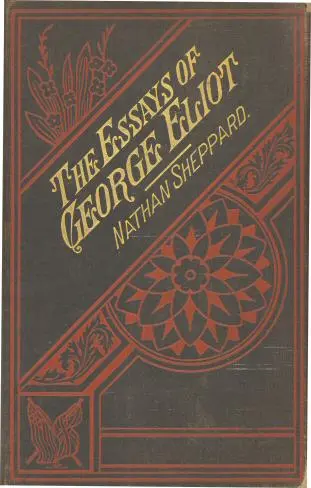
The Essays of “George Eliot” Complete
George Eliot
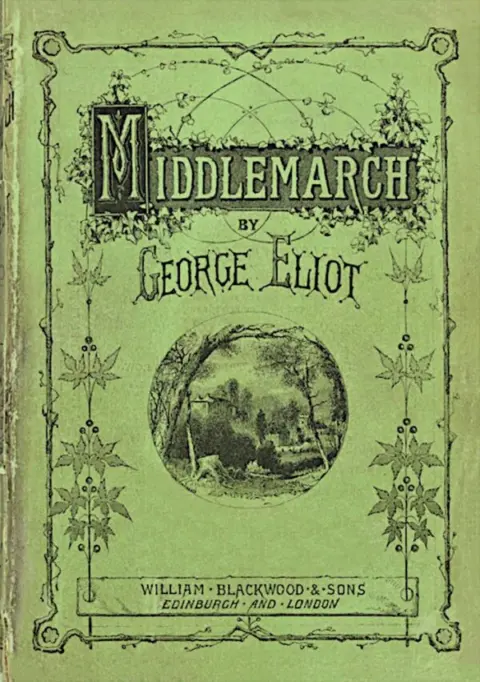
THE CLASSIC COLLECTION · 1871
"Middlemarch" by George Eliot is a novel published in 1871-1872. Set in a fictional English Midlands town from 1829 to 1832, it weaves together multiple intersecting stories exploring the status of women, marriage, idealism, and political reform. The narrative follows Dorothea Brooke's search for purpose, Dr. Lydgate's medical ambitions, and several other inhabitants navigating love, debt, scandal, and social change against the backdrop of the approaching Reform Act of 1832.
Introduction adapted from the source catalogue; source summaries may be automatically generated.
Free to read · English · 321,947 words · No account needed
MAKE TIME FOR A GOOD BOOK
On by default. Untick to stop anonymous reading totals. Each page counts after 10 seconds in view. How this works.
Anonymous counting is on unless you have switched it off.
“Aha, Miss Rosy, you don’t know Homer from slang. I shall invent a new game; I shall write bits of slang and poetry on slips, and give them to you to separate.”
“Dear me, how amusing it is to hear young people talk!” said Mrs. Vincy, with cheerful admiration.
“Have you got nothing else for my breakfast, Pritchard?” said Fred, to the servant who brought in coffee and buttered toast; while he walked round the table surveying the ham, potted beef, and other cold remnants, with an air of silent rejection, and polite forbearance from signs of disgust.
“Should you like eggs, sir?”
“Eggs, no! Bring me a grilled bone.”
“Really, Fred,” said Rosamond, when the servant had left the room, “if you must have hot things for breakfast, I wish you would come down earlier. You can get up at six o’clock to go out hunting; I cannot understand why you find it so difficult to get up on other mornings.”
“That is your want of understanding, Rosy. I can get up to go hunting
because I like it.”
“What would you think of me if I came down two hours after every one else and ordered grilled bone?”
“I should think you were an uncommonly fast young lady,” said Fred, eating his toast with the utmost composure.
“I cannot see why brothers are to make themselves disagreeable, any
more than sisters.”
“I don’t make myself disagreeable; it is you who find me so.
Disagreeable is a word that describes your feelings and not my
actions.”
“I think it describes the smell of grilled bone.”
“Not at all. It describes a sensation in your little nose associated with certain finicking notions which are the classics of Mrs. Lemon’s school. Look at my mother; you don’t see her objecting to everything except what she does herself. She is my notion of a pleasant woman.”
“Bless you both, my dears, and don’t quarrel,” said Mrs. Vincy, with motherly cordiality. “Come, Fred, tell us all about the new doctor. How is your uncle pleased with him?”
“Pretty well, I think. He asks Lydgate all sorts of questions and then screws up his face while he hears the answers, as if they were pinching his toes. That’s his way. Ah, here comes my grilled bone.”
“But how came you to stay out so late, my dear? You only said you were going to your uncle’s.”
“Oh, I dined at Plymdale’s. We had whist. Lydgate was there too.”
“And what do you think of him? He is very gentlemanly, I suppose. They say he is of excellent family—his relations quite county people.”
Your reading position is saved on this browser. Take it to another device with a library code. Reading pages adapt to text, rather than matching a printed edition.
George Eliot
George Eliot
George Eliot
George Eliot & Elizabeth Barrett Browning & Robert Browning & Percy Bysshe Shelley
BEHIND THE BOOK
This eBook is for the use of anyone anywhere in the United States and most other parts of the world at no cost and with almost no restrictions whatsoever. You may copy it, give it away or re-use it under the terms of the Project Gutenberg License included with this eBook or online at www.gutenberg.org. If you are not located in the United States, you will have to check the laws of the country where you are located before using this eBook. Read the source licence.
The original source file, including credits and licence, is retained by this library. Request an original-format copy at no charge. Please include the book title and Project Gutenberg identifier #145.
KEEP YOUR CURIOSITY GOING
Cécile Tormay

Moritz Busch
Coulson Kernahan
John L. Ransom

Maurice Baring
Frances Wright