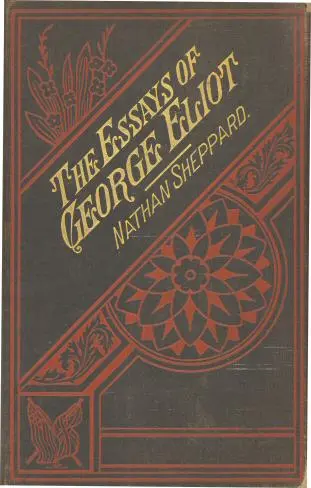
The Essays of “George Eliot” Complete
George Eliot
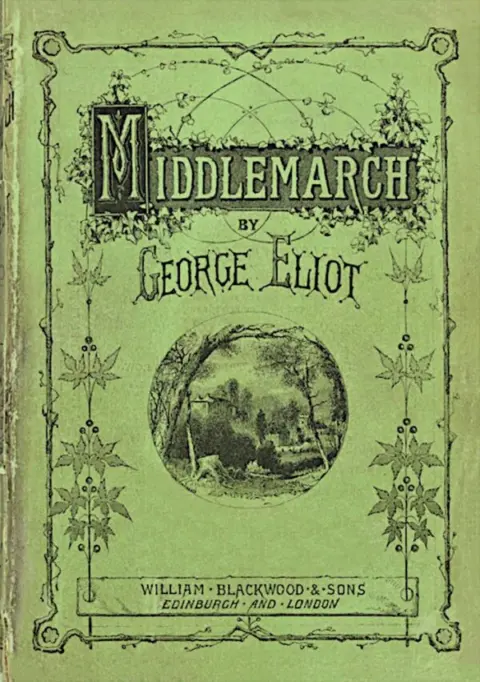
THE CLASSIC COLLECTION · 1871
"Middlemarch" by George Eliot is a novel published in 1871-1872. Set in a fictional English Midlands town from 1829 to 1832, it weaves together multiple intersecting stories exploring the status of women, marriage, idealism, and political reform. The narrative follows Dorothea Brooke's search for purpose, Dr. Lydgate's medical ambitions, and several other inhabitants navigating love, debt, scandal, and social change against the backdrop of the approaching Reform Act of 1832.
Introduction adapted from the source catalogue; source summaries may be automatically generated.
Free to read · English · 321,947 words · No account needed
MAKE TIME FOR A GOOD BOOK
On by default. Untick to stop anonymous reading totals. Each page counts after 10 seconds in view. How this works.
Anonymous counting is on unless you have switched it off.
“Now, father, you did praise him last Wednesday. You said he had an uncommon notion of stock, and a good eye for things.”
“Did I?” said Caleb, rather slyly.
“Yes, I put it all down, and the date, anno Domini, and everything,” said Mary. “You like things to be neatly booked. And then his behavior to you, father, is really good; he has a deep respect for you; and it is impossible to have a better temper than Fred has.”
“Ay, ay; you want to coax me into thinking him a fine match.”
“No, indeed, father. I don’t love him because he is a fine match.”
“What for, then?”
“Oh, dear, because I have always loved him. I should never like scolding any one else so well; and that is a point to be thought of in a husband.”
“Your mind is quite settled, then, Mary?” said Caleb, returning to his first tone. “There’s no other wish come into it since things have been going on as they have been of late?” (Caleb meant a great deal in that vague phrase;) “because, better late than never. A woman must not force her heart—she’ll do a man no good by that.”
“My feelings have not changed, father,” said Mary, calmly. “I shall be constant to Fred as long as he is constant to me. I don’t think either of us could spare the other, or like any one else better, however much we might admire them. It would make too great a difference to us—like seeing all the old places altered, and changing the name for everything. We must wait for each other a long while; but Fred knows that.”
Instead of speaking immediately, Caleb stood still and screwed his stick on the grassy walk. Then he said, with emotion in his voice, “Well, I’ve got a bit of news. What do you think of Fred going to live at Stone Court, and managing the land there?”
“How can that ever be, father?” said Mary, wonderingly.
“He would manage it for his aunt Bulstrode. The poor woman has been to me begging and praying. She wants to do the lad good, and it might be a fine thing for him. With saving, he might gradually buy the stock, and he has a turn for farming.”
“Oh, Fred would be so happy! It is too good to believe.”
“Ah, but mind you,” said Caleb, turning his head warningly, “I must take it on my shoulders, and be responsible, and see after everything; and that will grieve your mother a bit, though she mayn’t say so. Fred had need be careful.”
Your reading position is saved on this browser. Take it to another device with a library code. Reading pages adapt to text, rather than matching a printed edition.
George Eliot
George Eliot
George Eliot
George Eliot & Elizabeth Barrett Browning & Robert Browning & Percy Bysshe Shelley
BEHIND THE BOOK
This eBook is for the use of anyone anywhere in the United States and most other parts of the world at no cost and with almost no restrictions whatsoever. You may copy it, give it away or re-use it under the terms of the Project Gutenberg License included with this eBook or online at www.gutenberg.org. If you are not located in the United States, you will have to check the laws of the country where you are located before using this eBook. Read the source licence.
The original source file, including credits and licence, is retained by this library. Request an original-format copy at no charge. Please include the book title and Project Gutenberg identifier #145.
KEEP YOUR CURIOSITY GOING
Cécile Tormay

Moritz Busch
Coulson Kernahan
John L. Ransom

Maurice Baring
Frances Wright