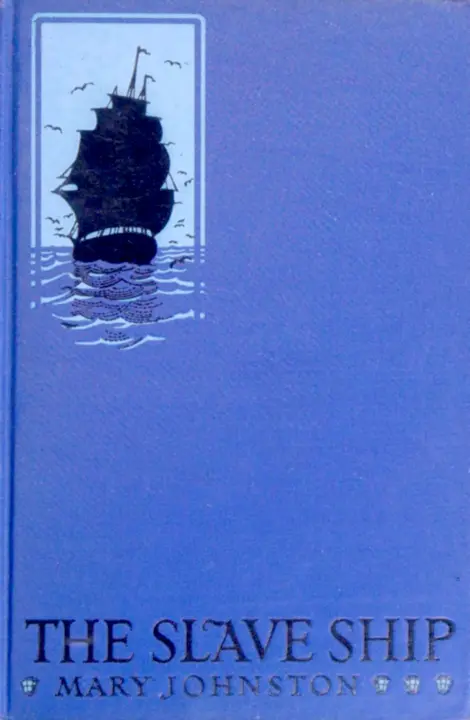
The slave ship
Mary Johnston
THE CLASSIC COLLECTION · 1919
Michael Forth by Mary Johnston. Explore this classic work in a free online edition. Subjects include American fiction -- 20th century. Read the locally hosted text below, adjust the reading display, and continue where you left off.
Introduction adapted from the source catalogue; source summaries may be automatically generated.
Free to read · English · 93,267 words · No account needed
MAKE TIME FOR A GOOD BOOK
On by default. Untick to stop anonymous reading totals. Each page counts after 10 seconds in view. How this works.
Anonymous counting is on unless you have switched it off.
In the physical landscape the mountains had sunk from sight. The hills had all lowered in height. The wooded country showed another aspect. Broom sedge became plentifully in evidence. All that ride, out of my window, might be seen agricultural poverty, poverty of town and village. With something of frequency rose out of green or brown earth, like ruined tombs, chimneys and hearths and nothing more. Everywhere fencing was makeshift, and once-painted houses had forgotten the event. The roads that the train crossed or paralleled showed stony ledge, rut, and mud-hole. But the sun was shining and the spring woods were greening.
A stout, well-dressed man came and sat beside my grandfather. "Glad to see you, Colonel Forth! Well, what's the news in your part of the state?"
They talked. After a while said the stout man, looking out of window: "I have been North. Their country looks prosperous!"
My grandfather rested his thin brown hands, palm in palm, upon his newspaper. His voice when he spoke had an unusual deep vibrancy. "I am glad that part of our country is prosperous."
"'Our country'! So you have come to that?"
"Yes," said my grandfather. "Our South, our North, our East, our West. Our America, our Europe, our Asia, our Africa. Our earth."
"Well, I'll be--! You didn't talk that way, Colonel, during the Seven Days, nor in the Petersburg trenches!"
"No," said my grandfather. "Live and learn, Otway! Live and learn."
"Well, I can tell you," said Otway, "that where I've been it's 'Our North--and you in the South, damn you!'"
"Yes," said my grandfather. "They, too, have got to live and learn. We haven't been doing much living, any of us!"
"All that's a new lingo!" said the stout man, and presently went back to his companion at the end of the car. I think that he said: "The old Colonel must have been a Union man before the war. I never heard of it, but he must have been!"
The worn engine and the worn cars and the worn road-bed, the engineer with a wooden leg, the brakeman too young to have fought, the conductor with the patched eye and the scar, the passengers discussing Readmittance, and bad times, and better times perhaps in the misty future, crops and Ku-Klux and the war in Europe, creaked and jolted and roared, twenty-odd miles an hour. Twice occurred prolonged halts. We were an hour and a half late and came upon Richmond red in a great sunset flare. The stout man, passing the colonel and me, said, "It looks like the burning five years ago!"
Your reading position is saved on this browser. Take it to another device with a library code. Reading pages adapt to text, rather than matching a printed edition.
Mary Johnston
Mary Johnston
Mary Johnston
Mary Johnston
BEHIND THE BOOK
This eBook is for the use of anyone anywhere in the United States and most other parts of the world at no cost and with almost no restrictions whatsoever. You may copy it, give it away or re-use it under the terms of the Project Gutenberg License included with this eBook or online at www.gutenberg.org. If you are not located in the United States, you will have to check the laws of the country where you are located before using this eBook. Read the source licence.
The original source file, including credits and licence, is retained by this library. Request an original-format copy at no charge. Please include the book title and Project Gutenberg identifier #79418.
KEEP YOUR CURIOSITY GOING
Coulson Kernahan

Maurice Baring
Frances Wright
Cécile Tormay

Frederic Jesup Stimson

W. H. P. (William Henry Pope) Jarvis