THE CLASSIC COLLECTION✦An outlaw’s diary: the CommuneCLASSIC FREE BOOKS
An outlaw’s diary: the Commune
Cécile Tormay
THE CLASSIC COLLECTION · 1890
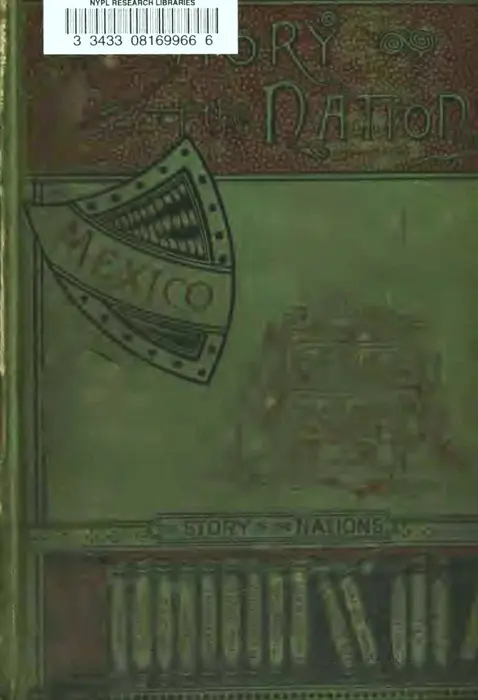
"Mexico" by Susan Hale is a historical account written in the late 19th century. The book explores the rich and complex history of Mexico, from its ancient civilizations to the impact of European conquest, notably by figures like Cortés. The narrative delves into various themes, including the legacy of earlier societies like the Aztecs and Toltecs, and the evolution of Mexico into a republic amid challenges in its political landscape. The opening of the book sets the stage with a vivid description of the scenery as seen from a steamer anchored off Vera Cruz, engaging readers with the contrasts between natural beauty and the inhospitable elements of the coast. It introduces the reader to the historical context of the region, evoking the memories of Cortés as he arrived in pursuit of conquest and riches in a land teeming with potential and folklore. The text hints at exploration themes, emphasizing the allure of the unknown and the juxtaposition of modern conveniences with the arduous experiences of early explorers. Hale begins to weave the narrative to reflect on how civilization transformed the landscape and the people within it, provoking thoughts on cultural loss and the complexities of historical legacies.
Introduction adapted from the source catalogue; source summaries may be automatically generated.
Free to read · English · 97,629 words · No account needed
MAKE TIME FOR A GOOD BOOK
On by default. Untick to stop anonymous reading totals. Each page counts after 10 seconds in view. How this works.
Anonymous counting is on unless you have switched it off.
The most important building at Palenque is the Palace. It rests on a truncated pyramid about fifty feet high, of which the base measures three hundred and ten feet by two hundred and sixty. Subterranean galleries penetrated the interior of the pyramid. It is made of earth, with external faces of large slabs; steps lead up to the top, on which is the chief building, a quadrilateral of two hundred and twenty-eight feet by one hundred and eighty; the walls are from two to three feet thick, ornamented with a frieze between two double cornices, covered with painted stucco, either red, blue, black, or white. There are fourteen entrances in the eastern front, which is the principal one, separated by pillars ornamented with figures more than six feet in height. Over their heads are hieroglyphics which contain the key to their meaning, still hidden to us.
The inside of the palace corresponds with the outside, galleries run all round the court, and the lofty chambers are decorated with strange bas-reliefs in granite thirteen feet high or more, strange and grotesque to us, but full of meaning and expression to the race which understood them.
Over the palace rises a tower of three stories, thirty feet square at the base, decorated profusely with symbols no longer suggestive. A strange thing about the palace is that the staircases look new, the steps whole and unworn, as if the people who built it had suddenly taken flight soon after they erected their chief buildings.
One other of the monuments of Palenque should be mentioned, the Temple of the Cross. It rises from a truncated pyramid, and forms a quadrilateral separated by pilasters, ornamented with hieroglyphics and human figures. The openings lead through an inside gallery to three little rooms, of which the middle one contains an altar, ornamented with a frieze. Above this altar until recently stood three marble slabs, of which one is now in the Smithsonian Institute at Washington, the central stone at the National Museum in the city of Mexico, and the third still remains at Palenque. They are six feet four inches in height, four feet wide, and six inches thick, of cream-colored stone of a fine grain. The central stone now in Mexico gives a striking representation of the Christian cross on a pedestal in the midst of a tangle of hieroglyphics, with a priestly figure, nearly life size, which in the stone still at Palenque is continued by another figure of a priest and six rows of hieroglyphics running from top to bottom. The piece at Washington is covered with similar rows of hieroglyphics, and contains ornaments to match the human figure on the left of the central stone. The startling resemblance to a cross on this tablet has excited much discussion; it is said that the presence of the emblem of the Christian faith caused it to be torn down and cast forth into the forest, which crowds around the ruins of the ancient city. But such representations of the symbol of an earlier date than the Christian era, have been found elsewhere in America. The cross was looked upon by the Mayas as the sign of the creative and fertilizing powers of nature, and has no affinity with the Christian one. Some attempts have been made to decipher the meaning of the Palenque tablets, considering the three pieces as a whole. The figure on the left (still at Palenque) is said to be the Sun with his grand mitre. He presents an offering in his hand, and appears to be blowing with his mouth or breathing incense. At his back are two astronomical signs, representing, one the four phases of the moon, and the other the great Period of the Sun. The figure at the right (in the museum at Mexico) is larger than the other. It stands erect with outstretched arms offering a child before the cross. This priest differs from the other in being without the sacred mask and the robe of ocelotl skin. Both figures open their lips in prayer to the deity, the cross, here united with the sign Acatl, an arrow thrust through the upper half making another smaller cross. At the right of the cross are the signs of the four seasons of the year, vernal equinox, summer solstice, autumnal equinox, and winter solstice. The bird above the cross is the star of the morning, and the strange figure below may be a skull, to represent the star of the evening. According to this explanation the famous tablet of Palenque, with its accidental likeness to the Christian cross, was dedicated to the Sun as the great creative power, and to the Year with its four seasons, and change of morning and evening. Palenque is by no means the only monument of the ancient people in this region. Yucatan is covered with interesting ruins, the remains of different branches of the mighty Mayan race. It can hardly be doubted, moreover, that extensive ruins lie yet hidden in the unexplored regions of the peninsula. Chichen-Itza is one of the few towns which has preserved its ancient Mayan name, from chichen, opening of a well, and Itza, one of the chief branches of Mayapan confederacy. Itza maintained its independence, after the destruction of the confederacy, for two centuries after the Conquest. It was then taken by the Spaniards and completely destroyed.
Your reading position is saved on this browser. Take it to another device with a library code. Reading pages adapt to text, rather than matching a printed edition.
BEHIND THE BOOK
This eBook is for the use of anyone anywhere in the United States and most other parts of the world at no cost and with almost no restrictions whatsoever. You may copy it, give it away or re-use it under the terms of the Project Gutenberg License included with this eBook or online at www.gutenberg.org. If you are not located in the United States, you will have to check the laws of the country where you are located before using this eBook. Read the source licence.
The original source file, including credits and licence, is retained by this library. Request an original-format copy at no charge. Please include the book title and Project Gutenberg identifier #40032.
KEEP YOUR CURIOSITY GOING
Cécile Tormay

Moritz Busch
John L. Ransom
Frances Wright
Cécile Tormay

Mabel Potter Daggett